
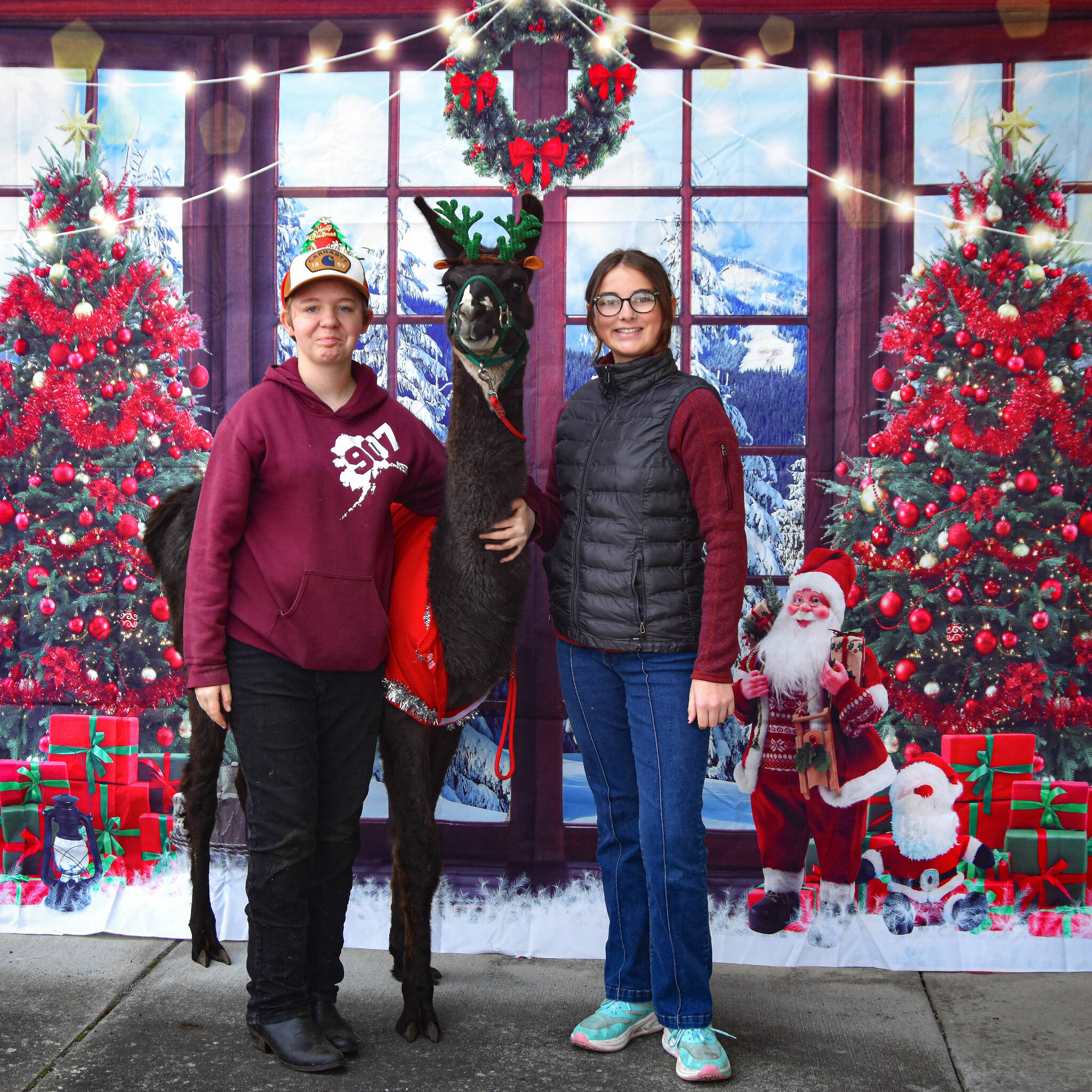
Spike and his cohorts had been on the run in Nevada, wreaking havoc in Lovelock – the seat of Pershing County and the namesake of a nearby medium-security men’s prison.
The gang was becoming a liability. Something had to be done.
A chilling plan was hatched involving killers on four-wheelers. They would chase the marauders, and gun them down.
But a tender-hearted woman got wind of the plot and set about to foil it. She contacted Rondi Smith, 800 miles away on the North Olympic Peninsula.
Smith is the founder of Olympic Peninsula Alpaca Rescue, which is based in Port Angeles where Smith lives with her husband Greg. Spike and his friends weren’t on a crime spree, and they weren’t escapees from the local prison; they were just llamas whose owner had died. The woman who phoned Smith was one of the deceased man’s daughters. She was hoping to stop the scheme laid out by two of her siblings, who were frustrated after multiple attempts to corral the frightened animals had failed.
“The story haunted me at night — seeing multiple four-wheelers chasing these animals trying to run away while someone is shooting them,” Smith detailed in an email to the Sequim Gazette.
To Nevada, Smith went, dropping off several rescues to new homes near Spokane on the way. Greg couldn’t help because he was participating in Run For The Wall, a cross-country motorcycle ride to honor veterans and raise awareness of Prisoners of War (POWs) and those Missing in Action (MIA).
Due to the number of alpacas, Smith’s rescue mission necessitated two trailers and help from two other volunteers. The rescued animals included a three-month-old cria, or baby.
To capture llamas or alpacas, “you have to rely on camelid behavior, including accessing where they eat, where they sleep, their ‘territory,’ and, once you have that, if you plan properly, you can almost always guess where they will go and set up a capture point,” Smith said.
Two female llamas were captured in about two hours and then Smith moved on “to see the other situations as there were three different locations of animals.”
When Smith spotted the baby, “it really was love at first sight,” she said.
“The wind was blowing and he had this Fabio effect with his fiber going on, and he was tall for a three-month-old, and definitely dark colored and handsome,” she wrote in her email, following the description with the acronym LOL to indicate laughter.
She phoned her husband that night and told him that she had fallen in love with a new man while he was away. Greg didn’t fall for it.
“The cria from Nevada,” he said.
“Yup,” she replied.
Smith named the baby Spike because of a colored area on his forehead that reminded her of the cowlick sported by Alfalfa in “The Little Rascals.” How Spike had managed to remind his rescuer of both Alfalfa and Fabio is anyone’s guess, but Smith was smitten nonetheless.
Today, Spike is being trained as a “PR animal,” Smith said, and will soon be visiting residents of nursing homes and assisted living facilities. His charm was evident at the Falalallama Holiday Bazaar at the Sequim Masonic Lodge on Saturday, Nov. 22, where he posed for photos with shoppers. The bazaar, which included a bake sale and silent auction, was a fundraiser for the nonprofit.
The money was desperately needed.
“Our donation income has dropped about 75 percent in the last year from 2023,” Smith said. “People are trying to feed their families. Food is priority and it’s very expensive. We used to be able to do a skip-a-coffee Facebook advertisement and generate nearly $2,000 for feed.”
Used to be, the nonprofit would receive random checks in the mail for $2,000 or even $6,000, Smith said, but that has stopped.
“I don’t think in this whole year, except for animal sponsorships where people sponsor an old or sick animal to pay its monthly expenses, we have gotten any checks in the mail,” Smith said. “We have had several regular contributors donate $500 at a time to a few of our online fundraisers.”
Smith said that many nonprofit animal rescues are suffering in the current economic climate and some have even been forced to shut down entirely. Grants have “dried up” for for smaller rescues, she said, going instead to larger operations.
“We have really had to tighten our belts and we have had to turn away rescuing animals this winter for the first time ever because of lack of funding,” Smith said.
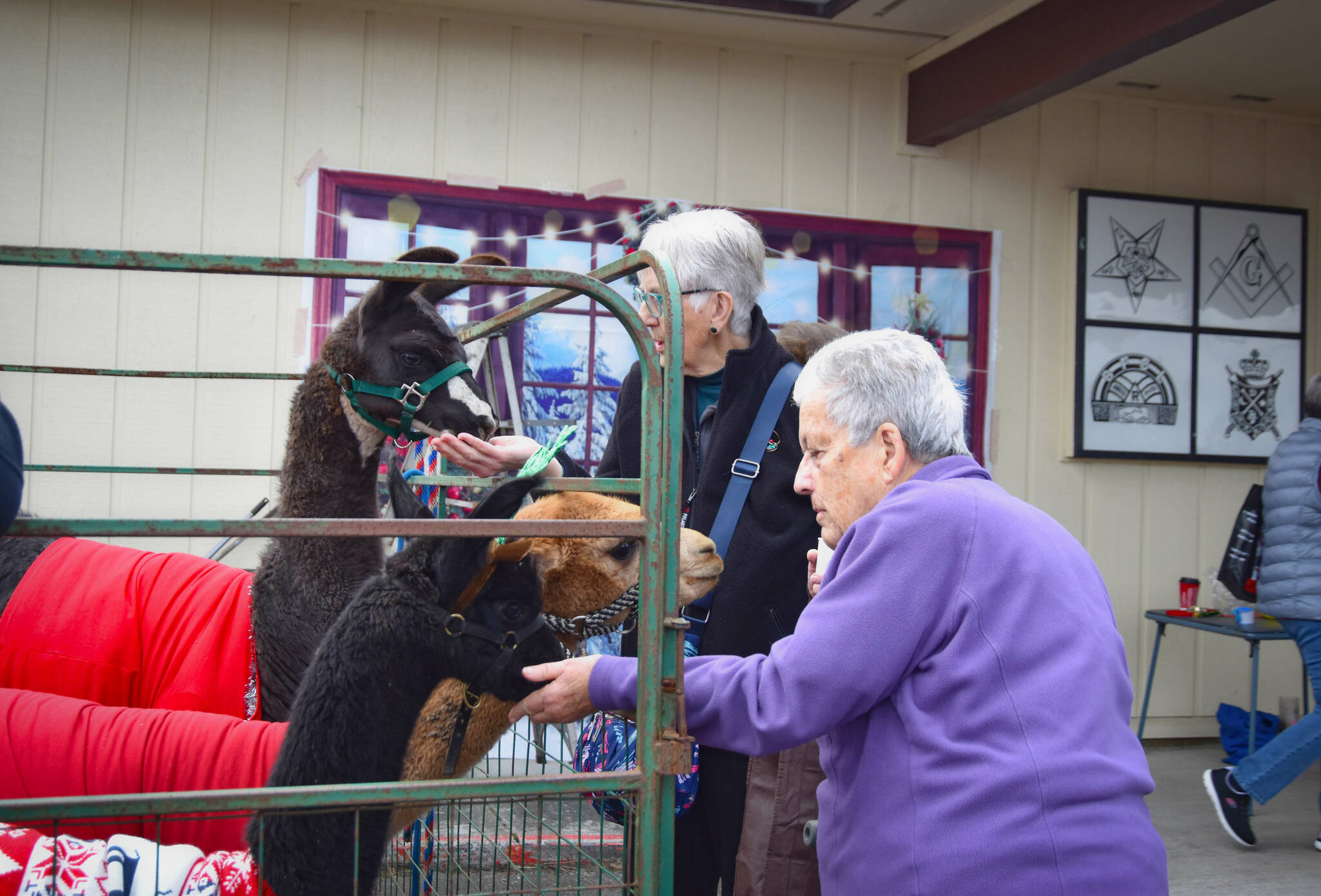
Sequim Gazette photo by Monica Berkseth/ Lyn Fiveash, right, and Priscilla Hudson take a break from shopping at the Falalallama Holiday Bazaar in Sequim to feed and pet some of the animals representing Olympic Peninsula Alpaca Rescue.
Crazy for camelids
Smith moved to the North Olympic Peninsula from Alaska in 2002 because she wanted to have an apple orchard and raise alpacas. The reason she wanted to raise alpacas was because of another passion she has: knitting and crocheting. She’s been doing both since she was very young.
The first alpaca she adopted was part of a group that included two alpacas and three llamas.
“I then answered an ad on Craigslist (for) two alpacas for $100 each,” she recalled. “I drove down to pick them up.”
When she arrived, the two alpacas were in a round pen with a couple of pigs, goats, a calf and a couple of turkeys.
“I loaded them up in the trailer, brought them home, dropped the ramp and walked Lady out into our barn,” Smith recounted. But when she went to retrieve the other female, the alpaca dropped at the bottom of the ramp “and never got up.”
The animal took its last breath with its head in Smith’s lap.
“I soon realized that these people were buying animals from the meat market (animal auction), throwing them all together and selling them on Craigslist to make money,” Smith detailed.
Stress, Smith said, is the “number one killer” of alpacas. The animals are sensitive and “grieve like humans.”
“After that, I decided I would try and buy every single alpaca that was cheap or being given away so this wouldn’t keep happening,” Smith said. “I knew I couldn’t change the world, but I could make a difference for those animals.”
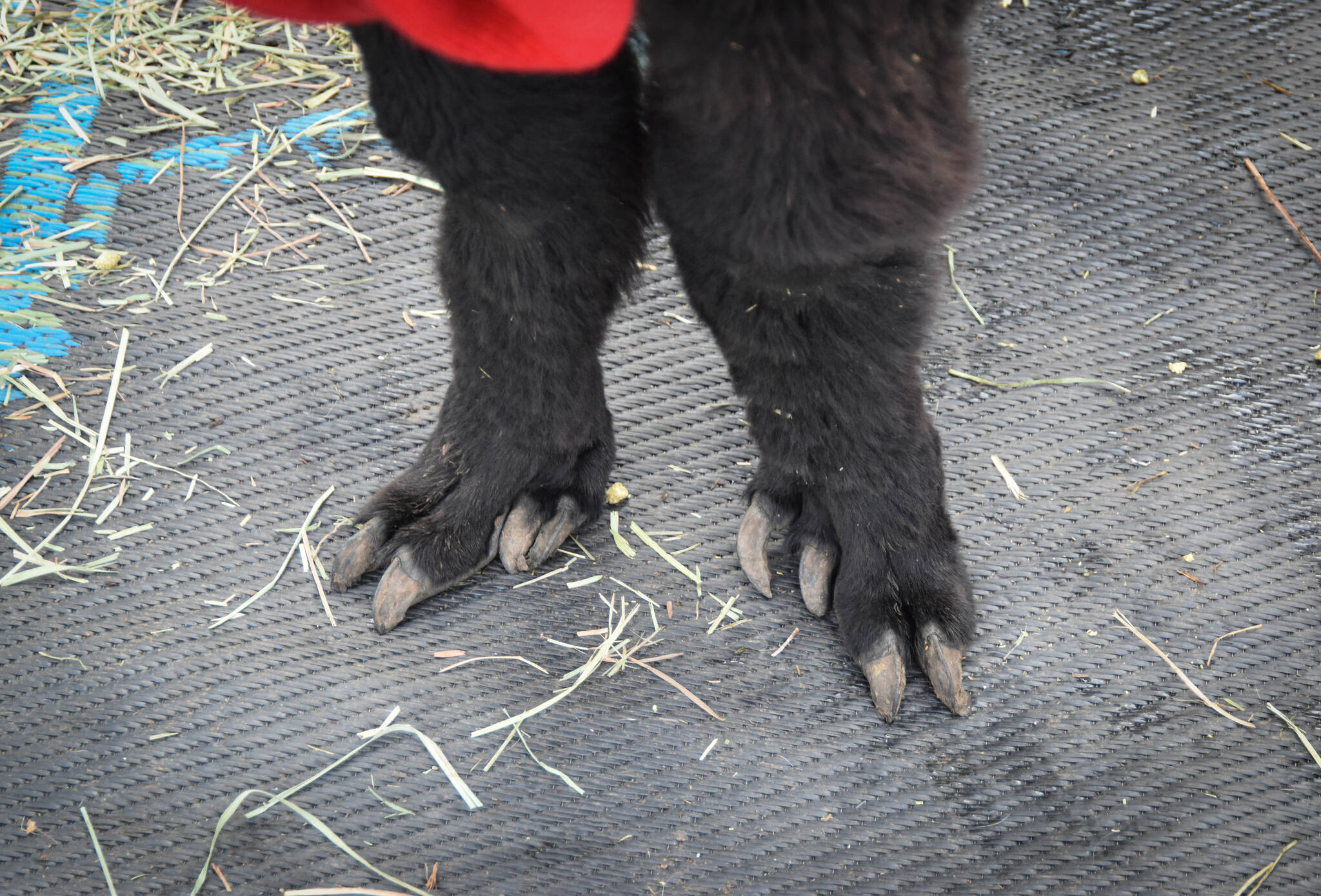
Sequim Gazette photo by Monica Berkseth/ With feet like these, Quatro the alpaca won’t be part of any Nutcracker ballet. His rescuer, Rondi Smith, founder of Olympic Peninsula Alpaca Rescue, said that her unadoptable rescues are endearingly similar to the “misfit toys” featured in the classic animated TV show “Rudolph the Red-Nosed Reindeer.” Instead of being misfits, though, they are just special, she said.
In loving hands
Typically, Olympic Peninsula Alpaca Rescue takes in 50-100 animals annually, Smith said. Last year, the nonprofit assisted the Clallam County Sheriff’s Office in rescuing 44 llamas, 13 of which were pregnant. That same year, they rescued 19 alpacas.
The Smiths are “extremely picky” about who adopts animals through their nonprofit, according to Smith. Those seeking to adopt fill out an application and undergo an interview during which their knowledge of camelids is assessed. References are checked, and the potential adopter’s property is either walked or viewed via video.
“We reserve the right to come check on the animals once a year and remove them from any situation that is unhealthy,” Smith said.
Currently, the camelids under the couple’s care are “unadoptable,” Smith said, but donors are welcome to sponsor an animal for $80 per month and even assist with their respite care. The Smiths are currently spending about $3,500 per month to feed and care for the rescues.
Smith said her beloved rescues remind her of the classic animated television show “Rudolph the Red-Nosed Reindeer,” which features the Island of Misfit Toys.
“They aren’t misfits, they are just special, and that’s why we really want people to come and actually interact, not just send money,” Smith said, adding that it not required for sponsoring a rescue.
How to help
As valuable as money is to the organizations, volunteers are as well. Smith said they are “worth their weight in gold.”
“We train volunteers and set them up with mentors,” she said.
Donations can be made on the nonprofit’s square site at https://square.link/u/6ZtNIdPn, Venmo at Olympic Peninsula Alpaca Rescue and via paypal to Olympicalpacas@outlook.com . Checks can be mailed to Olympic Peninsula Alpaca Rescue, P.O. Box 1045, Port Angeles, WA., 98362.
For more information about Olympic Peninsula Alpaca Rescue, visit opalpacarescue.org or email Smith at olympicalpacas@outlook.com.
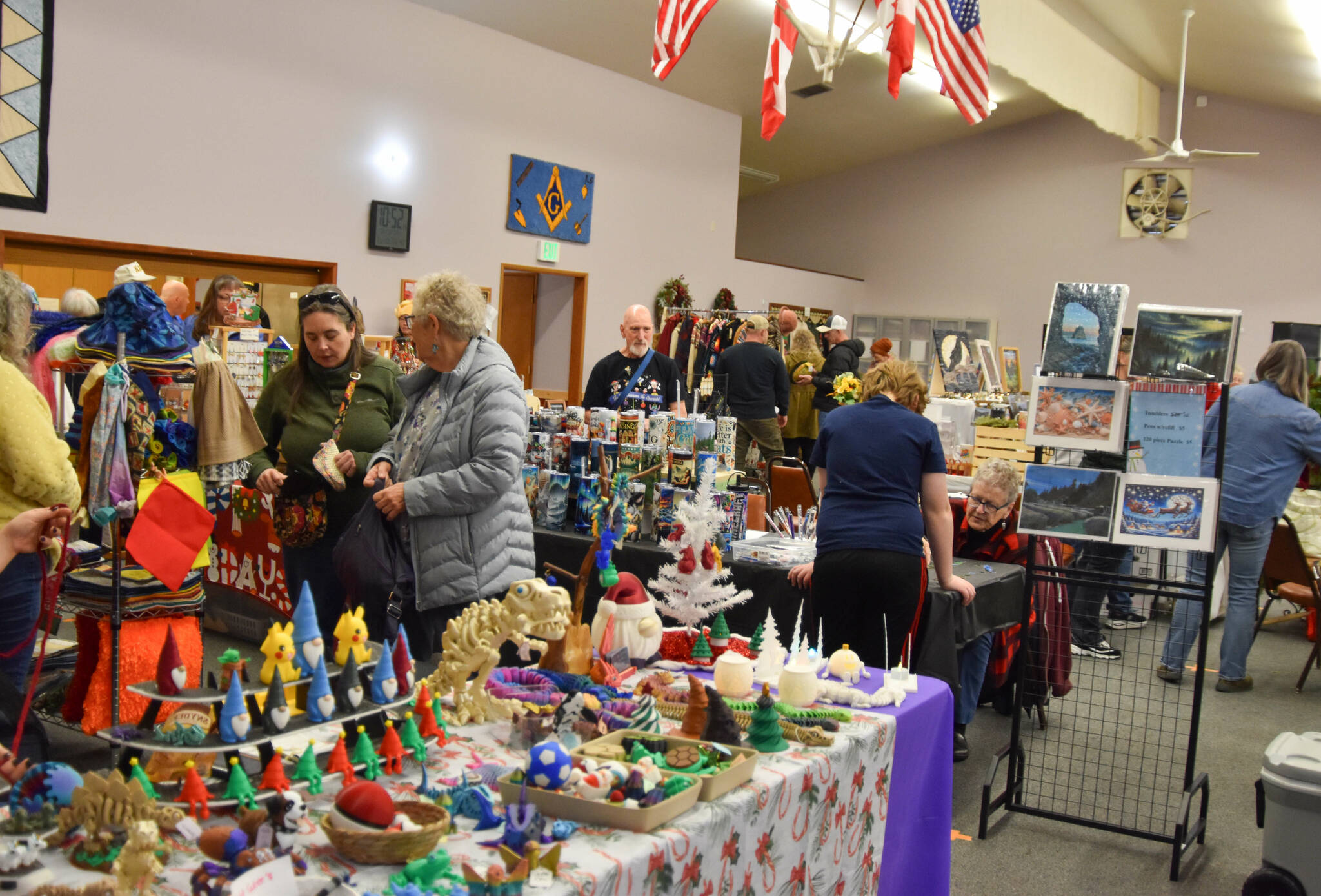
Sequim Gazette photo by Monica Berkseth/ The Falalallama Holiday Bazaar at the Sequim Masonic Lodge on South Fifth Avenue included handmade crafts, a bake sale and a silent auction. A similar fundraiser is being planned for Valentine’s Day and will feature 25 percent new vendors, according to Rondi Smith, founder of Olympic Peninsula Alpaca Rescue.