@SequimSchools — March 18, 2020
Published 1:30 am Wednesday, March 18, 2020











DISTRICT
The next school board meeting is 6 p.m. Monday, April 6, in the district boardroom, 503 N. Sequim Ave. The public is invited to attend and time is set aside for public comment. To view the agenda and minutes of past meetings, click on “School Board,” “Regular Communication” and “Agendas” on the district’s website at www.sequimschools.org.
The Sequim School District hosts a community forum regarding facility upgrades at 6:30 p.m. on Tuesday, March 24, in the Sequim High School library, 601 N. Sequim Ave. Call 360-582-3260 or www.sequimschools.org.
GREYWOLF ELEMENTARY SCHOOL
Greywolf third-grade students are having a great time in music! Right now they are working reading music, reading chord diagrams (such as those for a guitar, mandolin, banjo, etc.) and experimenting with different strum patterns. Daily they also learn how to read music, feel the beat and apply that to playing real music pieces, chords and melody.
HELEN HALLER ELEMENTARY SCHOOL
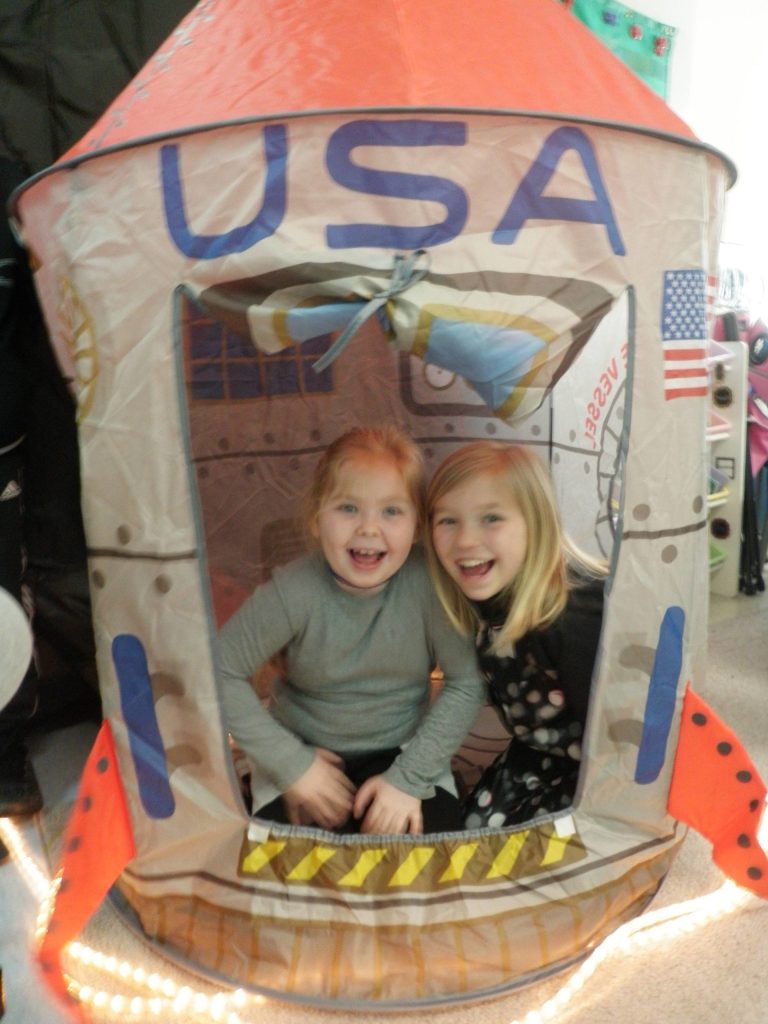
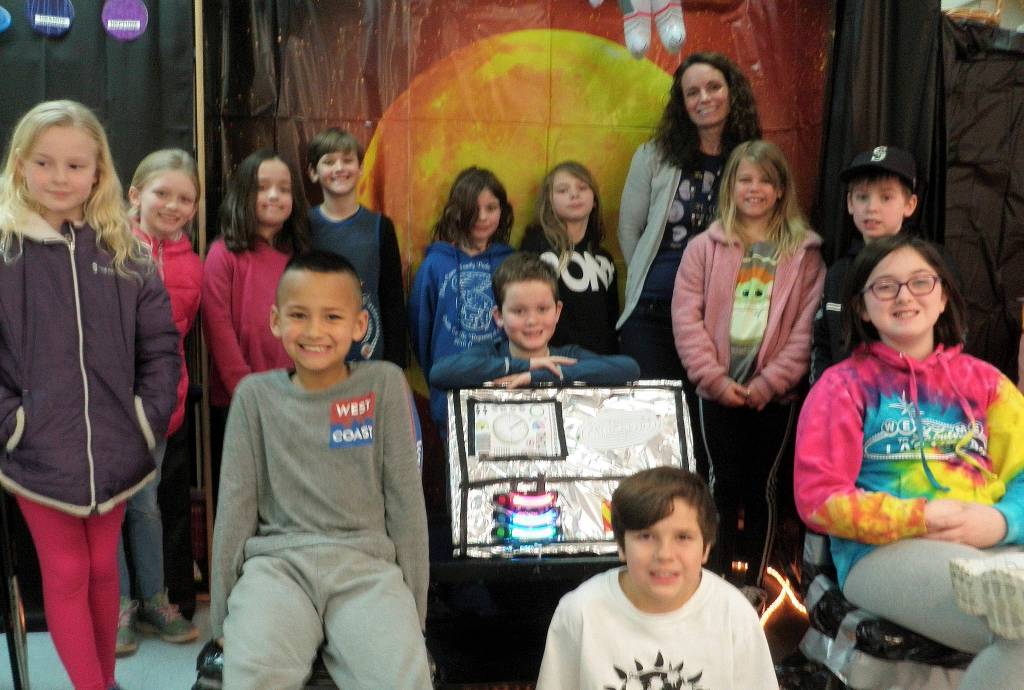
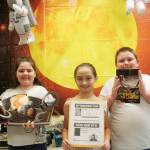
Third-graders in Carolyn Luengen and Emily Ellefson’s classrooms are participating in a month-long unit on Astronomy. They are studying planets, moons, stars, gravity, and the National Aeronautics and Space Administration (NASA).
During a class discussion, students were intrigued to learn that NASA is accepting applications for new astronauts this month for its next class of astronauts. These new recruits will train for expeditions to the International Space Station and the moon. It is expected the agency will select only 12 out of thousands of applicants.
Students are writing about space during daily journal time. They ponder if they wish to travel to the Moon or even Mars. During class discussion they learn about interactions of the Sun-Earth-Moon System. They will each be writing a story about a trip to space.
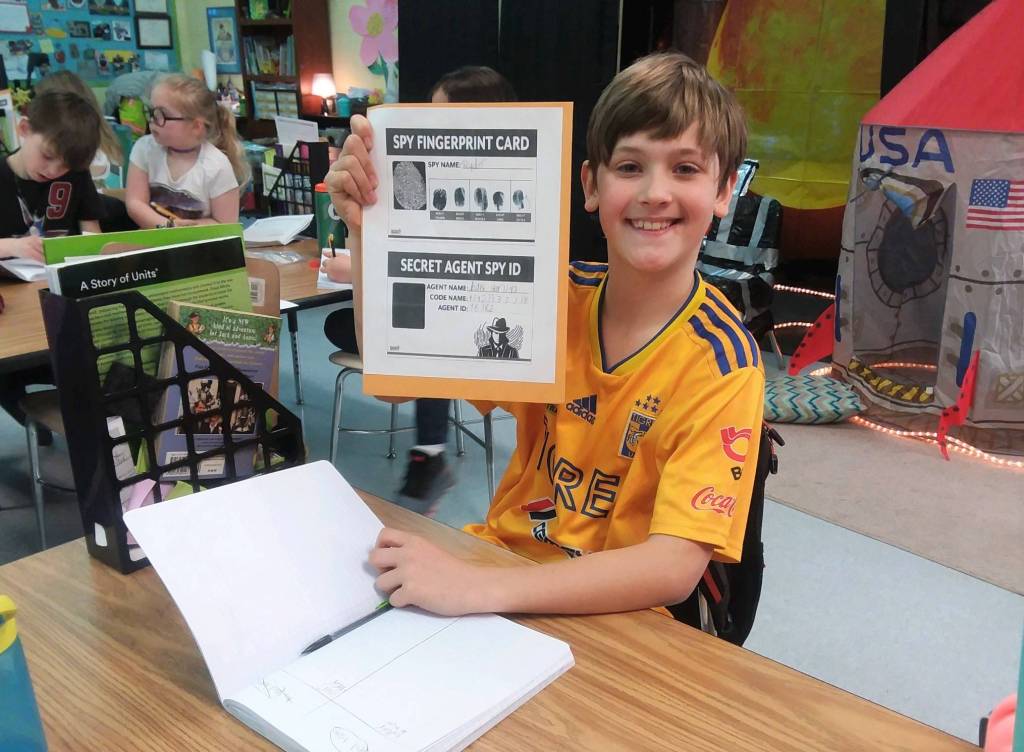
Some class activities on a lighter side are modeled after an escape room, where an assembled team has a limited amount of time to complete their mission and “escape” the room. In the space scenario, a successful “escape” requires participants to become Secret Agents and find hidden clues to solve challenging puzzles. The scenario has an alien (or extraterrestrial) trying to take over the International Space Station and the class must use clues to figure out how to stop the alien. Students update their Secret Agent folders daily with information to get closer to a solution.
“It has been fun to learn about planet Earth, the moon and the sun,” said Evelynn Hodgson in Luengen’s classroom. “The most interesting fact I’ve learned is that there are eight planets in our solar system. There used to be nine, but Pluto was taken off the list.”
“Our Solar System Part 2” by Lillian McCullough
Did you know that some planets have atmospheres, and some don’t? Did you know Earth has an atmosphere? Earth’s atmosphere keeps the sun’s rays from touching Earth. Mercury is hot on one side and one side is frigid. It is hot on one side because one side is facing the sun and one side is not facing the sun. Did you know that Venus is very hot? It’s hot because it has a very strong atmosphere. And that’s what atmosphere is!
“Our Solar System Part 2” by Sophia Mager
Our planets’ atmospheres are fascinating. Mercury is a planet without an atmosphere. Why Mercury has no atmosphere because it is really close to the sun and if one side is facing the sun it will be boiling hot there and the other side will be frigid. Venus has a really, really thick atmosphere and it is really hot there. Why Venus is hot there because it has a really thick atmosphere and whenever heat gets into the atmosphere it gets really hot there. Neptune is really, really far away from the sun and it is frigid there. Why Neptune is cold is because it is really, really far away and cannot get heat. That’s how our planets’ atmospheres are fascinating.
“Our Solar System Part 2” by David Herman
An atmosphere is important to Earth, so we don’t freeze or burn at day or night. An atmosphere is important to us so we can have air and breathe so we don’t die. It helps us live by helping us breathe in air and stay warm. Neptune is frigid so it’s cold and if we went there, we would freeze in 0.5 seconds! Neptune is frigid because it’s made of ice and gases. Mars has the largest mountain ever in the whole solar system. It is three times the size of Mount Everest, the biggest mountain ever. In conclusion, an atmosphere is important.