For the birds
Published 10:30 am Wednesday, September 3, 2025
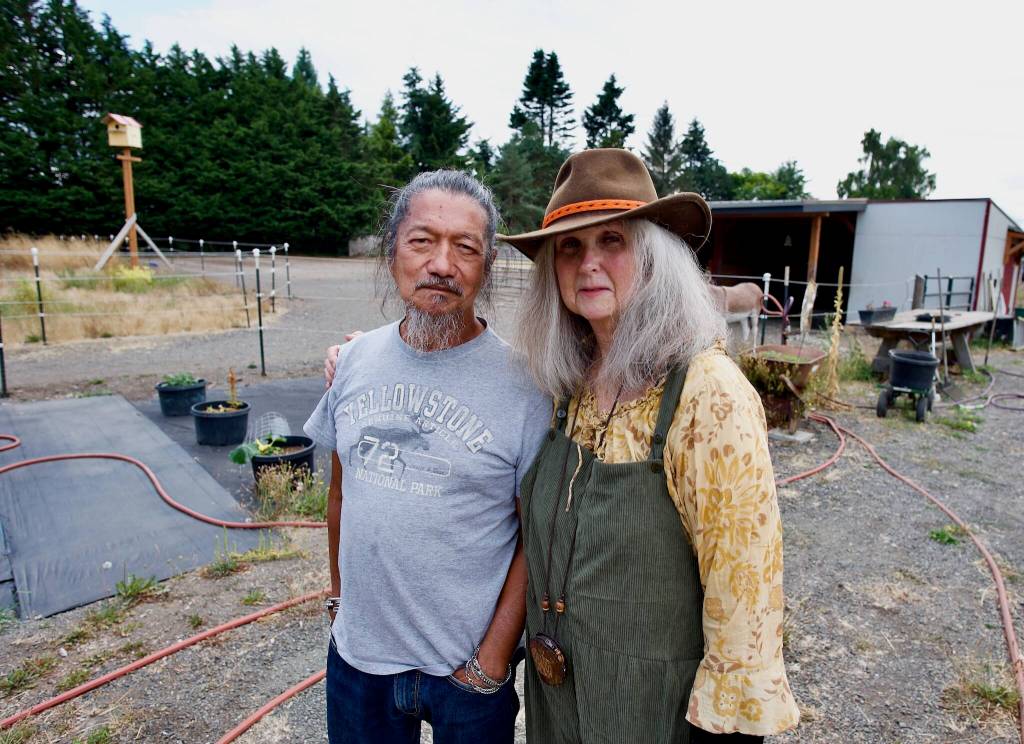
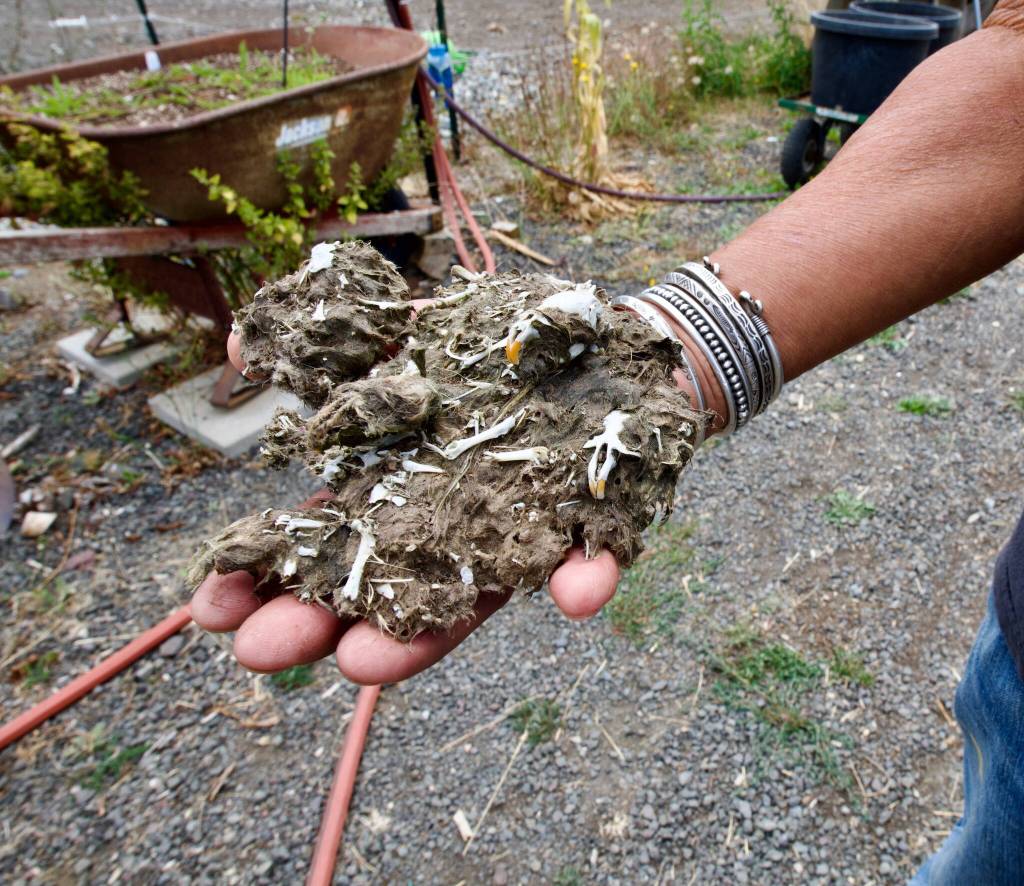
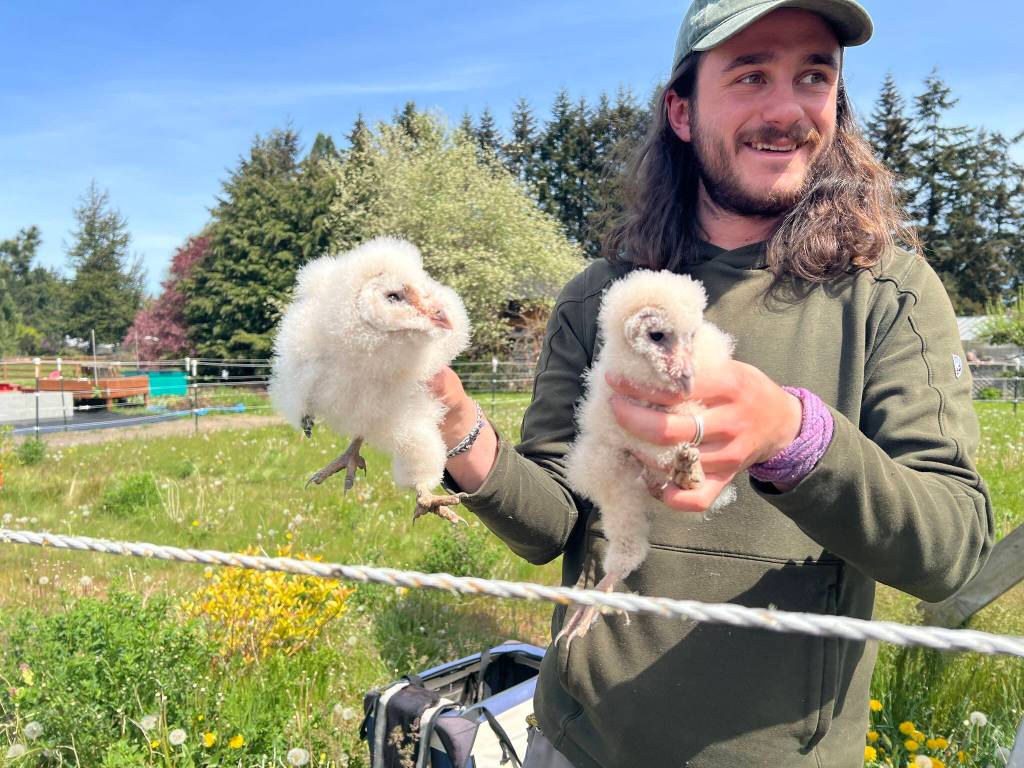
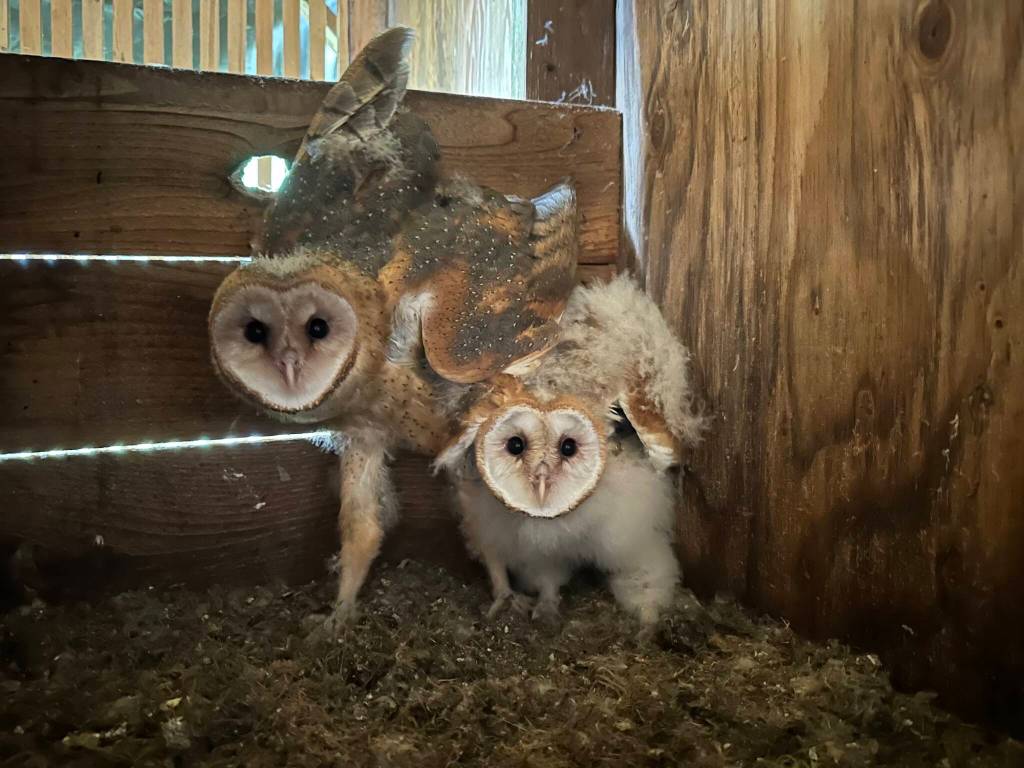
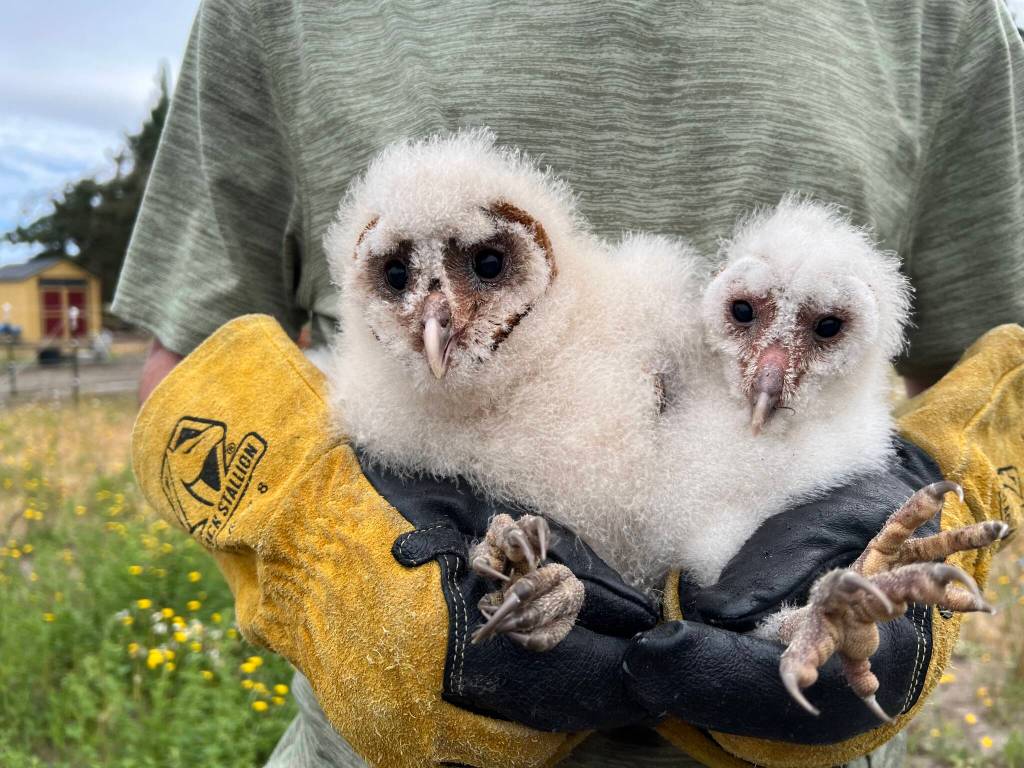
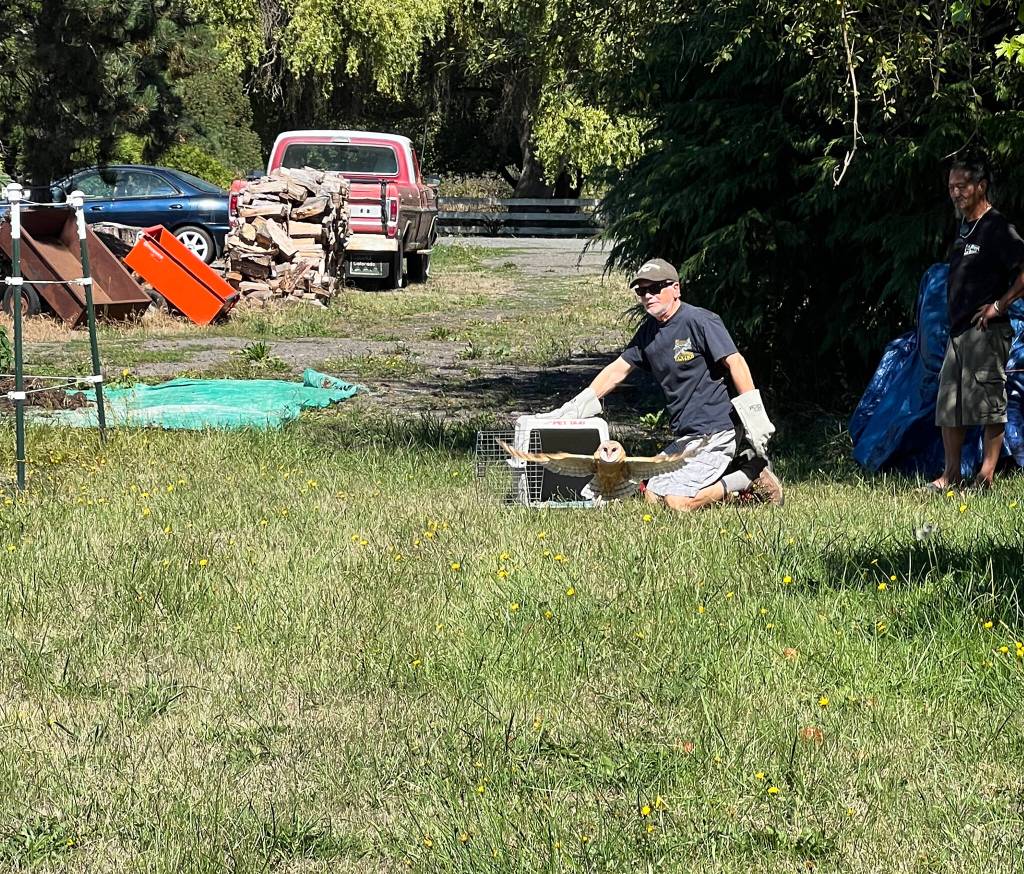
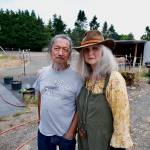



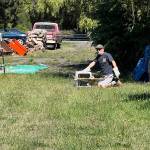
Skulls, bones and hair are all that’s left as Bert Corales shows what he keeps finding on the Sequim property he shares with his partner, Candace Fagerhaugh.
No, it’s not a crime scene; these are owl pellets, and they’re all over the couple’s backyard. Owl pellets are made up of fur, bones, teeth and/or feathers — none of which owls are able to digest. The nocturnal raptors, which tend to swallow their prey whole, regurgitate what their digestive systems cannot break down.
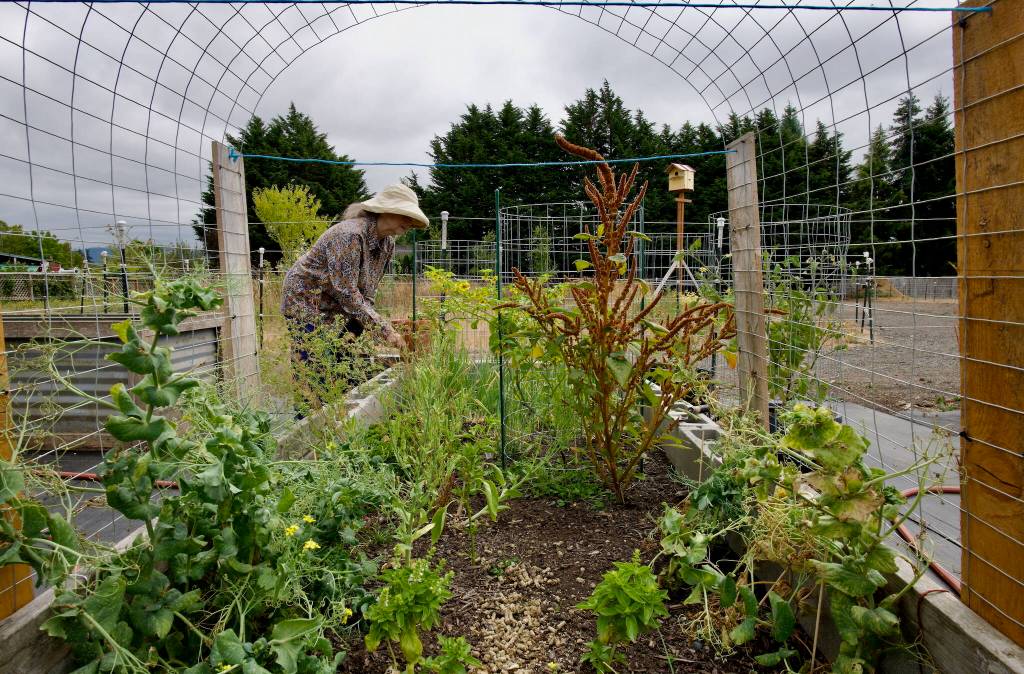
Bird lovers Corales and Fagerhaugh retired to Sequim in 2019 from Northern California, buying five acres for gardening. They have a horse and a donkey, but they didn’t expect to become caretakers for two baby owls.
Fagerhaugh said she wanted to attract birds, maybe even an owl, to the property and a local woman named Carolyn gave her some tips.
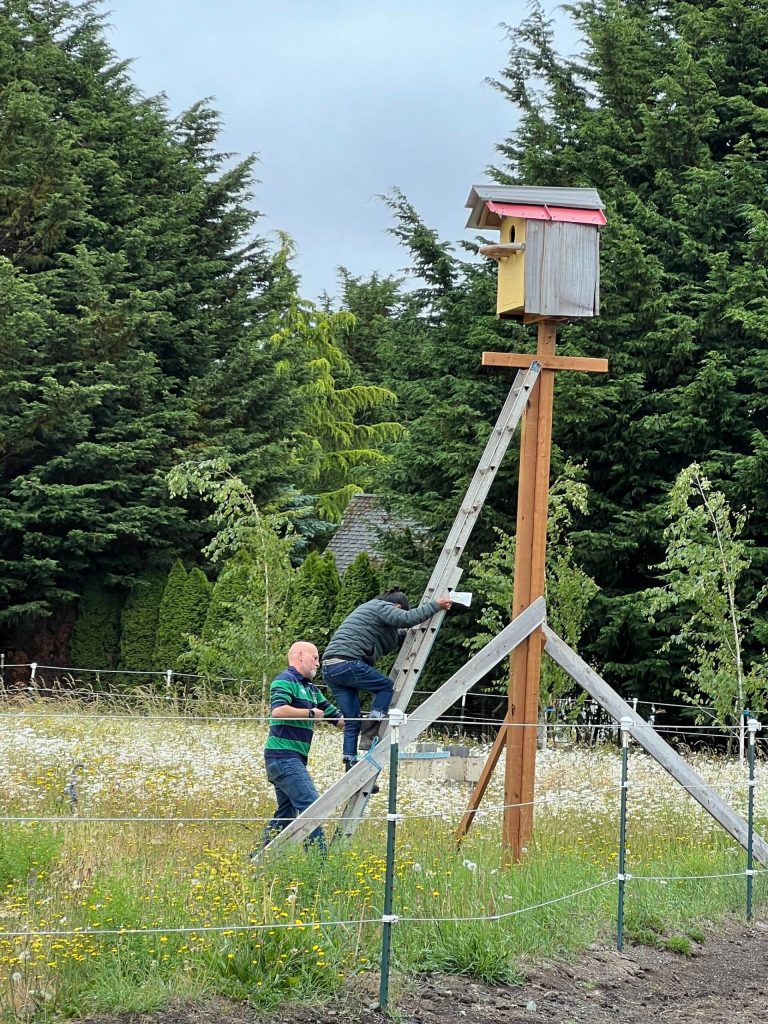
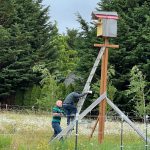
With a chicken coop on her property already built by aviary expert Tyler Spires, she commissioned Spires to build an owl house. Not knowing what to expect, Fagerhaugh and Corales forgot about the owl house after it was built and focused on gardening.
Everything changed on the 4th of July in 2023 when owls showed up with a bang.
Sitting in her garden watching fireworks, Fagerhaugh spotted an owl “right there with the lights flashing behind it, with a rat in its mouth.”
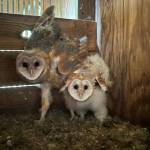
The couple decided to put a camera in the owl house to be able to watch its new inhabitants.
Corales explained that the male brings food “while the mother is laying her eggs.”
But one day the male owl left and did not return. Fagerhaugh feels there is a high probability the male was killed by rat poison from food or hit by a truck.
The couple started noticing that the female owl was struggling and appeared to be in bad shape. Eventually, the female, too, disappeared from the owl house, Corales said, leaving behind two babies.
“I had to go to Petco to buy some frozen mice and throw (them) in the house,” he said, adding that the frozen mice are costly and not “financially feasible.”
That’s when the couple decided to call Discovery Bay Wild Bird Rescue in Port Townsend. Director Cindy Daily explained how it is common for owls to become orphaned at such an early age.
“With urban sprawl and the world today, there’s a lot of challenges for (owls) to survive in the wild,” Fagerhaugh said, including “traffic, any kind of [rat] poisoning…. they get caught in electric lines. They are shot, illegally. They fly into things (and) they are taken by other raptors.”
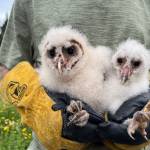
Daily sent Joseph Molotsky to retrieve the baby owls. According to Daily, the strategy is to raise the orphaned baby raptors with surrogate parents of the same species.
“What’s important to know about raptor babies is that, just like ducks and geese, they need to imprint on the proper role model,” she said. “So, if they are looking when they’re first developing and their eyes are starting to focus, they need to see the image that you know will imprint on their brain and let them know what species they are.”
After the owlets were taken to be raised by a surrogate mother for four weeks, Discovery Bay Wild Bird Rescue released them on Corales and Fagerhaugh’s property.
Following a successful release, a new family took residence in the owl house last December.
“It’s such a beautiful process.” Fagerhaugh said of how affectionate owls are to each other during the mating process.
Five eggs hatched and two of the babies survived. Fagerhaugh named the first egg Oscar because it was laid on the night of the Academy Awards ceremony. The second one was named Starlight.
The same thing happened that happened before. For a while, the male owl dropped off food for the babies, but eventually did not return. The mother later left as well. Fagerhaugh made another call to Discovery Bay Wild Bird Rescue, and, once again, they saved the day. The babies were eventually released but at a different location.
Since then, Fagerhaugh and Corales have noticed some new owls checking out the house, but no permanent residents as of yet. They hope to host a new family of owls by late fall.
For those interested in an owl house, Daily explained that barn owls like farmland where they can hunt for mice. Instead of using poison for rodent control, having owls nearby is a healthier solution, she said.
Daily said that when autumn arrives and darkness falls earlier in the evening, the rehab center receives a lot of owls that were hit by cars.
“Be aware that there are going to be more owls out there,” she said.
Daily advised that anyone who encounters an injured bird should place something over their heads and place them in a cloth or grocery bag, “then call us and get some help for them.”
The Discovery Bay Wildlife Rescue Center can be reached at 360-379-0802.