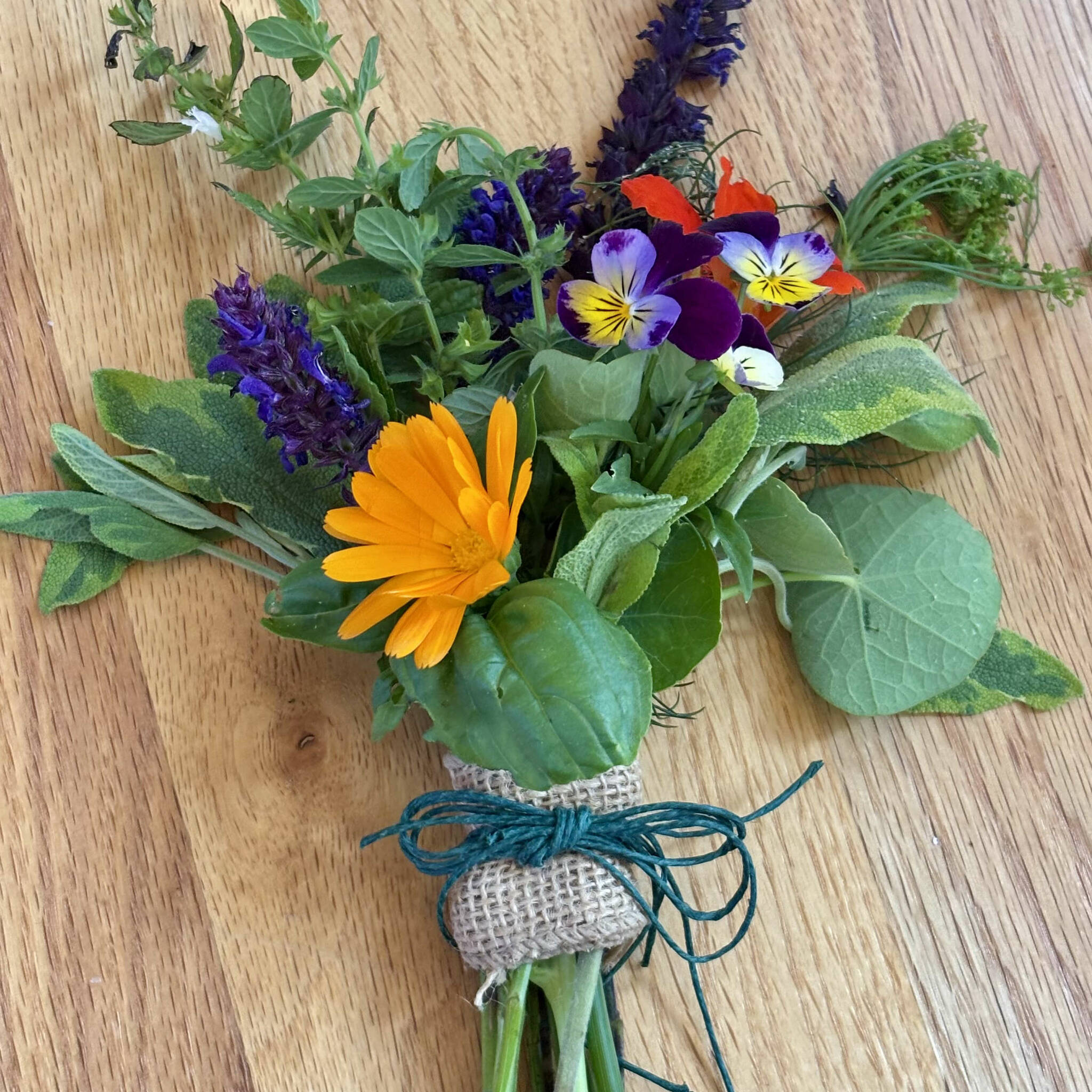
Before “roses are red” became a cliché, people once whispered sweet nothings through flowers. The language of flowers, called floriography, was once (and still can be!) a clever and romantic way to say how you really feel.
Most know that roses stand for love, lilies for purity, and daisies for innocence. But what about the herbs in a garden? Those fragrant sprigs weren’t just for tea, stews, or soup stock — they had messages to deliver, too.
Floriography stretches back centuries, with roots in ancient Persia, Turkey, and even Shakespearean England. But it reached full bloom in Victorian times (think high tea and chaperones). In an era when emotions, especially for women, were tightly laced under social rules, flowers became a silent, expressive language.
By the 1800’s, flower dictionaries were all the rage. These dainty little guides listed hundreds of plants and their meanings. Suddenly, every bouquet became a coded message — and not always about love, mind you. People used flowers to reject admirers, send warnings, or stir up a little drama.
Just be warned: different dictionaries don’t always agree, so tread carefully. Basil, for example, could mean affection… or flat-out hatred. (Yikes!)
Message in a nosegay
One popular way to send these flowery messages was through a nosegay (also delightfully called a tussie-mussie). These were small, tightly bound bouquets of flowers and herbs, often wrapped in lace or a doily and tied with ribbon. Practical as well as poetic, nosegays helped mask unpleasant city smells and were even believed to ward off disease.
Each herb or bloom in a nosegay carried a meaning, turning these lovely bundles into scented telegrams. Giving someone a nosegay was like handing them a beautifully wrapped note — one that also helped disguise the scent of the backyard privy.
Herbs are some of the biggest players in the floriography. Here are a few examples of what they may say:
• Basil: Dual meaning alert! Sweet basil means good wishes, but wild basil could express hatred or rejection. Be careful with your basil.
• Mint: Represents virtue and warmth of feeling. It also symbolizes hospitality, thus planting it by the front door may welcome guests.
• Thyme: This tiny but tough herb stood for courage and strength. A bouquet with thyme might say, “You’ve got this!”
• Lavender: A symbol of devotion, grace, and tranquility. It is also thought to protect against bad vibes and bad suitors.
• Chamomile: The flower of patience. Giving chamomile says, “Hang in there.”
• Sage: Signifies wisdom, long life, and esteem. Add it to a bouquet to say, “I admire you.”
• Yarrow: Stands for healing, lasting love, and sometimes conflict. It’s complicated — like real love.
You don’t need to be a Victorian lady or gentleman to enjoy floriography. With a few herbs and some imagination, you can send a message that’s more thoughtful than any emoji and more fragrant than a gift card. (Hint: you might want to include a note explaining your bouquet’s message, especially if you’re using basil!)
For encouragement, try a nosegay with:
• Lavender (devotion)
• Mint (warm feelings)
• Thyme (courage)
• Sage (wisdom)
For a hopeful love note:
• Basil (spicy love — but check your dictionary)
• Chamomile (patience)
• Thyme (courage)
• Yarrow (everlasting love)
Herbal bouquets are beautiful, meaningful, and sustainable and they’re a sweet way to share a piece of your garden and your heart. So, next time you’re trimming your herbs, think beyond the kitchen. You might be holding a message worth sending.
You’re invited
With flowers beds, herb gardens, and vegetables patches, the Master Gardener Woodcock Demonstration Garden, located at 2711 Woodcock Road, has a lot to say and see all year. You’re invited to wander through and enjoy the garden, which is open year-round and lovingly tended by the Clallam County Master Gardeners.
Parking is always available in a small lot just west of the main entrance. Please remember to look but not pick. This is a learning garden and all the food produced is donated to the local food bank.
________________
The language of herbs in floriography
Bay laurel – Success
Calendula – Health
Chamomile – Comfort
Echinacea – Capability
Fennel – Worthy of praise
Hops – Mirth
Hyssop – Cleansing
Lady’s mantle – Comfort
Lemon balm – Sympathy
Lilac – Joy of youth
Lovage – Strength
Mint – Virtue
Oregano – Joy
Parsley – Gratitude
Rosemary – Remembrance
Sage – Wisdom
Thyme – Courage
Vervain – Good fortune
Violet – Loyalty
________________
Susan Kalmar is a WSU Clallam County Master Gardener.