
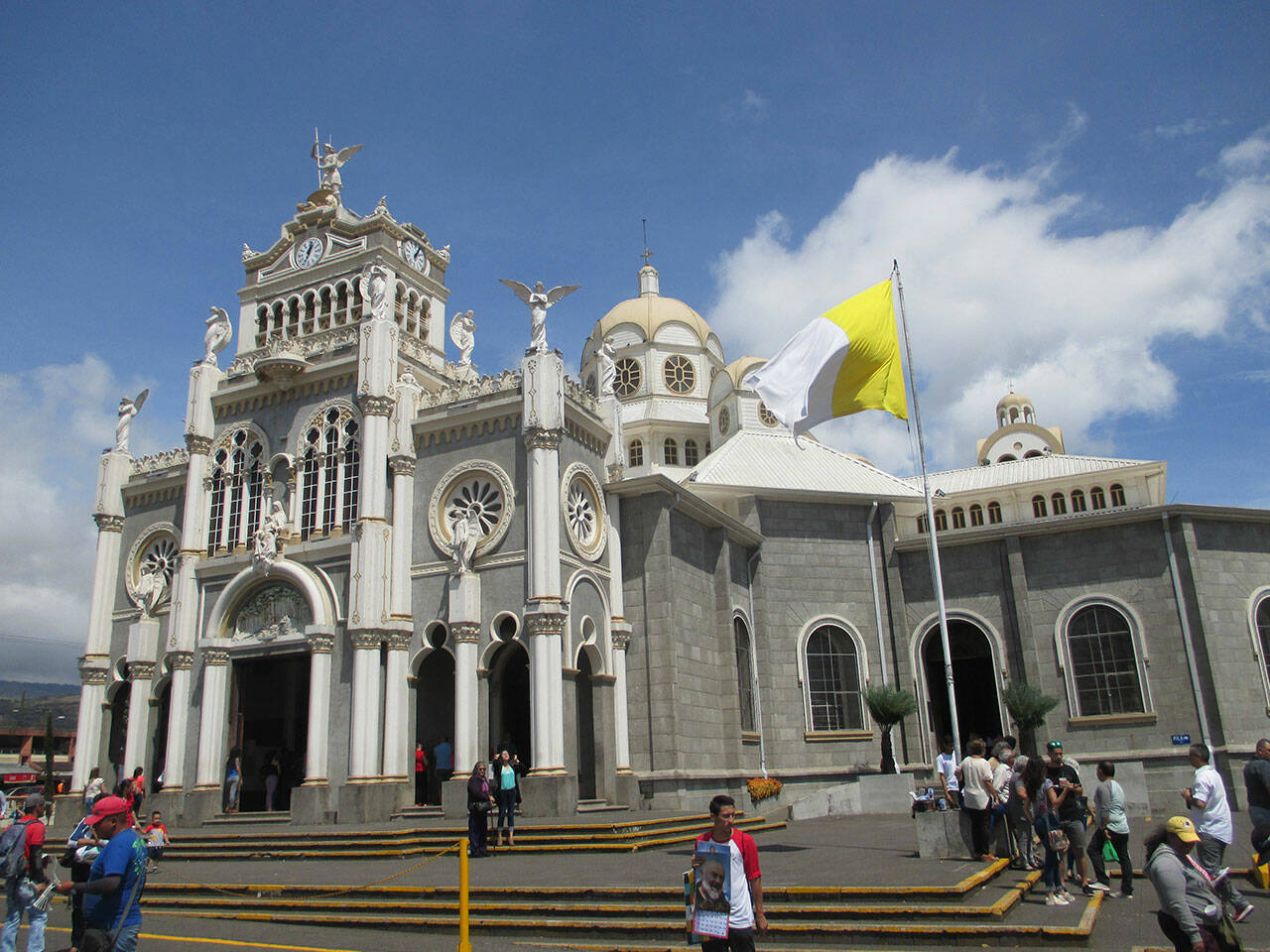
Costa Rica is a remarkable society of fellow humans that has embraced its natural environment as its legacy. Those who reside in such a paradise do not have to be convinced of the impossibility of survival outside of nature.
Blessed with a paucity of the shiny metals that secured the dubious future of Central American countries to the north, Costa Rica has instead chosen to bank on its staggering natural beauty.
A bi-coastal country with diverse lowlands separated by mountain ranges crested by still-simmering volcanoes, Costa Rica has designated more than 25 percent of its domain for conservation. Encompassing one of the most bio-diverse places on earth, a large chunk of the globe’s biota remains there for your viewing pleasure, hopefully secure for future generations.
My wife Chris and I participated in a tour of Costa Rica sponsored by Oregon State University, where we received our graduate degrees in fisheries and oceanography. We had the opportunity to sample the natural riches of this country on a 14-day journey that started on a stretch of the Caribbean coast perhaps best known as a destination resort for sea turtles, but home to a bewildering array of plant and animal life in the coastal streams, lagoons, and estuaries.
After a couple of days of exploring these backwaters from an ecotourism lodge situated an hour’s boat ride up the Laguna del Tortuguero, we returned to San Jose to commence exploration of the central highlands.
Our initial destination was to be Poas Volcano National Park, but volcanic activity has kept the park closed. Instead we visited Irazu Volcano National Park. Here we were able to view topographies at around 11,000 feet created by volcanic activity as recent as 25 years ago.
Moving northwesterly along the central cordilleras, we visited the Arenal region, where we were hosted by a local elementary school that treated us to traditional Costa Rican dances. We savored the flora and fauna of the central highlands via canopy walks and a visit to a local biological preserve.
From there we ascended to the cloud forests of Monteverde. Though personally not a birder in the life-list sense, I do know that the resplendent quetzal is high on said list. We were able to get a good look at one of these magnificent, but elusive birds while hiking through the cloud forest.
From the highlands, we descended down to the hot and dry plains of Guanacaste on the country’s Pacific coast, staying near the town of Tamarindo. While our trip started with a bounty of life among the backwaters and lagoons of Tortuguero, we finished up cruising the Tempisque River — a different type of wetland as the river courses through a more arid landscape.
Life flourishes here as well. We experienced a waterway that fully earns the sobriquet “crocodile-infested.” We departed for home from the town of Liberia. The new airport there is strategically located to serve the burgeoning tourist trade among the naturalists and surfers that have made Tamarindo and other towns along the Pacific shores a favorite destination.
About the presenters
Travel figures significantly in our lives as my wife Chris and I try to make a least one big trip each year.
For Chris, growing up in Vermont with parents who both came from Sweden meant trips back to visit relatives and a couple of extended stays when she was able to enroll in school in Sweden for a semester. After graduating from the University of Vermont with a degree in biology, Chris traveled west to Oregon State University at the same time I was traveling there from down south where I had earned Bachelor’s and Master’s degrees in biology from U.C.L.A and Cal State-Fullerton.
We parlayed this accumulation of paperwork attesting to our academic acumen into positions at Centre College — a small, liberal arts school in the Kentucky Bluegrass that is presently celebrating its bicentennial. By the time we arrived in the late 1970s, Centre was becoming increasingly aware of the value of international educational opportunities.
While at Centre, I developed an off-campus program in marine science taught on San Salvador Island in the Bahamas — long held to be Columbus’ first landfall in the New World.
My interest in overseas travel afforded me the opportunity to participate in the development of programs of international study in Mexico and Southeast Asia. Chris initiated a program of study that took students to the jungles of Ecuador and to the Galapagos Islands.
Upon retirement, we started a tradition of one major expedition each year. So far, this has included a trip through the Grand Canyon, travels in western Cuba, the Cornish coast of England, and, most recently, Costa Rica.
About the presentations
Traveler’s Journal, a presentation of the Peninsula Trails Coalition, raises funds to buy project supplies and food for volunteers working on Olympic Discovery Trail projects. Shows start at 7 p.m. at the Dungeness River Nature Center, 2099 W. Hendrickson Road. Suggested donation is $5 for adults. To protect speakers and others, attendees must be fully vaccinated against COVID-19 to attend the presentations; have vaccination cards available at the door. For more information, email Arvo Johnson at amjcgj@gmail.com.
2022 Traveler’s Journal
When: 7 p.m., Thursday, March 10 (door open at 6:30 p.m.)
Presenters: Mike and Chris Barton
Presentation: “Coast to Coast in Costa Rica”
Where: Dungeness River Nature Center, 2099 W. Hendrickson Road
Cost: Suggested $5 donation
Coming up: “Eri’s Adventure, Kayaking the Mighty Columbia River from Source to Sea” with John Kuntz, March 17
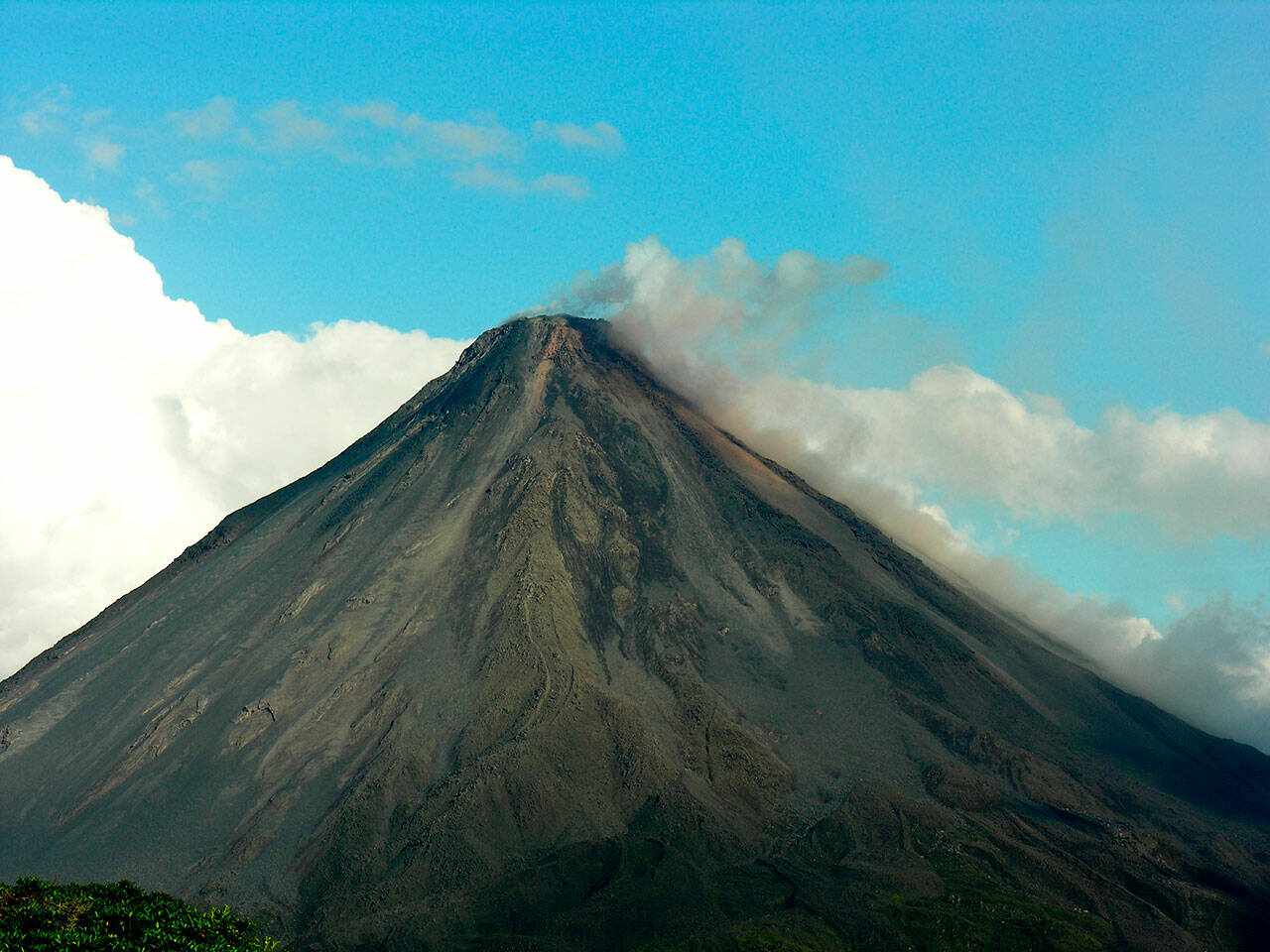
Oliver Acosta Arenal Volcano.
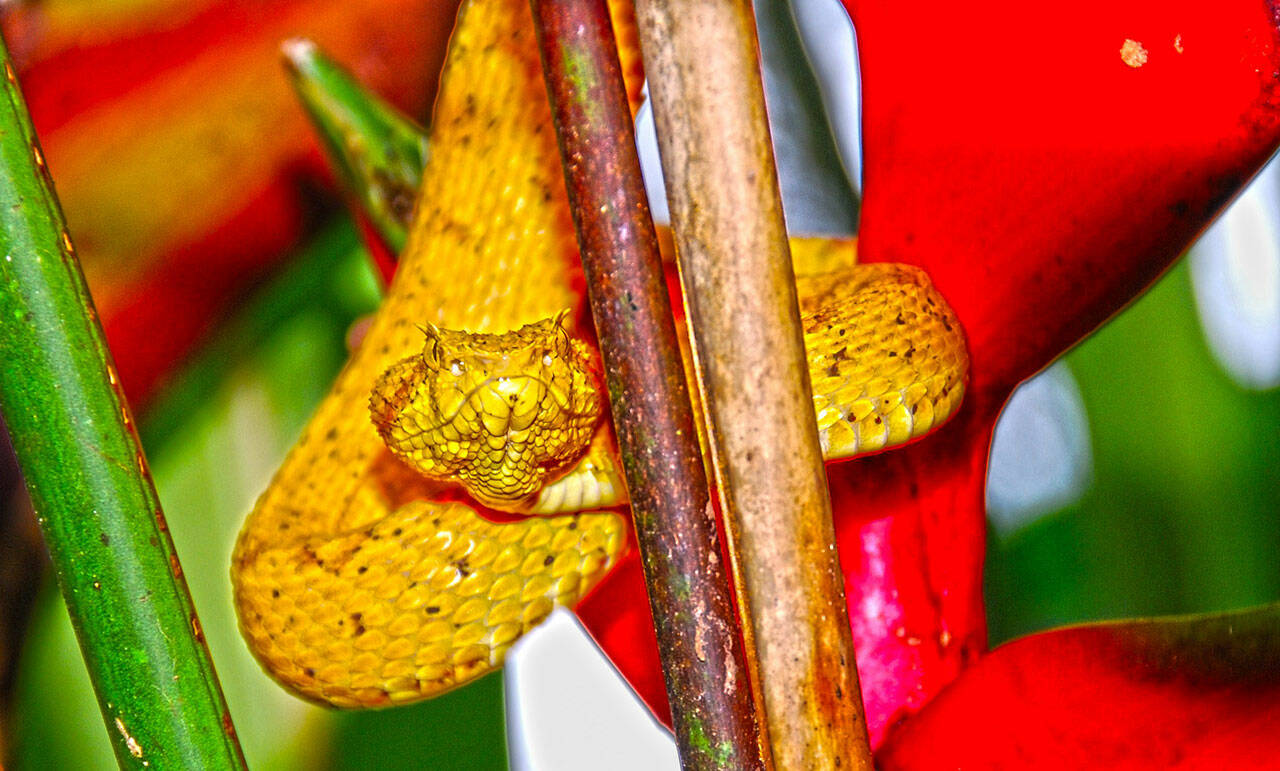
An up-close view of an Eyelash Viper. Photo by Oliver Acosta
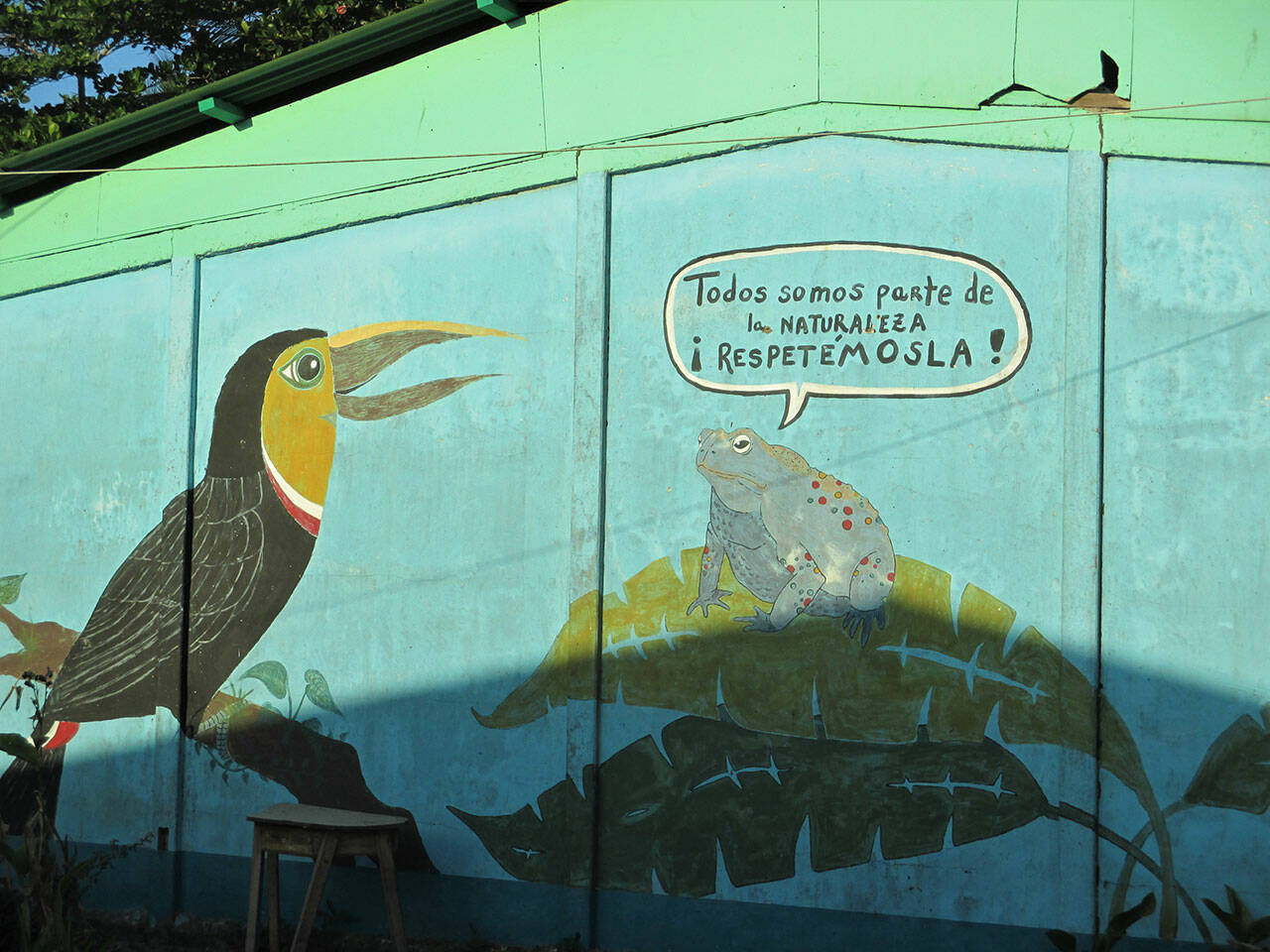
Artwork lines a wall at Tortuguero Elementary School. Photo by Mike Barton
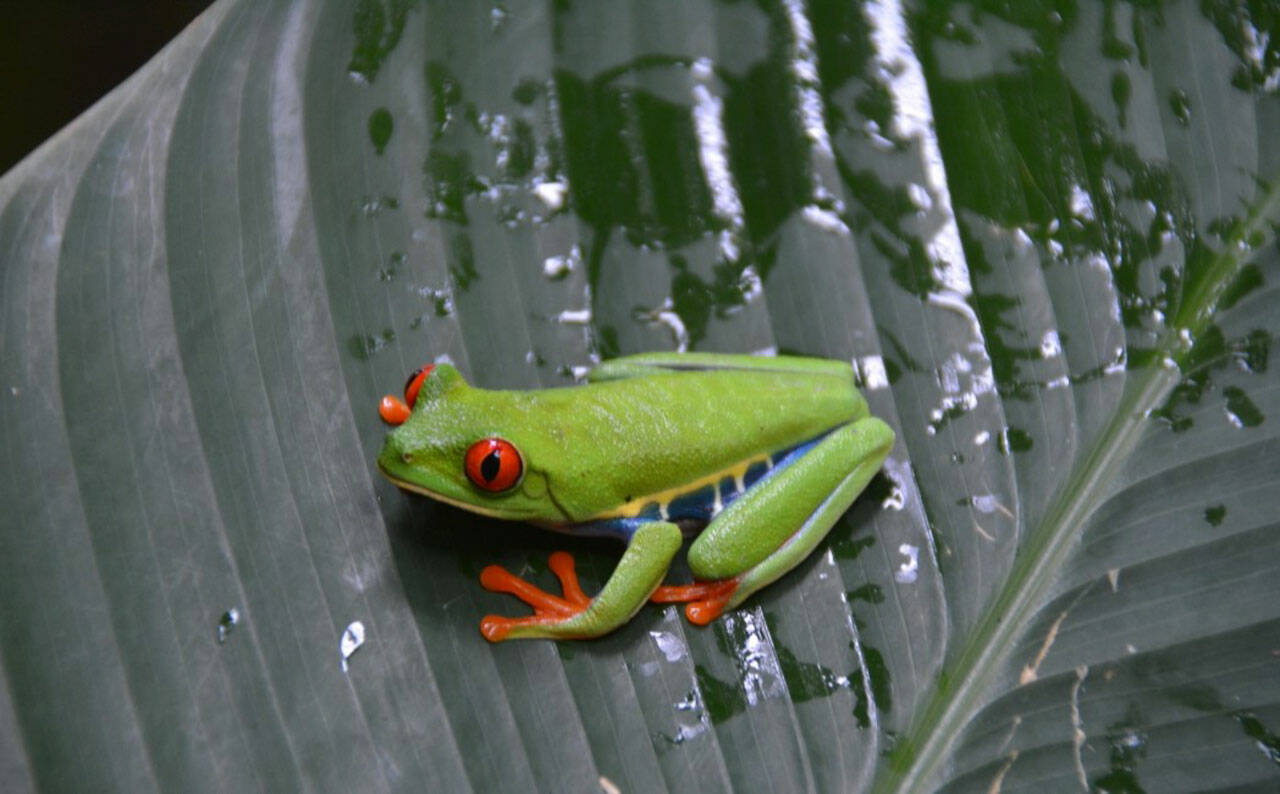
A Red-Eyed Tree Frog. Photo by Kermit Williams
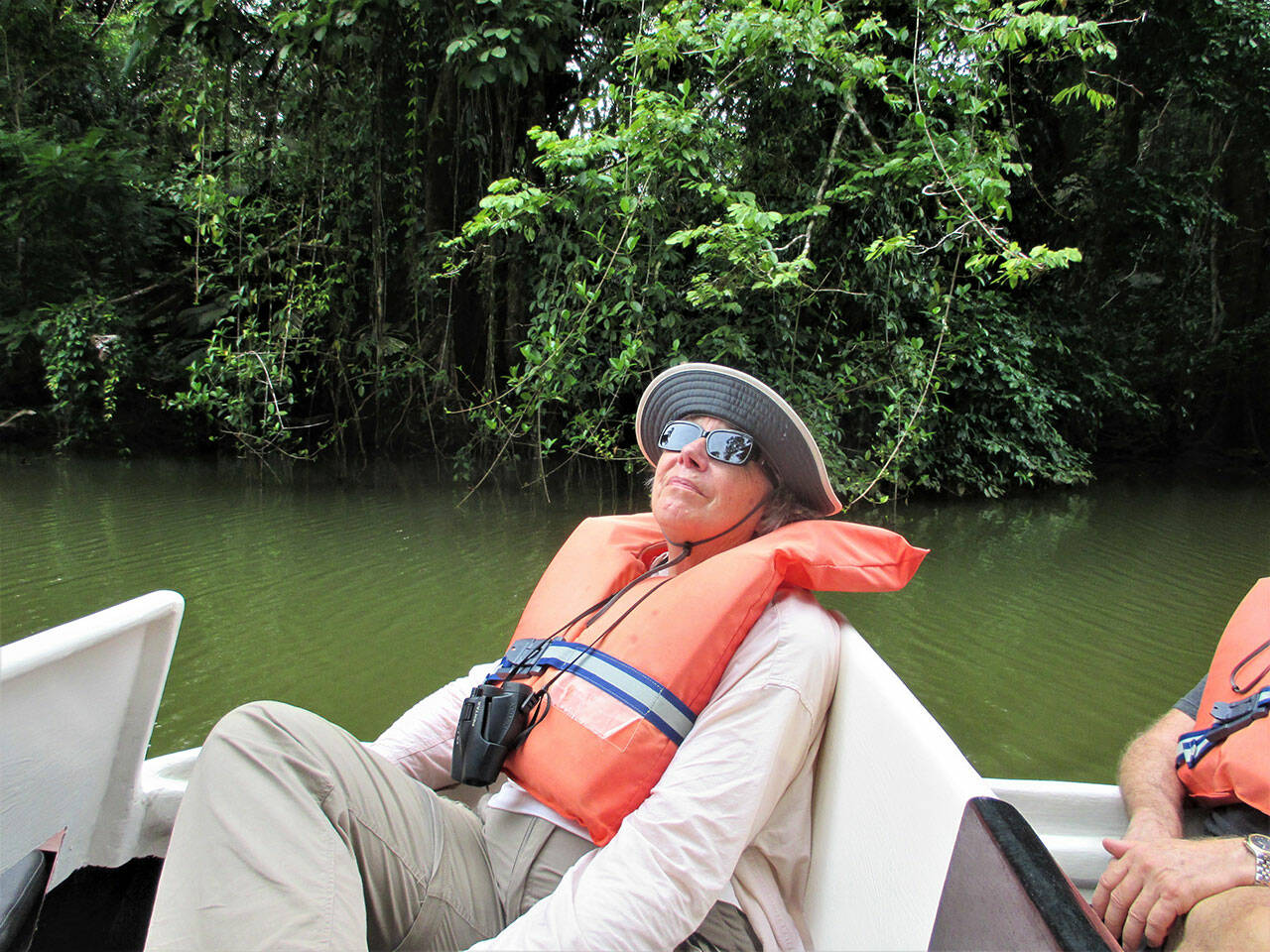
Boat riders watch for wildlife on the Tortuguero Lagoon. Photo by Mike Barton
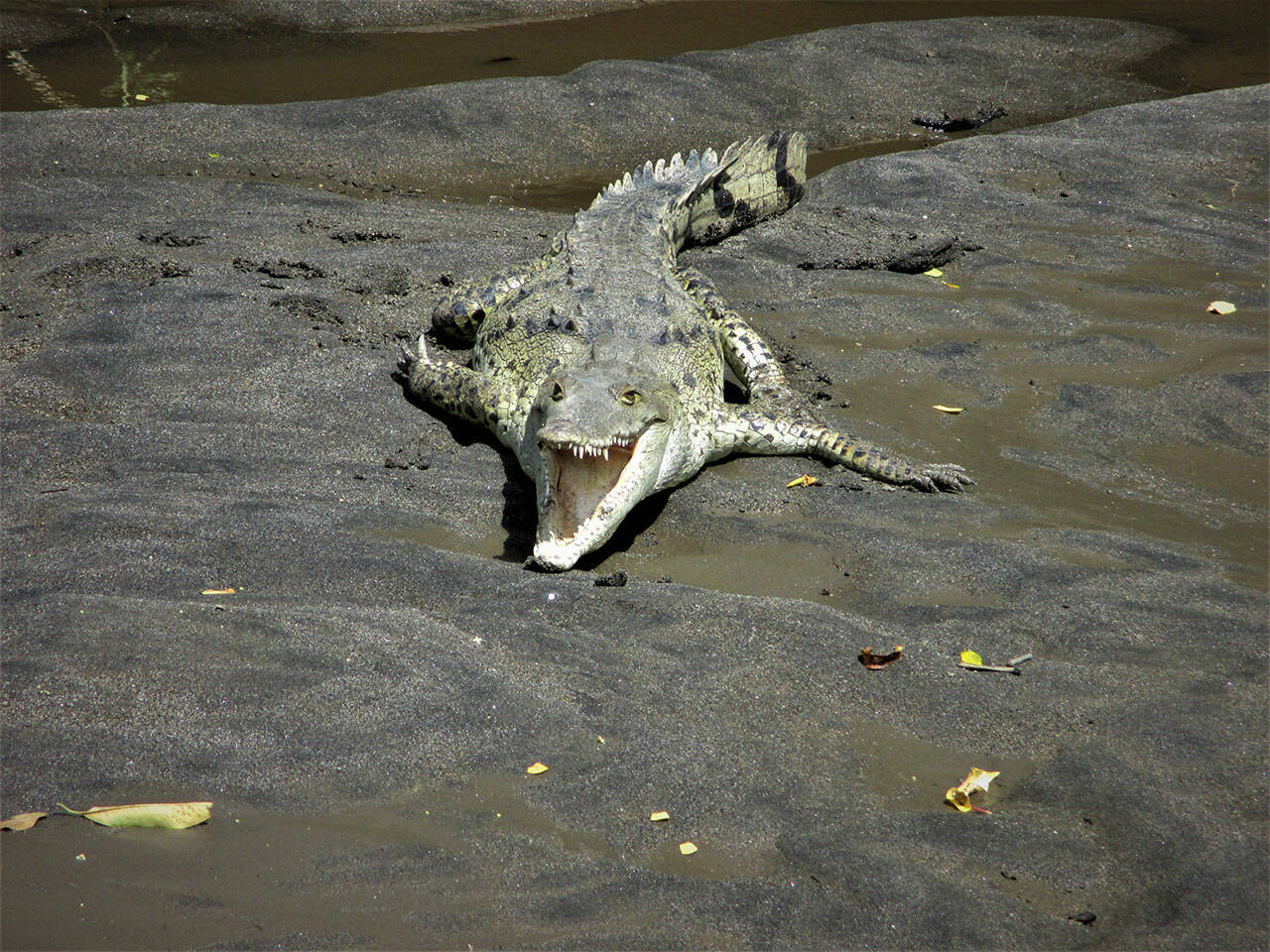
“Friendly” wildlife greet travelers on the banks of the Tempisque River. Photo by Mike Barton