A piece of history in the skies
Published 1:30 am Wednesday, November 10, 2021
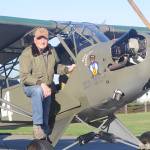
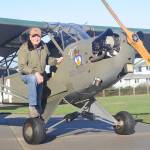
There’s a certain level of irony that one of the lightest and slowest planes used in World War II wound up being one of the most dangerous.
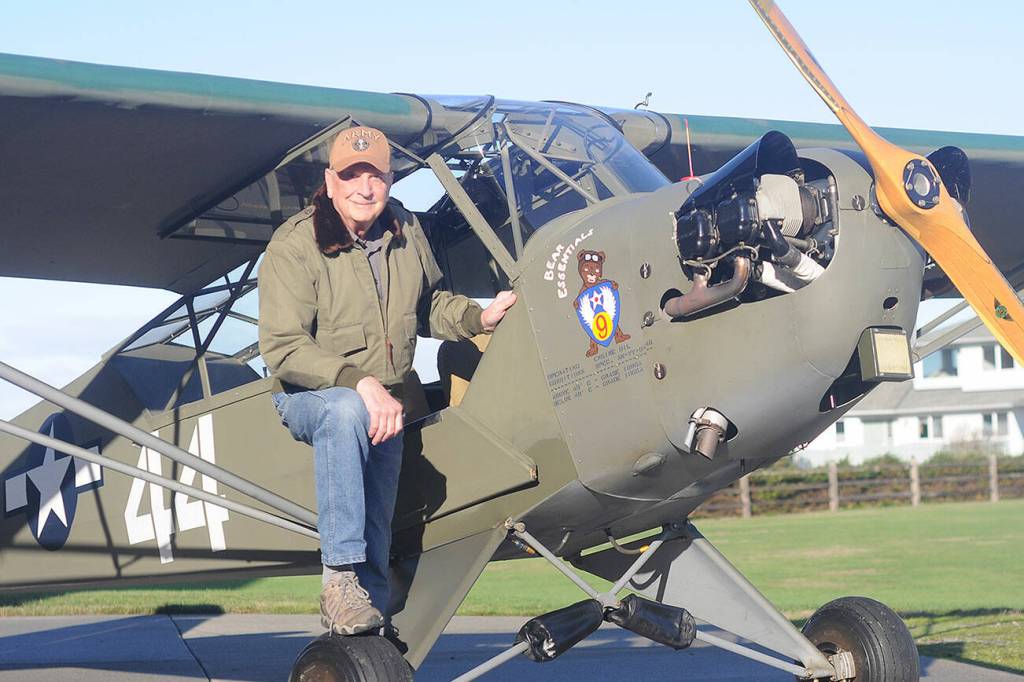
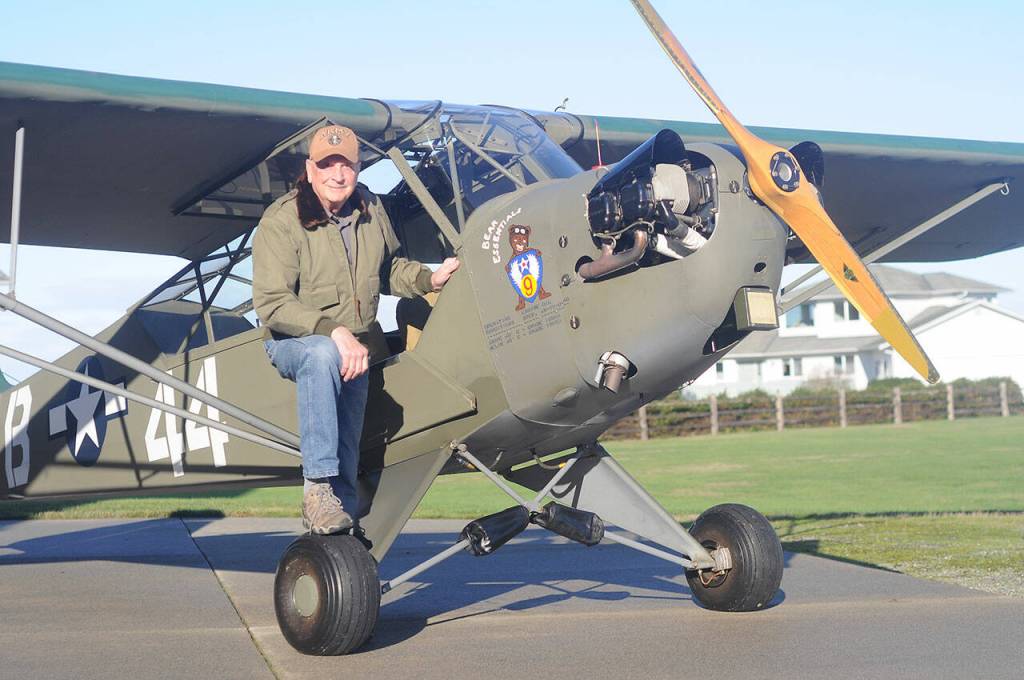
Sequim pilot David Woodcock wasn’t looking for any specific plane when he was thumbing through a trade publication when he happened upon a 1944 Piper Cub L-4H, a lightweight liaison aircraft used to spot enemy targets and help soldiers set the range for their artillery.
“I wanted a plane with a documented combat history,” Woodcock said last week.
“I didn’t realize how rare (this one is).”
Woodcock seems to have exactly that in his hangar near the Dungeness Spit. A native of Washington state and a longtime veteran of aerial photography, Woodcock — who is also a veteran having served as a dentist in the U.S. Air Force in the late 1960s and early 1970s — has more than 50 years experience flying general aviation and experimental aircraft and recently received the FAA Master Pilot Award. His photo adventures have taken him from the Pacific Northwest to above the Arctic Circle in Canada and from Alaska to the canyonlands of the American southwest.
So perhaps it was fitting that this type plane was so often used for aerial reconnaissance and photography as the military’s proverbial eyes in the sky.
According to Woodcock’s research, this particular L-4H was used in the 30th Infantry Division, Ninth Army’s efforts at the Battle of the Bulge, known as the bloodiest battle for U.S. forces in the Second World War.
Woodcock bought the plane in May 2020 but over a couple of months some structural issues within the wings and tail surfaces surfaced. It was disassembled and taken to the Port Townsend Aero Museum, where Mike Payne and Kevin Vogel spearheaded restoration efforts, which were completed in December.
“When I’m done flying, that’s where it’s going to go,” Woodcock said.
About the L-4H
A plane developed from the civilian Piper Cub series, this L-4H joined a group of planes that had a variety of responsibilities, from spotting for artillery to dropping off medical supplies, transporting officers — Woodcock has pictures of Dwight Eisenhower in one, and another with Gen. George Patton in another liaison aircraft. They were piloted by both officers and qualified enlisted personnel.
The nimble aircraft were able to take off and land on very small strips of land, and sometimes flew directly off the deck of Landing Ship Tanks (LSTs).
Woodcock’s plane was built, accepted by the Army Air Force, then disassembled and crated early April 1944. It was shipped to England in mid-May of that year and assigned to the Ninth Air Force. These planes, he said, were often unboxed and re-assembled on beaches or roads starting in Africa and Italy and later Normandy; some were flown to France over the English Channel with an auxiliary fuel tank. They were used in every theater of operation during World War II.
According to Woodcock’s research, a single battalion’s Piper Cub planes could, by spotting enemy positions, help deliver 50 tons of explosive steel. They could direct artillery from the Army or Naval guns.
The plane, Woodcock said, must have been maddening for enemies. A relatively slow aircraft (its cruising speed is 75 miles per hour, with a stalling speed of 37 mph), it gave anti-aircraft soldiers fits as they tried to adjust to its speed. The plane doesn’t have fuel tanks in the wings, he said, so often bullets would pierce the fabric wings and the plane would simply fly on.
One L-4H, built on the same day as Woodcock’s aircraft, outfitted late in the war with three M9A1 bazookas under each wing was credited with six German tank kills, earning Major Charles Carpenter’s aircraft the nickname “Rosie the Rocketer.” (“Rosie” now resides at the Hangar Annex of the American Heritage Museum in Massachusetts.)
L-4Hs are two-seaters, with a spot for the pilot in front and another for an observer, who could face forward or back depending on the mission. Many of the planes in Europe replaced some of the wing aluminum fairings with plexiglass just above the pilot’s head for better visibility to help evade German fighter aircraft.
The planes were used in all kinds of battles and conditions, with some being outfitted with skis. Pilots had to make repairs in the field, Woodcock noted, and his restoration supervisors even found some evidence of welding in the fuselage structure that indicates it was repaired during its war service.
After the war was over, the L-4Hs saw their stars and stripes painted over and most were surplussed Woodcock said. However, a couple of hundred in Europe, like his, wound up getting shipped back to the United States. Woodock’s aircraft was purchased by a pilot for $300 and returned stateside in 1947.
The restoration puts Woodcock’s particular Piper Cub very close to its original state; colors and markings are period correct and only a slight change in power (90 horsepower rather than 65) set it apart.
On display
Those interested may get a quick glimpse of Woodcock’s Piper Cub this December: he’s scheduled to give a fly-over at Sequim View Cemetery during the Wreaths Across America event scheduled for Dec. 18 at Sequim View Cemetery, an event hosted by the Michael Trebert Chapter of the Daughters of the American Revolution. This fly over will be 77 years after the start of the Battle of the Bulge on December 16, 1944.
But others who want to see it up close will have a chance during an Armed Forces Day celebration being planned for May 21, 2022, in Port Angeles, Woodcock said. That event will look to include a fly-in with the Cascade Warbirds group, participation from the Experimental Aircraft Association’s Young Eagles program and more.
Woodcock, who hopes to take part in World War II reenactments with a group called Friends of Willie and Joe, said he hopes to give folks a chance to see the L-4H and other military planes and vehicles, particularly the younger visitors.
“It’s important to try to instill kids with the memory of all of this history,” he said.