PA Food Bank plays critical role as regional distribution hub
Published 4:30 am Wednesday, June 3, 2026


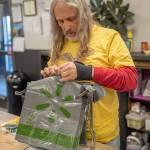
The longest amount of time Kevin Perry spent at one job didn’t start out as a job at all.
He and his girlfriend Megan, who grew up on San Juan Island, relocated to the North Olympic Peninsula from Oregon in 2015. They had visited Megan’s dad in Joyce several times and both quit their jobs to come help him with a temporary construction project. They ended up staying because they fell in love with the area, buying a house in Port Angeles proper in March 2020 — the month the COVID-19 pandemic hit.
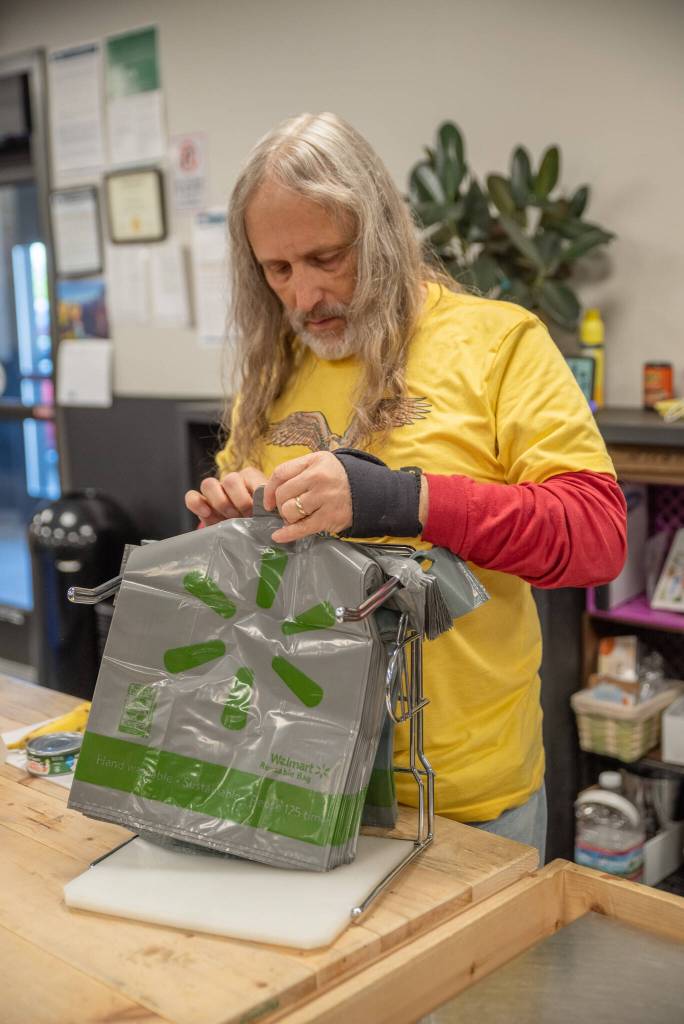
While helping Megan’s dad build a geodesic dome, the otherwise temporarily unemployed Perry felt he should do something meaningful, like volunteer work. So one day he walked into the Port Angeles Food Bank.
He never really left.
Within two weeks of volunteering, the warehouse manager abruptly quit. Then-Executive Director Jessica Hernandez turned to Perry and asked if he would apply for the job.
“I said, ‘I don’t know anything about anything when it comes to this kind of work,’” Perry recalled. ‘And she said, ‘You’ll figure it out.’”
He did more than figure it out. Over the next decade, Perry — along with Emily Dexter, who took over as executive director in 2018 — helped guide the Port Angeles Food Bank through a period of significant growth.
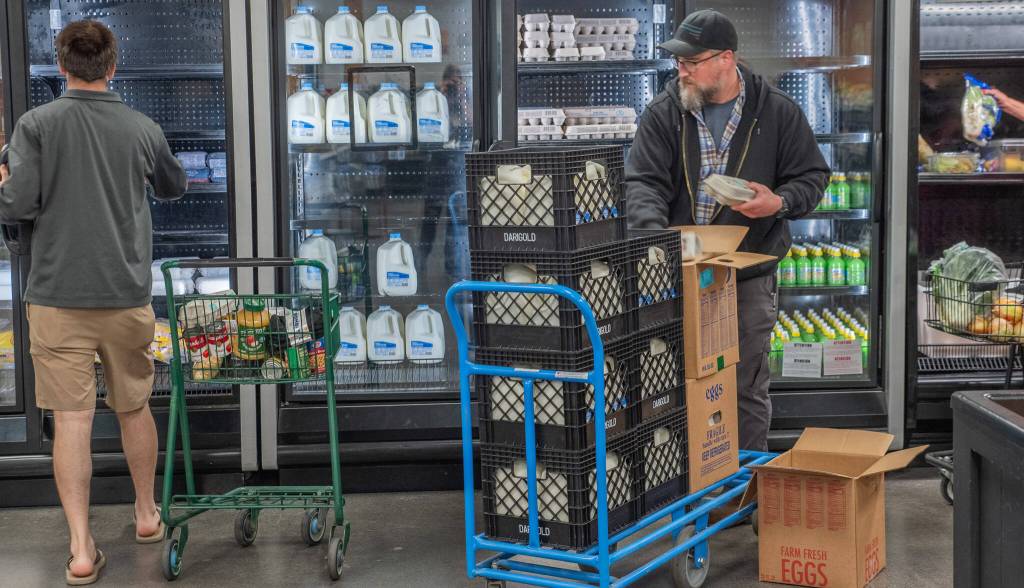
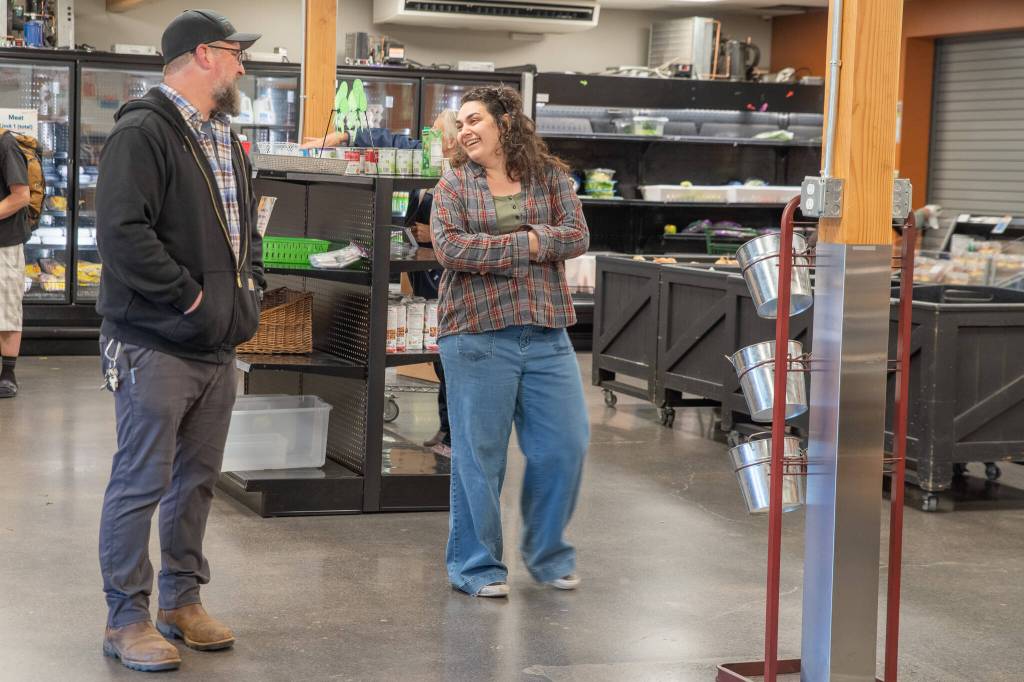
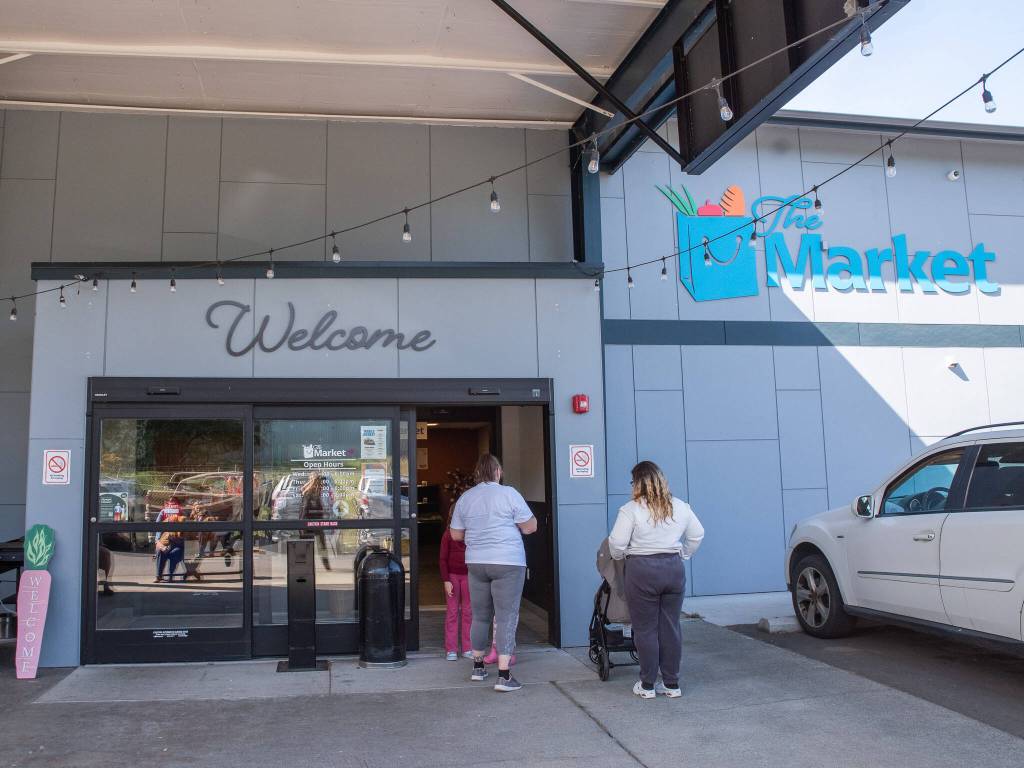
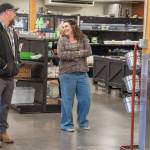
Perry remembers the old Valley Street site as “an old garage, like a mechanic garage setup,” where people shuffled single file down a narrow hallway to get food. Today, the food bank has traded that cramped corridor for a sprawling former beer distribution warehouse, complete with industrial freezer space, a market-style shopping area and plenty of storage room.
In late 2025, the food bank became an RDO — a Regional Distribution Organization — under a contract with the Washington State Department of Agriculture (WSDA). It serves as a central hub that receives large truckloads of food and then redistributes the food to smaller food banks and pantries across Clallam and Jefferson counties, including Forks and Sequim. As an RDO, the Port Angeles Food Bank’s mandate now stretches from Port Townsend to Neah Bay.
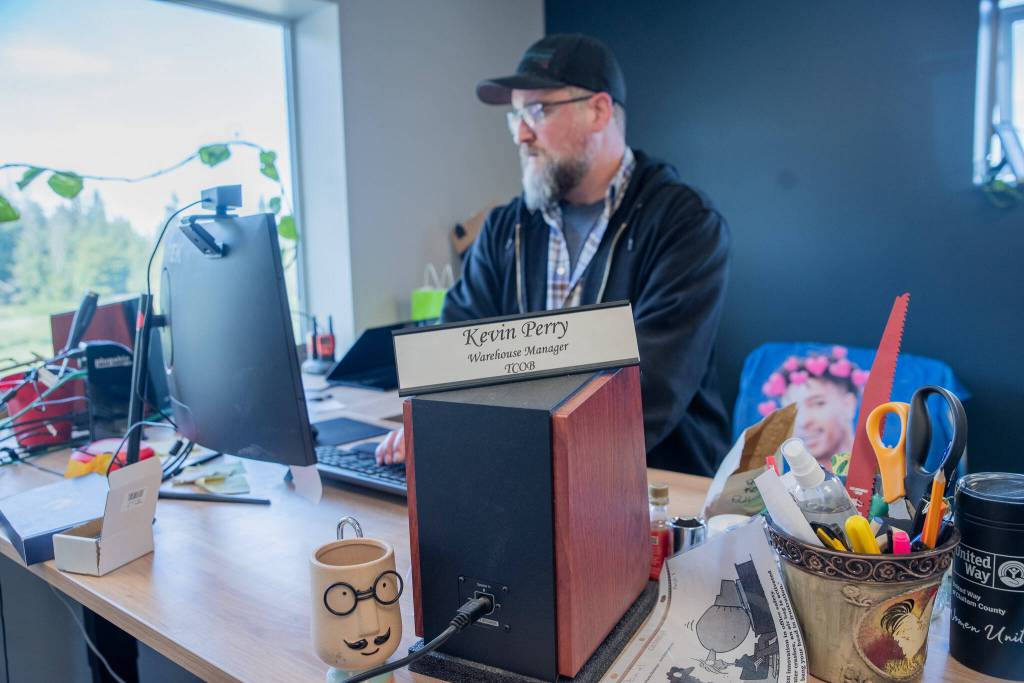
Perry, 44, is no longer warehouse manager, but operations manager. It’s a bigger role that comes with more responsibility, and an office.
“I’d worked (seasonal jobs) in Alaska, helped my parents build a little farm, worked for an attorney, even ran pool maintenance at a water park,” said the California native. “I was just all over the map. I didn’t have a career before this at all.”
Not only has Perry found a career, he has found a calling. A mission.
“It’s a really rewarding way to spend my time and to give back,” he said. “I’m paid to play Robin Hood, except I don’t have to steal any of it. I just get to give it away for free.”
Perry has found that he can calm others who are under duress.
“I don’t have a lot of highs, but I don’t have a lot of lows either,” he said of his low-key, even-keel personality. “So I can kind of maintain a balance when people are really stressed out … I think I’m just good at meeting people where they’re at. People just need a little kindness and a little help.”
He described times during the early days when the food bank had closed and he needed to hurry to catch the bus back to Joyce, but then he would see someone waiting outside. He knew that if he stopped to help, he might miss his bus and not get home until much later — but he also knew they needed help.
“I really liked being the person who could say, ‘Okay, I see you. I’ll help you. I got you,’” Perry said.
Grave responsibilities
For both Perry and Dexter, their titles, and the food bank’s standing as an RDO, will likely bring intense pressure and grave responsibility in the event of a Cascadia Subduction earthquake — if they themselves survive it.
“It’s not an if, it’s a when,” Perry said of the catastrophic event that could strike at any time, destroying buildings, taking out roads and bridges, cutting off supply lines, and likely causing a tsunami.
He said he learned in Community Point of Distribution (CPOD) training that the state is planning for a “giant earthquake” on the Cascadia fault and that, in that scenario, officials expect “every bridge” on the Peninsula to fall, creating about 13 isolated pockets of communities along the north coast.
Each pocket will need a CPOD, where food and supplies can be brought in by helicopter or boat and distributed without chaos. The Port Angeles Food Bank, Perry said, is very likely to be one of those points.
Dexter is candid that they haven’t spent as much time as they should preparing specifically for what Cascadia would look like. She said they’ve been largely in “recovery mode” since the pandemic, dealing with ongoing, everyday crises like the end of emergency SNAP benefits, new work requirements, the rising cost of living and increased demand on the food bank.
If Cascadia hits, Dexter said the core question in that scenario will be how to move food if trucks, vans and normal transport aren’t available, and how to reach people if they can’t get to the food bank – an overwhelming task to take on.
“We don’t have the answer to that yet,” she said.
Evolution of the food bank
When Perry first began volunteering at the Port Angeles Food Bank, it was housed at 402 S. Valley St. Compared to its current facility at 632 N. Oakridge Drive, the former site was bare bones.
“We had basically a waiting room with some old church pews in it, and then one long hallway, and that was where people got their food,” Perry said. “We called it going down the line, because it was basically just enough room for single-file people to just go one direction the whole way, and there’d be food on either side.”
Volunteers lined the tight corridor, helping guide people as they moved through. It was functional, but not dignified.
“It was more like herding cattle than a shopping experience,” he said.
The hours were limited and inflexible. The food bank was open Monday, Wednesday and Friday from 1 p.m. to 3:30 p.m. People could only come to the food bank once a month. Anyone working a regular daytime job often had to take time off just to get food.
Despite the official short hours, Perry remembers nights when he didn’t leave until after 5:30 p.m. or even 6 p.m. — hours after the food bank was supposed to have closed. As long as people were still inside the building, he and the volunteers kept going.
“As a function of the layout of that building, as long as people kept leaving through the door, that would open it up for somebody else to come in,” he said. “As long as people were showing up, we would choose to help.”
As the food bank continued to help more and more people, its leadership began to dream bigger. Dexter looked beyond the cramped Valley Street layout and saw the need for more space, more storage and more capacity.
“She’s very ambitious,” Perry said of Dexter’s desire for the food bank to be able to help as many people as possible. “Without her, I don’t think any of this would have happened. She said, we need to do more. We need more food storage. We need a better building. We need a better location — and she made it happen.”
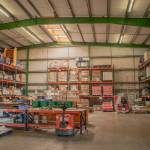
The opportunity came in the form of a former Budweiser distribution facility — a large warehouse-style building with loading docks and plenty of room to grow. When the food bank acquired the property in 2020, it had been empty for some time.
“When we came in, it was just empty. There was nothing here,” Perry said. “I don’t know how long it had been empty, but it looked like they hadn’t lived here for a while.”
The organization spent roughly three years renovating the space. They installed a walk-in freezer, created dry storage areas, rebuilt office space, constructed a market with more headroom by raising the floor of the second story, and added a commercial kitchen and classroom/meeting space.
“It was a construction site for the better part of three years,” Perry said. “I think ultimately we came out on the other end of that really well off.”
The move also came with a shift in how the food bank saw itself and how it would operate. No longer just a small local pantry, the Port Angeles Food Bank was positioning itself to be a regional hub.
As staff and programming expanded, so did Perry’s responsibilities. His original title of warehouse manager — which had essentially meant he was in charge of everything that wasn’t administration — no longer fit.
“With the expansion and the kitchen and all the renovations, the titles became more important,” he said.
Dexter offered him a choice: manage the kitchen, which appealed to him as someone who loves to cook, or step into a broader role overseeing operations.
“She really wanted me to be the operations manager, because I’d been there the longest … and she thought I would do better at the management stuff when it came to the operations of the food bank itself,” Perry said.
He took the operations job.
Today, the Port Angeles Food Bank has grown from two fulltime employees and one part-time driver to 14 fulltime and two part-time staff, plus a deep roster of volunteers. The old three-days-a-week, once-a-month model has been replaced by more flexible, frequent access.
“People could only come once a month, and now they can come twice a week,” Perry said. “We were only open three days a week, and now we’re open four on site, and we have mobile distribution five days a week.”
Perry now spends much of his time upstairs at a desk — answering emails, coordinating truckloads of food from statewide partners, managing data on visits and pounds distributed, and troubleshooting logistics for a network that extends across two counties.
According to the food bank’s data for 2025, it gave out or redistributed more than 2.14 million pounds of food to clients, partner agencies and/or other local organizations, and saw more than 48,000 visits to The Market, the shopping experience inside the food bank, and its Mobile Market.
Perry sometimes misses the connection with clients that he used to have, but he sees the bigger picture.
“I don’t get a lot of face time with the clients anymore, which is a little bit of a bummer,” he said. “But ultimately, I still get a kick out of the fact that I get to kind of play a version of Robin Hood.”
A standout on the Peninsula
Walk through the Port Angeles Food Bank’s current building and one thing becomes clear: this is not a typical food bank.
“Every other agency on the peninsula” pales in comparison when it comes to storage capacity, Perry said.
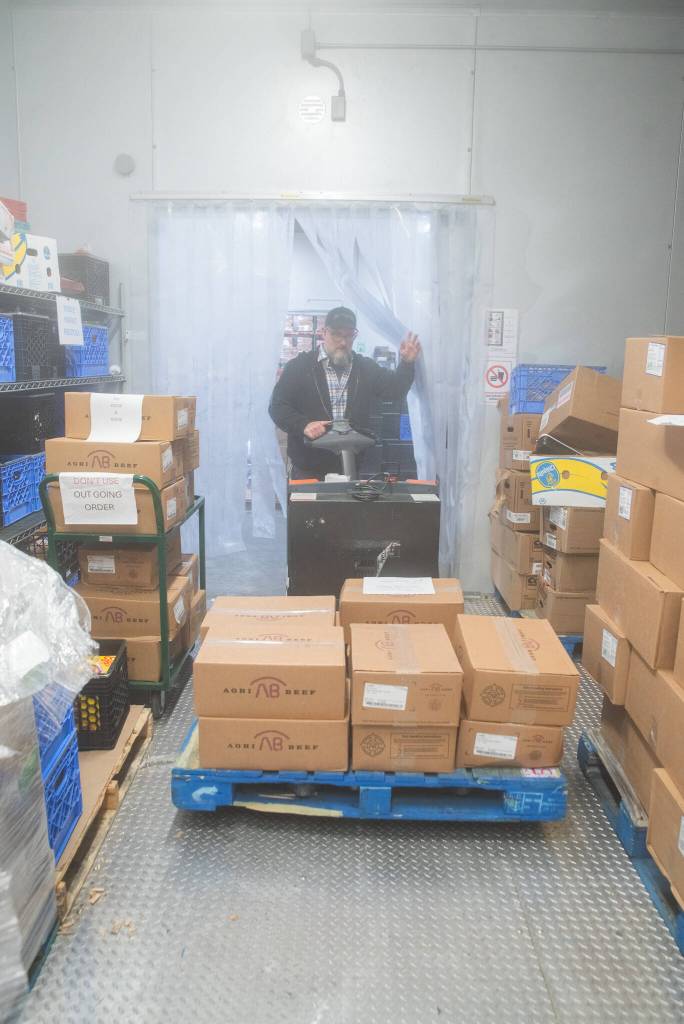
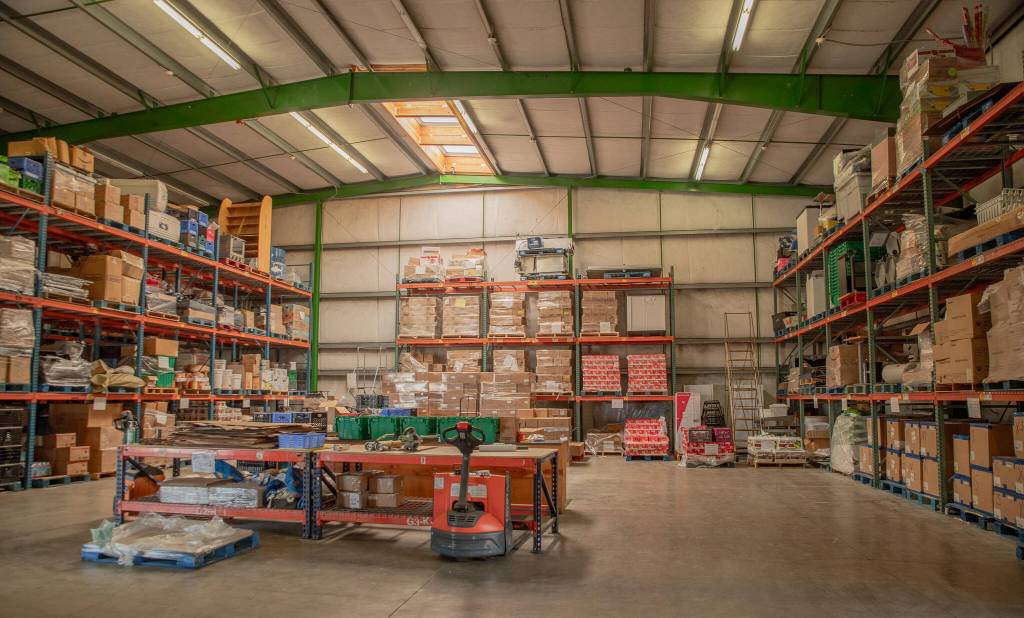
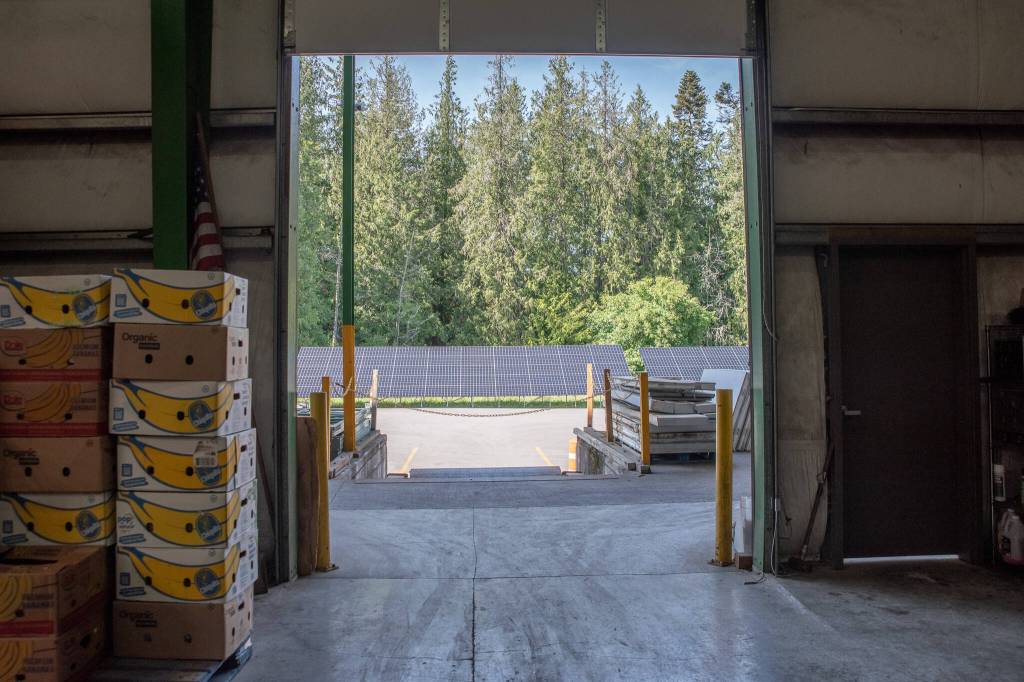
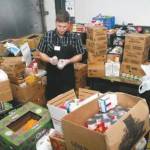
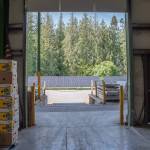
The facility features a large loading dock where semi-trucks can pull in, unload pallets and be on their way. Inside is a walk-in refrigerator (dimensions 28’ x 29’ x 11’2”), a massive sorting room (dimensions 43’ x 99’ x 20’) and the walk-in freezer (dimensions 22’5” x 24’5 x 11’2”). Perry said the freezer is tall enough to allow for stacked pallets, maximizing vertical space, and can store far more frozen food than any other food bank or partner organization in the area. Food is stored there for the Sequim and Forks food banks.
“There are a couple key logistical elements that separate us from Sequim Food Bank and from Forks and from even some of the other agencies that we work with, like Salvation Army and Serenity House,” he said. “They don’t have anything like this kind of space — certainly not dry storage, but definitely not freezer storage either.”
The sorting room can be used as a massive refrigerator, Perry said. He noted that largely due to the concrete floors, the room gets quite cold in the wintertime.
“In an emergency … if the earthquake hits, and we need to store a bunch of food … we could (store it) here,” Perry said as he stood in the expansive space.
The nonprofit is in the process of installing two additional walk-in units — another freezer and another refrigerator — inherited from the Olympic Community Action Programs (OlyCAP), which used to hold the regional distribution contract before stepping away from food banking.
Outside, an older external freezer, brought over from the Valley Street location, continues to serve as overflow storage.
All that capacity translates directly into flexibility. Smaller food banks and agencies that lack freezer or refrigerator space can accept larger-than-usual donations because Port Angeles can hold the surplus.
“It gives us the opportunity to really help where there wasn’t any option before,” Perry said. “It means storing things for people or for agencies and letting them take it a little bit at a time, rather than being forced to say, ‘That’s too much, (we) can’t take that,’ even though they might want it,” Perry said.
Becoming an RDO
That storage capacity and infrastructure did more than just ease day-to-day operations; it helped elevate the Port Angeles Food Bank into a formal role as a Regional Distribution Organization for WSDA.
Food from statewide partners — including Northwest Harvest and Food Lifeline — now flows through Port Angeles before heading out again to food banks and pantries across Clallam and Jefferson counties.
“A lot of the food that’s coming to the peninsula will come here first, and then it will be redistributed again from here,” Perry said. “So either they’ll come to pick it up, or we’ll go take it to them.”
Port Townsend, the Tri-Area, Brinnon, Quilcene, Forks, Neah Bay, La Push, and several tribal and rural communities depend on that redistribution. Some of those smaller sites have extremely limited staffing and space — in some cases, Perry said, operations are run out of what looks like a house or a garage.
To qualify as an RDO, a food bank must meet specific requirements set by WSDA: a minimum amount of freezer and refrigerator storage, a functional loading dock that can handle large trucks, and an overall capacity to move large volumes of food quickly and safely. There are only about nine RDOs in the entire state, according to Perry. He added that the food bank’s ability to qualify as an RDO was largely due to the Oakridge Drive warehouse.
Despite the food bank’s growth, Perry recognizes its limitations.
“We’re not going to fix the fact that we have people in our community that aren’t able to consistently provide for themselves,” he said. “That’s a much broader problem.”
As the economy, federal budget cuts and the risk of a Cascadia earthquake loom, Perry and Dexter, along with other staff and volunteers, are navigating challenges together. Perry and Dexter, in particular, are a good team. Perry is “the calm to my crazy,” said Dexter, explaining that he slows down her big ideas long enough to ask the right questions. His more methodical way of thinking complements her visionary approach, she said, adding, “I absolutely would not want to be doing this without him.”
Perry believes the work they are doing matters profoundly.
“It’s not just a job,” he said. “It’s a really rewarding way to spend my time and to give back.”
The Market at the Port Angeles Food Bank is open Wednesday-Friday, 2 p.m. to 6 p.m. and Saturday from 11 a.m. to 2 p.m. Business hours are 8 a.m. to 3 p.m. Monday and Tuesday, and 8 a.m. to 5 p.m. Wednesday-Friday. For more information, visit portangelesfoodbank.org or call 360-452-8568.


Best of Olympic Peninsula