Moonlighting tails: Peninsula Pet Emergency marks first year
Published 2:30 am Wednesday, June 24, 2026

When a beloved pet falls seriously ill in the middle of the night, North Olympic Peninsula residents once faced an agonizing choice: wait until morning and hope for the best, or make a dark, potentially dangerous drive to Poulsbo or beyond.
For the past year, there has — finally — been another option.
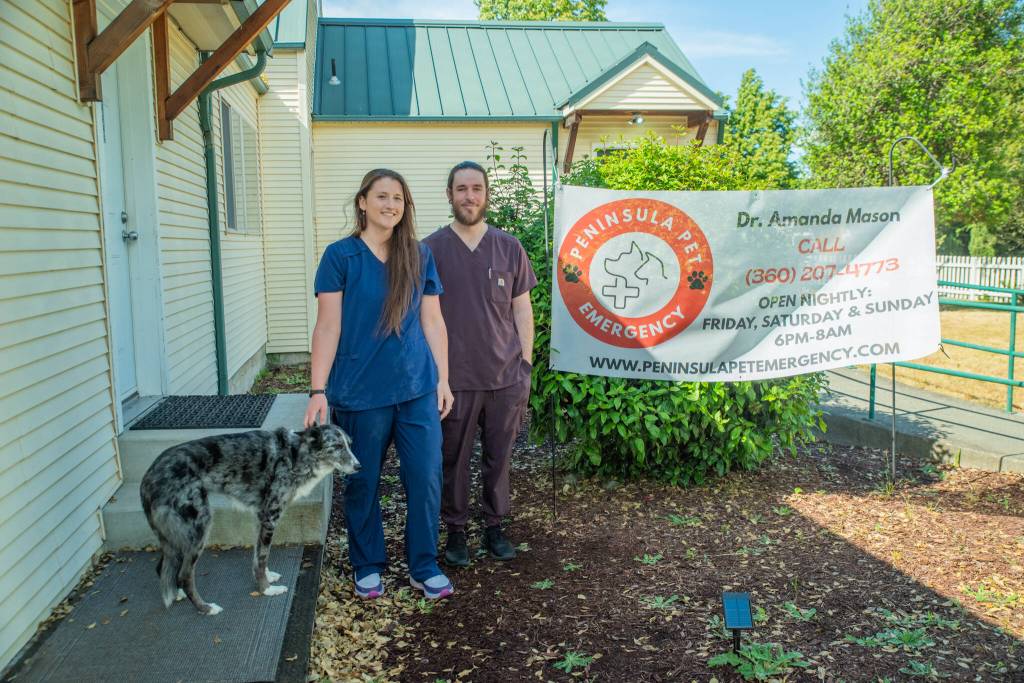
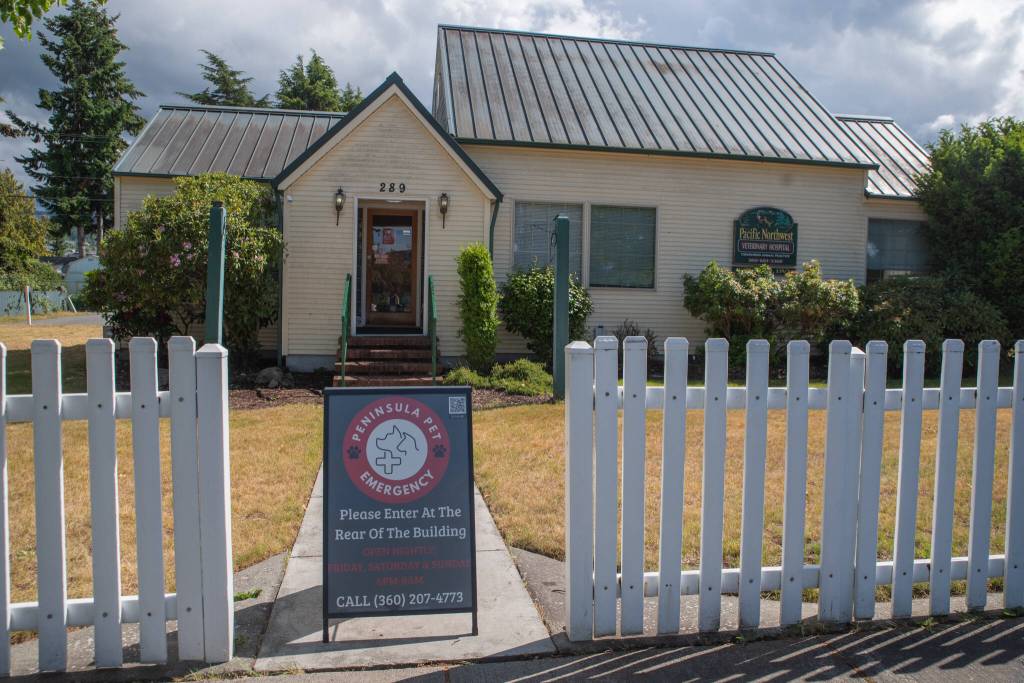
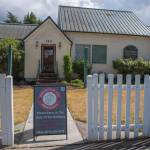
Peninsula Pet Emergency, operating overnight on weekends out of Pacific Northwest Veterinary Hospital at 289 W. Bell St. in Sequim, is filling a longstanding gap in after-hours veterinary care.
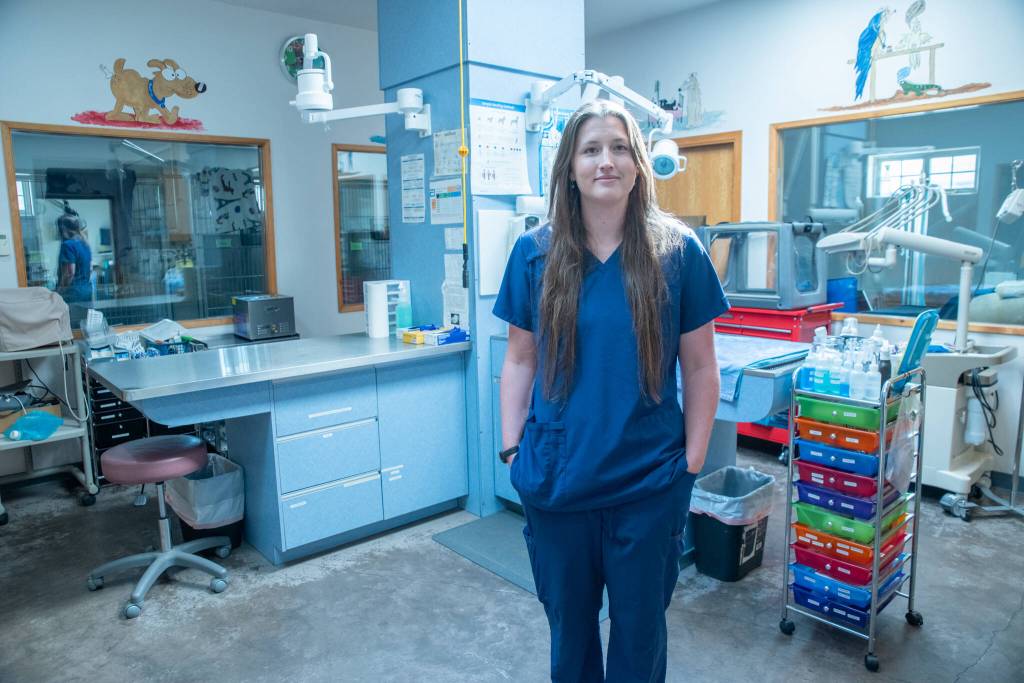
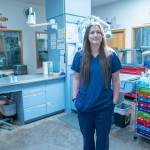
Behind the operation is Dr. Amanda Mason, a 33-year-old emergency veterinarian recruited by Pet Emergency Group (PEG), a grassroots effort to bring emergency veterinary services to the peninsula.
In its first year, Peninsula Pet Emergency treated about 1,200 patients.
“That speaks volumes to what that need actually is,” Mason said. “And the need is even greater than that, because I’m only covering three nights a week.”
For Mason, the clinic represents more than a business opportunity. It is an attempt to build a different model of emergency veterinary care — one that is smaller, more collaborative and focused on access.
A passion for pets
Mason’s care for animals began long before veterinary school.
She started working with animals at age 12 as a shelter volunteer, then became a kennel assistant and later a veterinary assistant and technician. She spent nine years in Texas — attending West Texas A&M University and later veterinary school in College Station — before moving to Washington in 2020.
Her first veterinary job was at an emergency hospital in Poulsbo. She later worked shifts at hospitals across Western Washington, including in Sequim.
Over time, she became increasingly uncomfortable with changes in the veterinary industry. Most emergency hospitals today are corporate-owned, she said, comparing the shift to the difference between a local market like Sunny Farms and a national chain like Walmart.
As corporations acquire formerly independent practices, she said, operating costs increase alongside expectations for growth and production.
Large specialty hospitals offer advanced services and equipment, but they also carry overhead that can translate into bills many owners struggle to afford.
Mason frequently saw clients forced into what she calls “economic euthanasia” — euthanizing an animal because treatment costs were out of reach.
“It’s hard to see people making medical decisions because of finances, not because of what was best for their pet,” she said.
The financial pressure intensified during and after the pandemic as supply costs rose.
Unlike human medicine, veterinary care is largely paid out of pocket, and pet insurance remains uncommon. Even when owners have insurance, many plans require payment upfront before reimbursement.
“In today’s time, you really should have … $5,000 on a credit card, or in a savings account, or something that can be accessed in an emergency for your pet,” Mason said.
Years of watching clients struggle shaped her vision for a smaller, lower-overhead emergency practice.
That vision became more concrete in 2023, when she was contacted by Sally Rogers of PEG.
Rogers had spent months gathering information — surveying pet owners, talking with veterinarians and documenting the number of peninsula residents traveling long distances for emergency care.
The results pointed to substantial unmet demand.
Corporate groups showed little interest in opening locally, Mason said. The population base was too small to meet their business expectations, and there was no existing emergency hospital to acquire.
At the same time, traditional after-hours coverage had eroded.
Years ago, local veterinarians more commonly rotated emergency calls. But burnout, staffing shortages and rising caseloads — especially after COVID — made those arrangements increasingly difficult to sustain.
One exception was Dr. Linda Allen, owner of Pacific Northwest Veterinary Hospital, who continued providing emergency coverage for her own clients.
Allen’s experience regularly seeing several emergency cases each weekend reinforced what Rogers’ research had already suggested.
To Mason, the region’s challenges were clear: long travel distances, an older population, limited options and no reliable emergency safety net.
One memory from her time in Poulsbo remains especially vivid.
Mason received a call from a pet owner on the peninsula whose animal was dying while traffic was stopped near the Hood Canal Bridge.
The family could not reach emergency care in time.
“All we could do was talk them through being there with their pet,” Mason said. “That phone call specifically stuck with me for years.”
Grassroots effort
Opening Peninsula Pet Emergency didn’t require constructing a new hospital; it simply required clever collaboration.
Rogers connected Mason with Allen and the two created a shared-space arrangement.
Peninsula Pet Emergency rents space and equipment from Pacific Northwest Veterinary Hospital and operates Friday through Sunday from 6 p.m. to 8 a.m.
The arrangement allowed Mason to open much faster and with lower startup costs.
She describes the model as “essentially moonlighting” inside an existing daytime practice.
Without the expense of constructing and staffing a standalone hospital, she said the clinic can operate more efficiently while keeping costs lower than large specialty facilities.
Mason believes this type of collaboration used to be more common before corporate ownership became more widespread.
Her goal was not to build a large asset, but to simply fill a need.
“I just wanted to make a living,” she said — enough to support herself, compensate staff fairly and provide care locally.
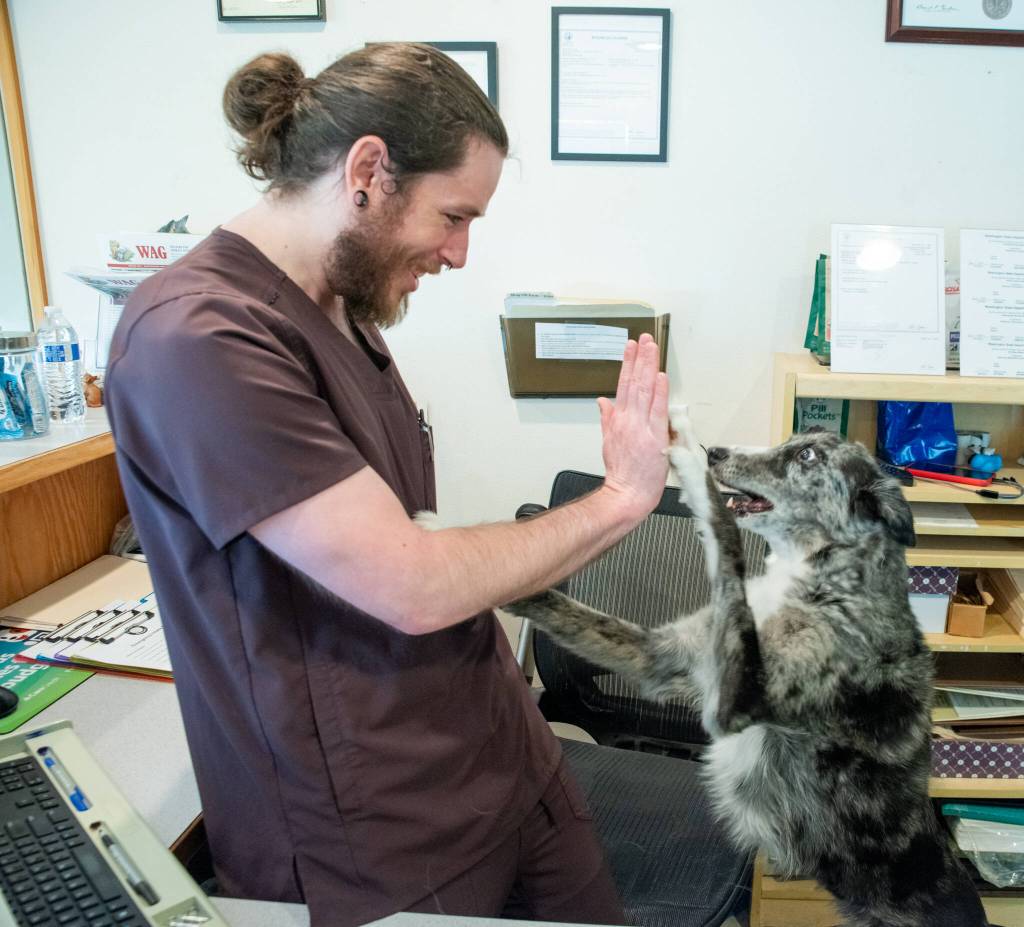
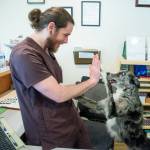
The clinic began with a tiny team: Mason, her husband Nick Mason and Allen’s son, a licensed veterinary technician.
They opened without a receptionist.
Everyone answered phones, checked clients in and helped with patients.
“If I wait until I have everything I need, I’ll never open,” Mason recalled telling herself.
As demand grew, so did staffing. There is now a receptionist for earlier evening hours, with Nick handling those duties in the wee hours.
Their quietest night brought two patients. Their busiest brought 14. Emergency patients are triaged by severity, but multiple critical cases arriving simultaneously is common.
“There were times it was standing room only,” Mason said.
Accessible care
Mason is careful not to promise emergency veterinary care is affordable. Instead, she talks about accessibility.
Peninsula Pet Emergency accepts five external financing options that allow eligible clients to arrange payment plans. Those services carry costs for the clinic, but Mason sees them as worthwhile.
“I’d rather pay a percentage and treat the pet,” she said.
The clinic also participates in an angel fund established last year to help owners who have exhausted financing options and face significant hardship.
The fund operates through a separate 501(c)(3) organization, which reimburses approved cases.
So far, more than $3,700 has supported care for local animals.
Mason said she constantly balances sustainability with helping as many people as possible.
Sometimes that means treating patients outside the clinic’s normal focus.
Though primarily equipped for dogs and cats, the clinic has occasionally treated rabbits, guinea pigs, an opossum and even a robin struck by a car.
With help from staff experienced in wildlife rehabilitation, the bird received stabilization and pain management overnight.
The next morning, Mason and her husband returned it to where it had been found and released it.
“It flew away,” she said.
Mason has worked nights for much of her adult life and maintains a demanding schedule. For her work at Peninsula Pet Emergency, she stays awake for extended stretches to transition into weekend overnight shifts, then spends Monday shifting back to daytime hours.
“It does take its toll,” she said.
But she values the flexibility and the sense of purpose.
What ultimately keeps her in Sequim, she said, is the community. She was drawn to the slower pace and the feeling of connection.
Many of her clients are retirees whose pets have become primary companions.
Inside the clinic is a wall covered in thank-you cards and photographs. On difficult nights, she reads them.
“I see visibly the difference we make in the community every day,” she said. “It’s the hardest thing I’ve ever done in my whole life, but it’s also the most rewarding.”
Mason hopes more residents across Sequim, Port Angeles, Port Townsend and surrounding rural communities know local emergency care exists — and that in many cases, driving to Sequim may be faster than waiting at a distant specialty hospital.
“There are so many people that care so much about what we’re doing,” Mason said. “I’m just really thankful for the community, and all their support.”
To learn more about Peninsula Pet Emergency, visit peninsulapet emergency.com. Clients with pets needing emergency care are asked to call ahead at 360-207-4773.

Best of Olympic Peninsula