Get It Growing: Millipedes probably aren’t your problem
Published 3:30 am Wednesday, April 15, 2026
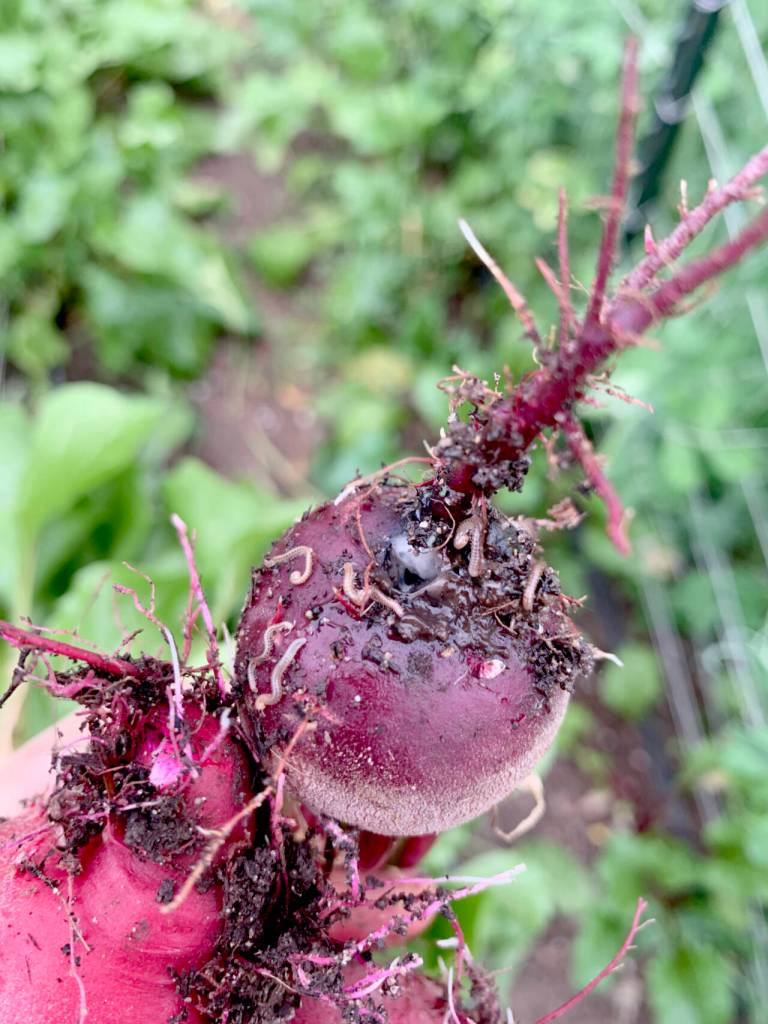
Have you ever pulled up a stunted broccoli or bok choy plant only to find shiny, curly, worm-like critters making a meal out of the roots and crown of the plant? The critters in the photograph are a type of millipede — technically considered a non-insect arthropod.
Millipedes have many legs, with two pairs per segment, and are often tube shaped. Millipedes are detritivores, meaning that they eat rotting organic matter and thus are beneficial components of the soil macroflora as they break down material releasing nutrients. Herein lies the dilemma — healthy living plant tissue should not be the meal of choice for a detritivore.
In most cases when gardeners report millipede pest problems, we find that the millipedes are not the pest. Instead, they are consuming tissue that is rotting due to damage caused by another pest. The most often reported associations are the cabbage root maggot, or slug-damaged strawberries, but millipedes may be found feeding on crops damaged by wireworms and other pests that feed on plant parts in or near the soil.
In rare cases, millipedes are a primary pest. In a local example, millipedes severely damaged a whole row of broccoli seedlings. A search of literature turned up examples of farmers in the Midwest reporting occasional but significant damage from millipedes on germinating crops of soybeans and corn, and farmers in Ontario that found damage to sweet potatoes and other crops.
The millipede that has been identified locally is a type of snake millipede, Cylindroiulus latestriatus (Curtis, 1845). This is a European species that has become widespread across the globe. It is described as occurring in some wild habitats but is strongly associated with agricultural landscapes. These millipedes lay eggs in the spring, which typically hatch in two weeks. Millipedes of varying sizes can be found living together, as individuals may grow at varying rates. They shed their skin eight to 13 times as they grow over their lifetime. Their typical lifespan is two to four years but may be as long as eight.
Primary pest pressure from millipedes is not a widespread problem and only seems to occur in very specific conditions. Millipedes prefer cool, moist habitats that are high in organic matter and protected from the sun. All the reports of millipede problems (whether primary or secondary) that we have received have come from farms and gardens that use low or no-till and deep-mulch methods.
The cases reported on large farms in the Midwest were associated with cool rainy years in no-till systems that had high levels of residual crop residue, although researchers in Canada have reported millipede damage to some no-till crops even in dry years. Moist, organic-rich conditions favor millipede population increases. If they do become pests, they’re most likely to damage seedlings.
If you find millipedes invading the roots of your crops, here are some things that you should consider:
• Check to see if there is another pest at work, such as cabbage root maggots, slugs, or wireworms and focus management on those primary pests.
• Allow the soil surface to dry out between irrigation and remove places where millipedes may seek refuge. Pull mulch or crop residue away from crops, dispose of crop residue in the compost instead of leaving it in the garden, and move unnecessary weed cloth away from crops.
• Try planting later when the soil is warmer and drier, if it is appropriate for the crop.
• Employ occasional spring tillage to disrupt reproduction and bring millipedes to the surface where they are vulnerable to predators.
• Try monitoring your millipede population using pitfall traps. Simply sink a plastic cup into the ground and prop up a pot or a saucer over it to provide shade and rain protection. Check and empty the trap every couple of days. There aren’t research-based standards for assessing probability of crop damage based on millipede population levels, but deploying pitfall traps is a fun way to see what ground dwelling arthropods are in your garden, and to compare populations over time.
• The use of insecticides is typically not recommended for millipedes due to low efficacy.
For more information and photographs visit puyallup.wsu.edu/plantclinic/pls/ and select Millipedes in Gardens, Plant Leaflet Series-15.
Special thanks to Dr. Paul E. Marek, associate professor and curator, Virginia Tech Insect Collection and the Department of Entomology at Virginia Tech, which identified our specific species of millipede.
For more information on pests, attend the Master Gardener Green Thumb Education Series on Thursday, April 16, from 1 p.m. to 2:15 p.m. at the Vern Barton Community Center, 308 E. Fourth St. in Port Angeles. Master Gardener Laurel Moulton will present “Keep Pests at Bay the Green Way.” The event is free and open to the public.
____________
Learn to keep pests at bay
For more information on pests, attend the Master Gardener Green Thumb Education Series on Thursday, April 16, from 1 p.m. to 2:15 p.m. at the Vern Burton Community Center, 308 E. Fourth St. in Port Angeles. Master Gardener Laurel Molton will present “Keep Pests at Bay the Green Way.” The event is free and open to the public.
____________
Master Gardener Laurel Moulten is a regional horticulture specialist specializing in insects and serves as the Clallam County Master Gardener program coordinator. Jenny Glass is a diagnostician for the WSU Puyallup Plant and Insect Diagnostic Lab and an instructor for Master Gardeners.