Sequim Picklers seek new partnership with city to revamp courts
Published 5:30 pm Tuesday, April 21, 2026
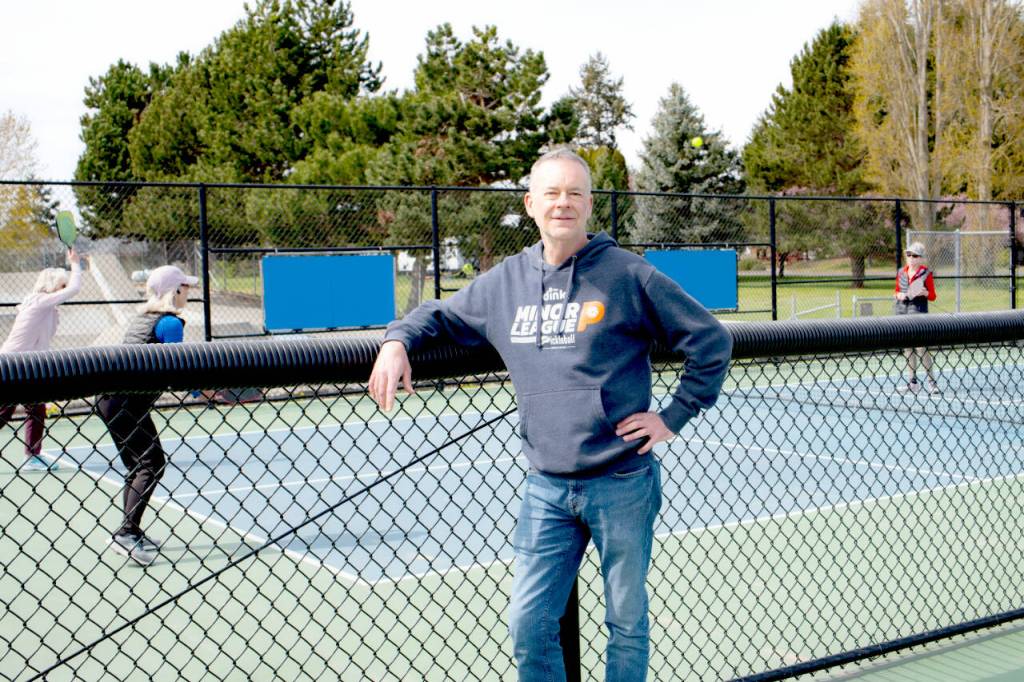
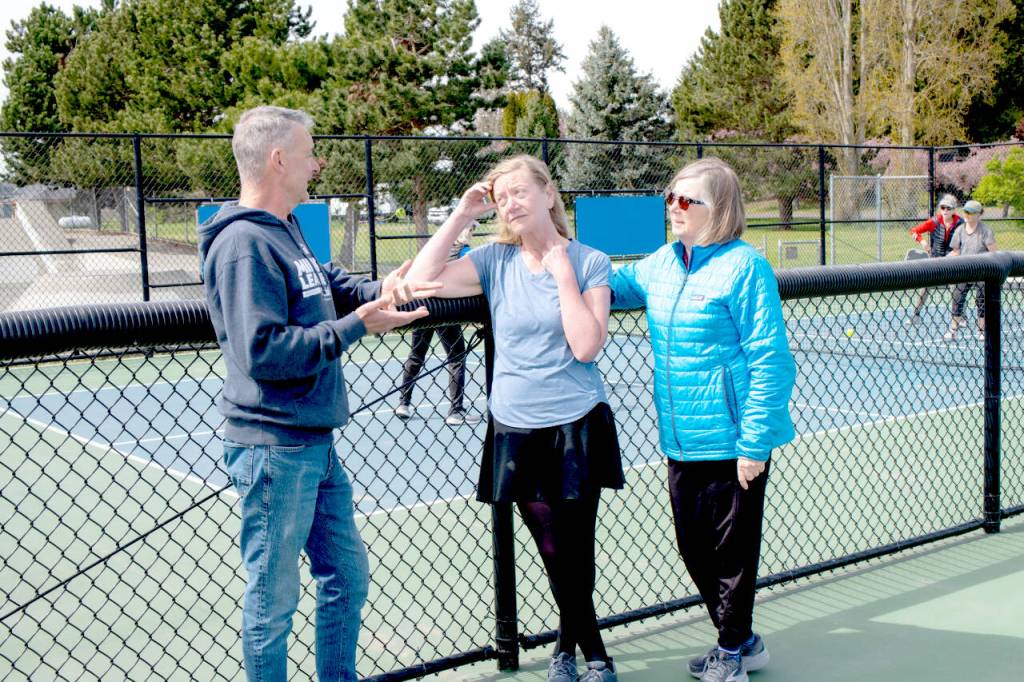
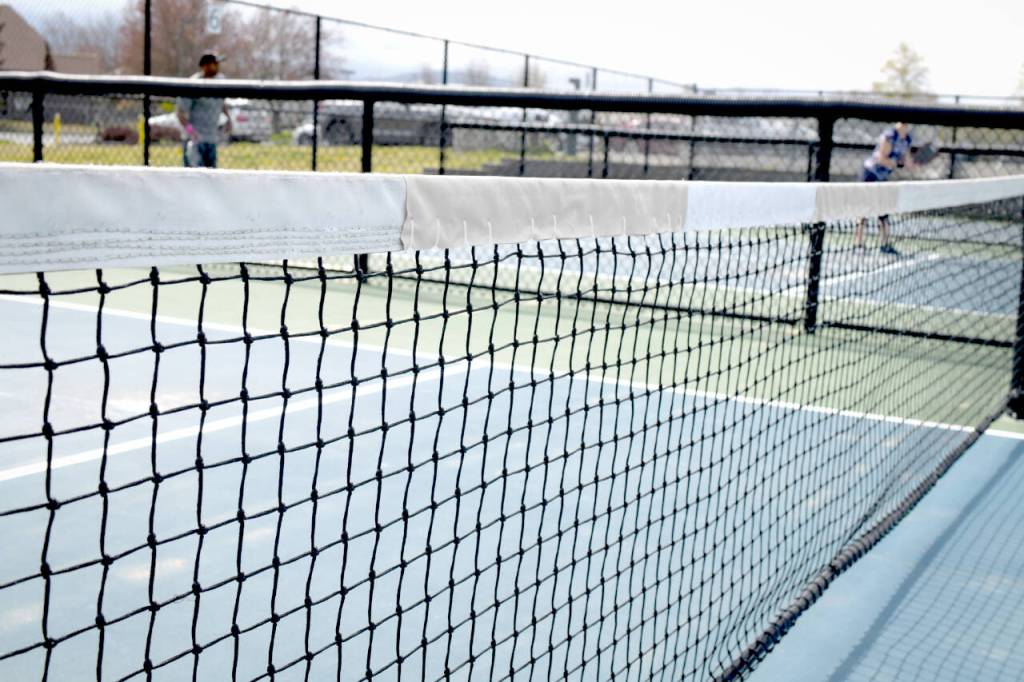


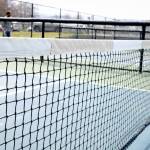
Sequim Picklers president Tim Williams hopes that a meeting that was scheduled with city representatives on Tuesday as the Sequim Gazette went to press will lead to the re-establishment of a partnership between the pickleball organization and the City of Sequim. The former partnership unraveled — much like the nets on courts he and other Picklers believe are long overdue for a revamp.
The eight pickleball courts at Carrie Blake Community Park have not only been used by locals that include the more than 550 members of the Sequim Picklers, but also by the 200-plus players who once traveled to Sequim from Oregon, British Columbia and other areas of the state for pickleball tournaments, contributing to local tourism. In Williams’ view, the condition of the courts has diminished what was once “a regional crown jewel” of pickleball.
The Picklers and city officials hold different perspectives on the issue on several fronts, including funding, safety, the impact of the courts’ current condition on tourism, and what previously transpired between the two parties.
In a recent letter to members of the city council, Williams detailed an original agreement with the city through which the organization contributed $217,000 toward construction of the pickleball courts and agreed to cover 75% of ongoing maintenance costs.
However, that agreement was terminated in 2019 — two years after it was initiated — after city officials determined it was flawed and sought revisions that would have allowed the city to end the partnership at will.
Williams said the Picklers declined to sign the revised agreement “for a variety of reasons,” leading to the termination of the original deal and shifting full maintenance responsibility to the city.
“It really felt, you know, a little disingenuous to invalidate the entire agreement at that point,” Williams said, but added that he was not living in Sequim at the time the organization declined to enter into a new agreement.
Regardless of what happened and how it happened, “I just would like to get back to a point where we’re actually partners with the city instead of what seems to have become kind of an adversarial relationship,” Williams said. “I don’t want it to be adversarial. I want to be partners with them.”
He added, “It just absolutely kills those of us in the club to see the condition the courts have been allowed to get into now.”
In addition to Williams, those who were set to participate in the Tuesday meeting were Lettie Flerchinger, the Sequim Picklers’ director of court operations; Public Works Director Paul Bucich; City Manager Matt Huish; and Parks Manager Hannah Merrill.
Deteriorating conditions
Williams and other Picklers say conditions have significantly declined since the pickleball courts were constructed eight years ago. Williams noted cracking, pitting and areas where water pools on the playing surface, creating what he considers a safety concern.
“There are places where water pools long after the rest of the court is dry,” Williams said in an interview. “You’re running, planting your foot — it’s slippery. Maybe it’s not a giant crater, but it is a safety issue.”
Like Williams, Bucich was not around when the original partnership between the city and the Picklers was entered into or when it was dissolved. He said he has been with the city for two years.
In an interview on Thursday, April 16, Bucich said he had not walked the courts himself but would likely examine them later that afternoon. However, he said he had been told by staff that the courts do not currently pose a safety hazard.
“The cracks that are out there are not extreme,” he said.
The Picklers have taken on minor repairs at the courts themselves, using zip ties and vinyl patches to keep nets playable and clearing debris from the courts, but Williams said those efforts are no substitute for resurfacing.
He also raised concerns about vandalism, including a crude swastika that was painted on one of the courts months ago and is still visible.
Bucich said crews attempted to cover the symbol shortly after it appeared last October but were unsuccessful due to weather conditions.
“The paint material you need to use has temperature considerations and has to have dry conditions,” he said. “We’re waiting for the weather to be warm enough for the paint to adhere.”
He said he anticipates conditions may be right in May or June.
Funding challenges and grants
Williams criticized the city for delaying a planned resurfacing project and for not pursuing grant funding aggressively for the courts.
According to his letter, resurfacing was previously scheduled in the city’s capital improvement plan for 2026 but has since been pushed to 2028. He also said a public records request showed no grant applications had been submitted since at least 2024.
Bucich said the issue is less about inaction and more about limited opportunities.
“Grants where this type of work is eligible are few and far between,” he said. “Most grants are looking to build new things. This type of work is usually viewed as maintenance.”
He added that if a suitable grant opportunity arises, the city will apply.
Another point of contention is the Picklers’ offer to help fund resurfacing.
Williams said the group has repeatedly expressed willingness to pay for a significant portion of the work in exchange for reinstating a formal agreement that would include designated play times and reduced fees.
Bucich said the city is open to donations but said that contribution must follow a formal process established in 2023 that requires documentation, internal review and city council approval.
“We have a process. It’s codified,” Bucich said of the policy that was instated years after the original agreement with the Picklers. “We need to evaluate all donations to make sure they’re not going to cause a long-term fiscal liability or legal risk.”
He also said a previous potential donation did not materialize after the city obtained resurfacing quotes, leaving officials hesitant to proceed without confirmed funding.
Williams, however, said there has never been a finalized agreement or formal commitment to donate funds, only ongoing discussions tied to the possibility of a broader partnership.
Economic impact questioned
Williams argued that, as tournament participation declines, local businesses are being impacted by extension. These days the Picklers are struggling to attract even local competitors, he said.
“The inability to attract regional players directly affects the economic impact our tournaments provide to local hotels and restaurants,” Williams wrote in his letter.
Bucich said the city is still trying to quantify that impact and noted that the facility is a public recreational amenity, not a tournament-focused venue.
“This is a public facility,” he said. “It is not a tournament-level facility owned and operated by a private entity.”
Looking ahead
Despite the disagreements, both sides say they are willing to talk.
“What I’m really hoping is we can finally have a dialogue about reopening the discussion,” Williams said.
For now, the future of the courts — and whether the city and the Picklers can rebuild their partnership — remains uncertain, even as the facility continues to draw daily use from the community.
“This is a really special opportunity for the citizens of Sequim,” Williams said. “To see it now not maintained — it’s heartbreaking.”