Olympic Peninsula plays host to state conservation commission
Published 4:26 pm Tuesday, January 27, 2015
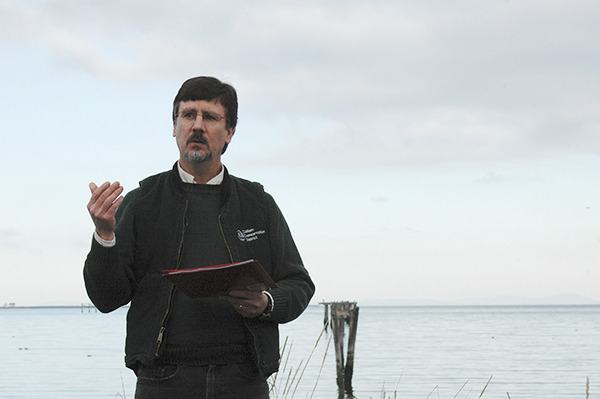
Clallam Conservation District officials had the first opportunity in nearly a decade to take the Washington State Conservation Commission and attending guests on a tour through Sequim and the surrounding area to provide insight into the area’s unique characteristics and needs.
About 50 individuals from all over the state attended the first of six regional Washington State Conservation Commission meetings.
The 10-member commission is governed by representatives from the Washington State Departments of Ecology, Agriculture and Natural Resources, Washington State University, the Washington Association of Conservation Districts, conservation districts and governor appointees.
Prior to Jan. 14, it had been nine years since the state conservation commission met in Clallam County, Joe Holtrop, Clallam Conservation District manager, said.
“It’s an opportunity to showcase some of the things we’re doing and for some people it was their first time to our area,” he said.
The first of the two-day meeting was spent touring a variety of projects the county’s conservation district has either led, been involved with or is pursuing.
Tour stops included the LID (low impact development) site near the Albert Haller Playfields, Dungeness Bay to discuss ongoing water quality clean-up efforts – highlighting district officials’ recent role in drafting a Pollution Identification and Correction (PIC) Plan — and concluding at the Elwha River to witness the results of the Glines Canyon Dam removal.
Locally led
Spurred in response to the 1930s Dust Bowl with a mission “to engage local landowners in voluntary stewardship,” more than 3,000 conservation districts exist nationally with 45 in Washington, Alan Stromberger, president of Washington Association of Conservation Districts and commission member, said.
“Unlike some agencies like (Department of) Ecology for example, each district is locally led,” he said.
Given the locally governed structure of each conservation district, Holtrop and his staff are able to personalize their approach to issues distinct to the area, like Sequim’s lack of precipitation.
“The Clallam Conservation District always has been water focused,” Holtrop said, as Clallam Conservation District’s first employee in 1989. “It used to be all about water quality, but there has been a shift and there seems to be an equal focus on water quality and quantity.”
Holtrop said his district has found a “niche” collaborating with landowners on both improving and conserving water and speculates to continue its focus on water throughout 2015.
Work with water
Because the Dungeness Valley receives 15-20 inches of annual precipitation, Clallam Conservation District officials continue to build on their effort to improve irrigation efficiencies, helping to ensure profitable agriculture.
Working with staff from the Washington Water Trust that manage the Dungeness Water Exchange, district officials are involved with designing and implementing aquifer recharge projects and Holtrop’s hopeful to begin implementation next month.
The exchange or “water bank” was developed in response to the Department of Ecology’s Dungeness Water Rule implemented in 2013 and limits water use within the watershed.
To assist with water management, the aquifer recharge projects are intended to “capture early summer snowmelt and infiltrate it into the shallow aquifer to augment late summer low stream flows,” according the district’s summary on aquifer recharge.
Additionally, the preliminary planning is under way for a possible 1,500 acre-foot reservoir on River Road managed by officials with the Department of Nature Resources. If viable, the reservoir could be used for future water storage and supply water for late summer irrigation and facilitate better stormwater management.
“I have not yet met with DNR to discuss this project, they have taken quite a while to respond to our inquiry,” Amanda Cronin, Washington Water Trust program manager, said. “However, DNR has indicated that they are considering the project internally and will let us know what the options are soon.”
When Washington Water Trust and Department of Ecology officials first mentioned the possible reservoir site in October during a monthly Dungeness River Management Team meeting, the cost associated with the reservoir was estimated at $30 million.
“I would say the reservoir is a long way from reality yet,” Holtrop said.
Reach Alana Linderoth at alinderoth@sequimgazette.com.


Best of Olympic Peninsula