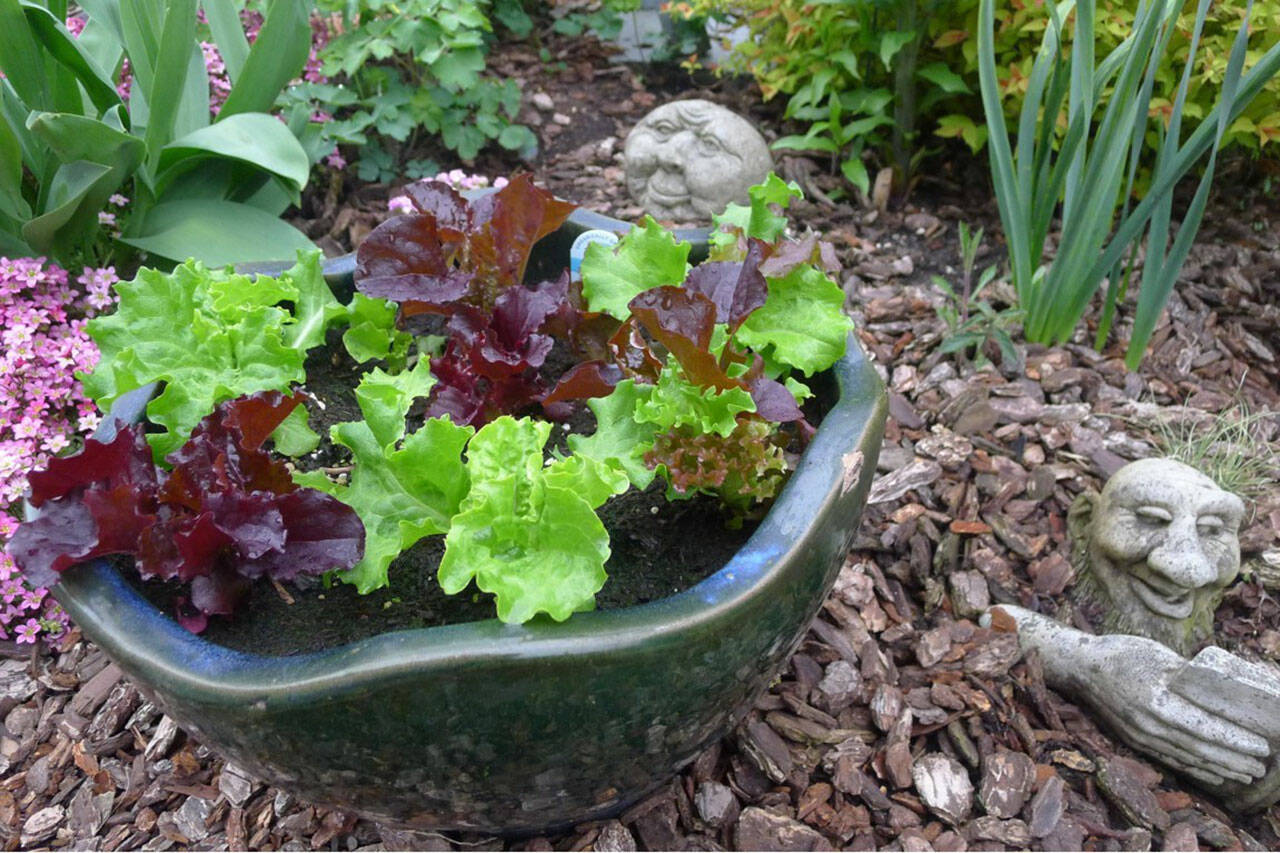
If you enjoy a home-grown harvest but have limited space, then vegetable container gardening might be a good option. Choose several containers that measure from 12- to 24-inches wide or larger. Terra cotta is one choice that provides a permeable surface so any excess water can evaporate and thus prevent soggy roots.
Plastic containers are lighter weight and can be more easily moved. All containers should have adequate drainage holes in the bottom.
Fill your containers with an organically rich, well-draining soil that contains some organic compost. A mixture that includes some vermiculite or perlite will aid in water retention.
Lettuce, pole beans, and zucchini all need 6 to 8 hours or more of full sun for optimum growth.
Lettuce
Lettuse is a cool season crop. With our cooler summers, you may be able to harvest lettuce from spring straight through fall. As the summer days heat up, expect your lettuce to bolt, sending up a flower stalk and going to seed.
You can sow lettuce seeds directly into the container and after they sprout, thin them to at least 6-inches apart. You can also purchase starts at your local nursery. When transplanting starts, separate each plant from the other very carefully to prevent damage to those tiny roots.
Choose a lettuce mix marked “cut and come again” for repeat harvests. Loose-leaf lettuces are better suited to pots than head lettuces. Just pinch or break off the lower, outer leaves from several plants for use in sandwiches or salads.
Since lettuce has shallow roots, it will grow best with consistent, shallow watering. Lettuce grown in pots needs at least an inch of water per week, perhaps a bit more. Watering early in the day, several times a week, should be sufficient.
Pole beans
Because pole beans grow fast and will shoot up to the sky if a stake or trellis is provided, position the trellis in the container before planting the seeds to limit damage to future roots. Some varieties can grow 12- to 15-feet high, making for a heavy plant even before the beans grow in. Use a pot that is at least 18-inches in diameter.
Plant the bean seeds, after danger of frost is past, directly into the pot, rather than starting indoors. Plant seeds twice as deep as the seed is long, with spacing 2- to 3-inches apart. Transplants do not have a high survival rate. The very first tendrils might need a helping hand to attach themselves to the trellis.
Beans do not need a lot of fertilizer. If you notice lush foliage, but not many beans, hold off on the fertilizer. Working some organic compost into the soil prior to planting is a better option.
Once the seeds are planted, water lightly until germination. When the seedlings pop up out of the soil, keep the soil moist at all times. As the plants grow, they will need more water. Plan on giving them a long drink at least two to three times weekly.
Bean pods will bulge when they are ready to harvest. Pinch or snip them off with care so you don’t snap a brittle branch or damage the plant. By harvesting early and often—every other day or so—you will get more and more beans.
Zucchini
This veggie likes to grow in pots that are a minimum of 24-inches in diameter with a depth of 12-inches. Consider a half whiskey barrel if you wish to grow three or four plants per container. The larger the container, the better.
Direct sow seeds into the container about two weeks after the last frost, using a lightweight, well-draining potting soil. Choose a dwarf variety or one marked for containers.
Plant two or three seeds, spaced at least 3- to 4-inches apart, to a depth of about one inch. Before the plants begin to compete with each other, thin to no more than two plants, depending on the size of the container. If you have another container, try transplanting the removed seedling into its own container.
Water the soil lightly and keep it slightly moist but not soggy until the seeds germinate in a week or two. Once the plants are well established, water every day, depending on temperature, humidity, and wind. A good soak every other day may be sufficient.
When watering zucchini, remember to water the soil, not the leaves. Try to avoid splashing any water onto the leaves because when the leaves are wet, they are more likely to succumb to powdery mildew. Always water early in the morning so leaves have all day to dry off.
If your pots are placed close together, separate them so that leaves are not blocking the sunshine from the ripening fruits. Remove some leaves to improve air flow and let in light.
Apply a good quality organic fertilizer at least once a month during the growing season. Companion plants nearby will help attract beneficial bees and other pollinators that will improve fruit set.
Harvesting zucchini while they are still quite small is always the best policy. This will reduce the strain on container grown plants. Twist the stem until the zucchini falls off into your hand.
With an overly abundant harvest, include a recipe for a tasty zucchini dish when giving zucchini to friends and neighbors.
Cookies, chocolate chip zucchini cake, bread, anyone?
Marilynn Elliott has been a Master Gardener since 2003. Her volunteer hours include Area Supervisor at the Woodcock Demo Garden, co-chairing the Youth Enrichment Program, chair of several annual Garden Tours, working the spring/fall plant sales, recording for the KSQM Gardening segment, and writing articles for the Sequim Gazette.