
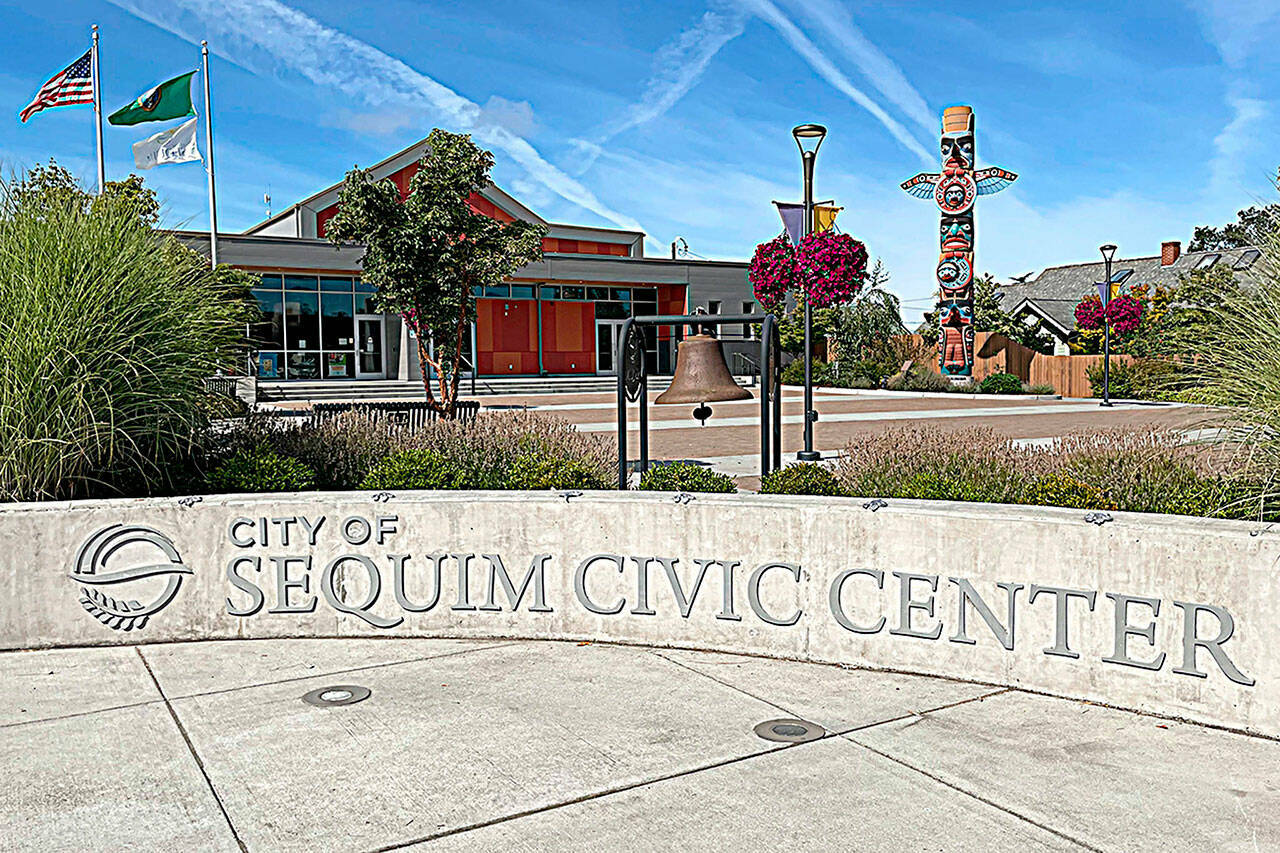
Sequim City Councilors agreed this month with a staff proposal to increase utility rates and general facility charges (GFCs) starting in 2026 each year through 2030.
Under the resolution, water rates will increase 5.5%, sewer rates 4.5%, and GFCs, a one-time charge for new developments to connect to city utilities, by 3%.
City staffers estimate most households using up to 500 cubic feet of water and sewer services will see about a $5 increase per month in 2026.
To connect a new single-family development to water and sewer in 2026, a GFC would cost about $473 more, according to the city’s “2025 Rates & Fees” sheet.
City councilors approved the resolution 6-1 at the July 14 city council meeting with Mayor Brandon Janisse opposed, saying he’s struggled with supporting utility increases.
“I understand the need for the increases and where they go … (but) I don’t like these numbers. They’re way too high for me,” he said.
“We sit there and talk about how well it is for the city, and good year after year, but what about those in the community … (increases to residents) add up year after year (and for) those in the community that live paycheck to paycheck or on a fixed income, those hurt.”
Public Works Director Paul Bucich said he appreciates Janisse’s position as he isn’t excited about paying higher rates either.
“I also believe (the rate increases are) 100% warranted,” he said.
“If we don’t do this in three years, we will need a 6, 7, or 8% increase, or push out critical projects beyond their true risk and liability and that concerns me.
“Nothing blows your budget faster than a project that fails. Then you’ll have to push other projects out.”
Planning
City staff shared various models of proposed increases in a June 9 work session via its new Waterworth utility software.
Bucich said at the meeting that the city would have a shortfall for its water and sewer projects in a few years, and would either require a significant utility-rate increase then, or a reduction in projects, services and/or staff along with delaying projects and not following state and federal permitting requirements.
In 2024, city councilors agreed to continue a 3% rate increase for this year to utilities following a 2020 rate study that proposed a 4% water and 2% sewer rate increase through 2030.
On July 14, Bucich said the city’s utilities have not been keeping up with costs, i.e. staffing, construction projects, and operational (materials, supplies), and that they must plan for future expenditures while meeting reserve standards.
Sequim’s Finance Director Sue Hagener wrote in an email to the Gazette that the city’s utility reserves are based on a formula.
The water reserves must currently be between a minimum $818,000 and a maximum of $1.445 million, and are now at $911,000.
Sewer reserves are set at a minimum standard of $1.475 million and a maximum of $2.605 million, and are now at about $2.232 million.
Bucich said in June the new software allows them to look decades ahead so “that we don’t have to ask for a massive rate increase.”
City Manager Matt Huish said it also helps save the city money as they won’t need to hire a utility consultant.
“We’re doing a lot more investigative work on our water and our sewer asset infrastructure, and I fully expect that we’re going to find new information, I don’t want to call surprises, but new information that’s going to help us better program the replacement and repair of our work moving forward in the future,” Bucich said.
He also said Sequim’s water and sewer rates are cheaper than sister cities and will continue to be so because the city draws from groundwater, and cities that don’t charge GFCs typically have higher utility rates.
Bucich said Sequim’s GFCs follow the mindset that new developments should pay to join an existing system and help pay for its maintenance.
He said in five years, Sequim’s utility rates will still be “well below” those of Port Angeles and Port Townsend.
“We’re not taking it out of your pocket,” Bucich said. “We’re using this to make sure you have clean healthy potable water and that we take your waste product and we deal with it appropriately. So we are giving you a service that I think is well worth the money.”
Staff said the utility software allows them to do more frequent assessments of utilities and costs, and that new water meters allow residents to better track their usage and expenses.
Low income discount
Currently the city has 53 customers using Sequim’s Low Income Utility Discount but staff said they take applications throughout the year despite a deadline each January.
For more information, visit sequimwa.gov/440/Low-Income-Utility-Discount.
Hagener said the discount cuts base charges in half, and residents who already receive a senior discount on their property taxes or disability taxes likely already qualify, along with those living at 150% of the federal poverty level.
Rates
According to the city’s “2025 Basic Utility Rate Information” sheet, the base rate for water at a single-family home is $29.84 with charges varying at usage up to 600 cubic feet, 601-1,600 cubic feet, and 1,601 cubic feet and up. Multi-family homes are charged a $28.34 base charge.
The sewer base charge is $64.88 for a single-family home, $61.64 for a multi-family home, and $68,51 for a home with sewer-only services in city limits. Commercial rates depend on pipe size for water and sewer and usage.
City of Sequim Sewer/Water Projects
Some of the city’s current capital sewer and water projects in-progress include:
• Doe Run Road lift station replacement
• West Sequim Bay Road corridor improvement
• Replacement of manholes on Washington Harbor Loop
• West Spruce Street parking lot construction
• Silberhorn Road deep well
• City shop expansion
• West Spruce Street parking lot construction
• Reservoir Road water main and booster station
Some future sewer and water projects include:
• Pavement rehabilitation
• Direct potable reuse water study
• Bell Street rehabilitation
• Guy Cole Event Center sewer lines replacement/parking lot overlay
• City fuel station
• City-wide security water/sewer sites
• East Fir Street rehabilitation from North Brown Road to North Blake Avenue