City Roundup: Councilors talk salaries, building fees, federal funding
Published 1:30 am Wednesday, February 2, 2022


Here are a few highlights from Sequim City Council’s Jan. 24 meeting and some ongoing efforts by city staff and councilors.
Councilors create salary commission
Sequim city councilors are creating a salary commission to analyze future councilors’ pay.
A new ordinance creates the commission with three appointed city residents reviewing salaries every four years (or sooner) at council’s discretion.
Councilors finalized the commission in a 6-1 vote on Jan. 24, with William Armacost opposed.
“It’s nice to take council out of (the salary decision process),” said councilor Rachel Anderson, who proposed the commission in early January.
“It’s good to keep an eye on what we’re spending in the past and in the future,” Mayor Tom Ferrell added.
Forming the commission followed city council’s Nov. 8, 2021 decision to rescind a March 22, 2021 ordinance allowing future pay increases for all city council seats. The commission was formed in lieu of putting pay increases back in place for councilors.
Armacost reiterated his points on Jan. 24 from earlier that there was a different economic status in the country now with growing inflation and general costs and that there are many in the community on fixed incomes.
He said he supports engaging the public but prefers putting the commission on hold “until we can see the economic meter rising.”
In the ordinance, any salary changes made don’t begin until the current councilors’ seat’s next term. Appointees are to be determined later by the council for no more than two-year terms.
Once formed, the council has 120 days to complete a review, according to the ordinance.
The ordinance also requires that all commission meetings be open to the public, and the deputy mayor’s salary set at 80 percent of the mayor’s salary. It also allows city staff to provide data from comparable cities and forms of government, and allows city council the ability to establish increases or decreases outside of the commission.
The 2022 city budget shows city council’s salaries and expenses at $60,416.
Previously, Sue Hagener, director of administrative services, said the nixed increases would have been less than $10,000 over a year.
Parks plan, fee discussion
At their Feb. 14 regular meeting, city councilors may consider a Parks Master Plan update along with potentially higher Park Impact Fees for new development.
Consultant Steve Duh with Conservation Technix of Portland said the cost is a one-time-fee for a new development project to pay for new or expanded facilities to pay for the impact of the new development, i.e. a single-family home.
Interim public works director Sarah VanAusdle said in the past the city has used Park Impact Fee funds to help with building pickleball courts and purchasing Keeler Park. The city has about $1.1 million in its Parks Restricted Fund.
The city hasn’t spent the collected Park Impact Fee dollars in four years, she said, because staff has been awaiting the completion of the plan.
Tentative growth-related projects, such as installing new playground equipment in parks, totals about $4.9 million, city staff report. However, no projects are set until the plan is approved.
The city’s Park Impact Fees were adopted in 2010 at $1,975 for single family homes, half of what the city’s then-consulting firm recommended; councilors then were concerned about the recession’s impact at the time.
In 2013, the city raised the price to $2,210 for single-family homes and from $2,129 to $2,382.
Staff report the Consumer Price Index rose 16.8 percent since 2013, and the newest proposed rate per capita is $3,066.
In his proposal, Duh calculates the persons per single family residence is 1.92, and $5,887 per single family residence, and 2.07 persons per unit or $6,347 per multi-family home.
Read the report here.
Congressman meeting
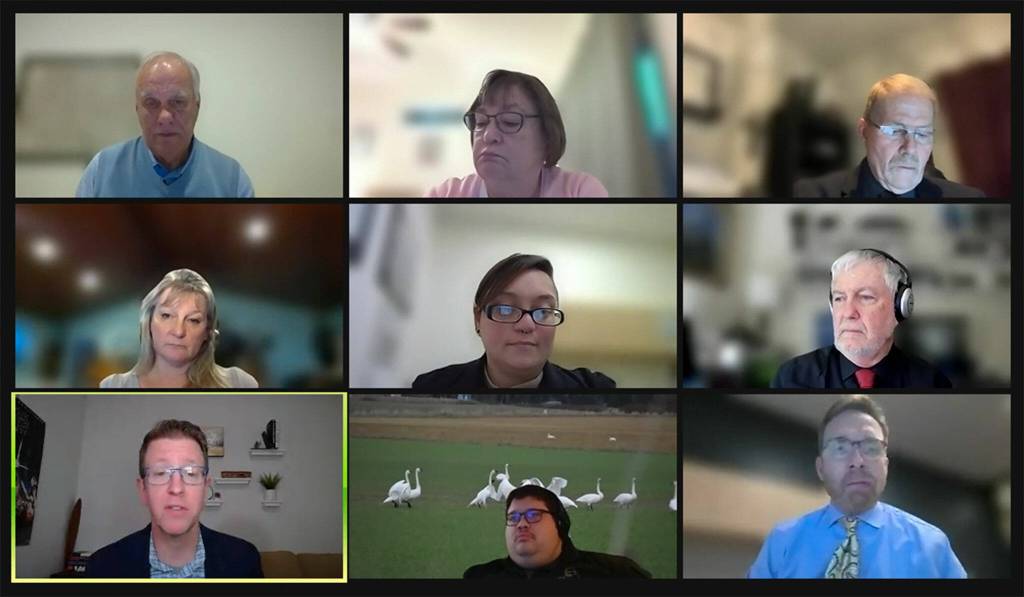
U.S. Rep. Derek Kilmer met with city councilors for about 30 minutes on Jan. 24 discussing federal funding and its potential impact on Sequim.
He said there’s a lot still being determined about the $1.2 trillion Infrastructure Investment and Jobs Act with $4.7 billion dedicated to federal highways and $605 million to bridge replacement.
Councilor Brandon Janisse asked if the U.S. 101 East Sequim Road Project that completes the Simdars Road Interchange could be funded through the Act’s dollars. Kilmer said they don’t know yet but “because so much of transportation flows to Washington, there is an opportunity to get a couple bites at the apple.”
He recommended city officials contact his office if they need help with application eligibility, federal contacts, and/or letters of support.
Kilmer added that after discussions with USDOT staff, they recommended municipalities “apply for everything you think you’re eligible for (at the state and federal level).”
Ferrell asked if there’s an attempt to simplify processes for applications with staff shortages and other constraints.
Kilmer said there is a recognition of a need for smaller and rural communities, and he expects some applications will be simpler for funding for those areas.
“It does us no good if smaller communities can’t take advantage of the funding,” he said.
He also acknowledged a universal need for affordable housing in his district and the nation, and to emphasize more that younger people to go into trades and technical schools.
Sustainability report
Ann Soule, Sequim’s resource manager, reported on the city’s Sustainability and Resiliency Annual Report sharing some of the efforts following a 2012 resolution to reduce greenhouse gas emissions and a 2016 resolution to improve sustainability and resiliency.
Some of the accomplishments included the city reducing its vehicle miles with more online meetings and training, added a new truck that runs on propane, and continued future planning for water, such as for the Dungeness Off-Channel Reservoir project.
Continued efforts included the city’s electric vehicle (EV) station offsetting 9.9 tons of CO2 (about 1,017 gallons of gasoline) in 2021; and the Sequim Civic Center’s solar power array cut $4,234 in electrical rates from June 2020-June 2021.
For more on the report, click here.
Rapid relief grants
The city is closer to being able to open applications for $250,000 in grants for the Small Business Rapid Relief program, Huish said. They’re looking to open it up to businesses, not just restaurants in the city that are in need of help during the pandemic, he added.
Care Closet donation
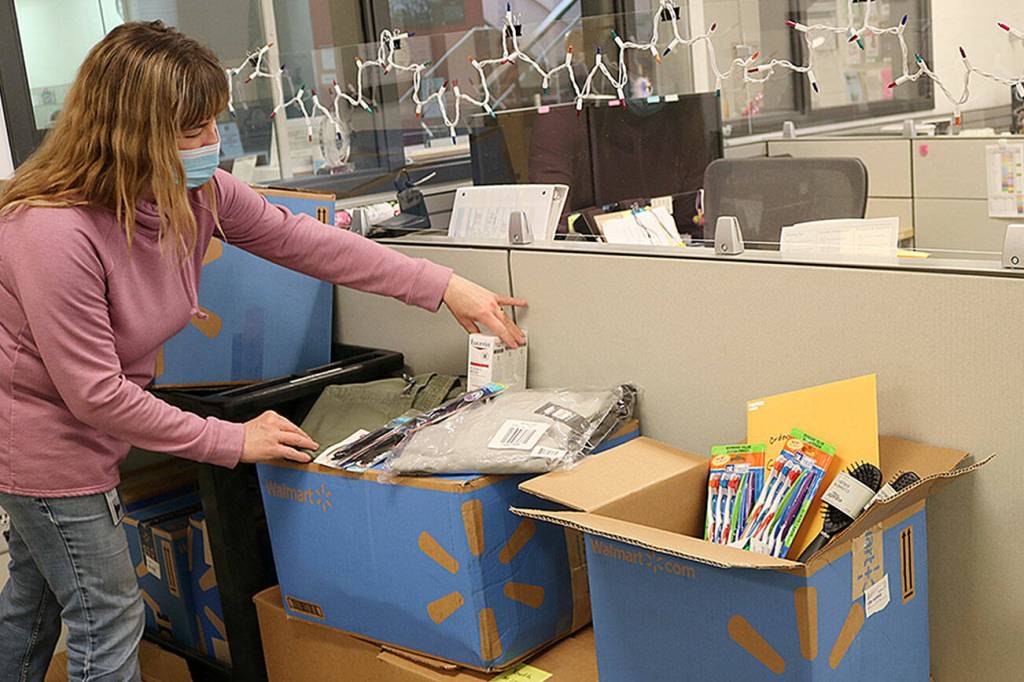
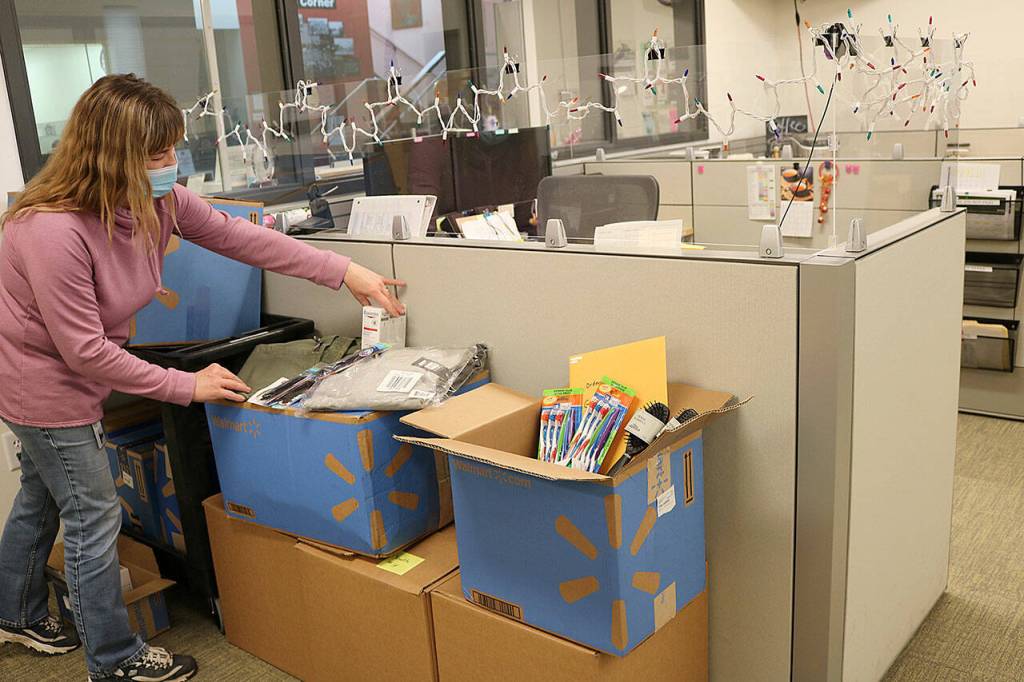
City staff in multiple departments partnered to secure a Walmart Community Grant for $1,700 to purchase a variety of products for Sequim School District’s Care Closet that supports children of all ages and all schools receive various supplies, such as clothes, school supplies and hygiene products.
In-person meetings
On Jan. 24, Sequim’s IT Program Manager Anthony Martin said they’ve received equipment to allow for hybrid virtual, on-location meetings for city council chambers. He said they’ll schedule to work with a consultant on installation the week of April 18 followed by staff training for the equipment. No timeline was given on when meetings would begin in person.



Best of Olympic Peninsula