Ask the experts: Local specialists address frequently asked questions
Published 3:30 am Wednesday, January 7, 2026










WHY IS MY HEAT PUMP NOISIER IN WINTER?
Heat pumps often make more noise during the winter months. Most of these sounds are normal and occur as the system works harder to keep your home warm. Understanding which noises are typical and which may signal a problem can help you keep your heat pump running smoothly.
These things are normal:
Defrost cycle sounds
During colder months, frost can accumulate on the heat pump while it is heating. To remove this buildup, the unit enters a defrost cycle. During this process, the fan stops and the compressor will run to melt the frost. You may notice sounds such as whooshing, hissing, thumping, or a change in fan noise.
Visible signs
It is normal to see water beneath the heat pump and some steam rising from the unit during the defrost cycle.
Metal contraction noises
Clicking, popping, or louder vibrations can occur as metal parts contract in cold weather.
These noises may indicate a problem:
Grinding or screeching
Loud mechanical sounds can point to a failure.
Banging
Sudden, very loud banging noises may signal trouble.
Fan blade hitting ice
You might hear repetitive clattering or scraping noises.
Heating performance
If your heat pump stops heating well, it could mean ice buildup or another issue.
High utility bill
A significant increase in your bill may indicate the system is struggling or not working properly.
If you notice abnormal sounds, do not attempt to repair your heat pump yourself. Document the noise and when it occurs and contact a professional.
______________
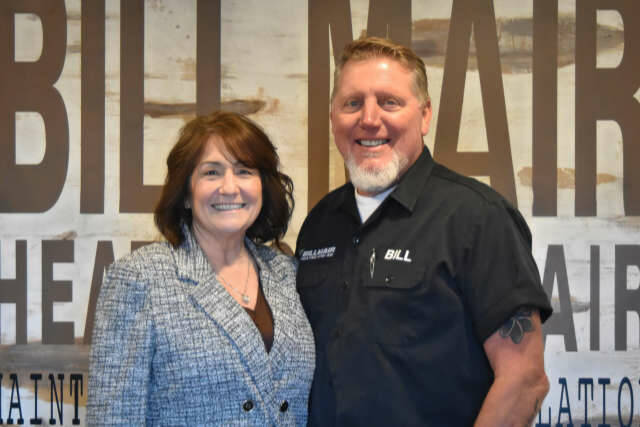
Answer provided by Bill and Anna Mair, owners of Bill Mair Heating & Air, 64 Village Lane in Sequim, billmairheating.com, 360-683-4245.
WHAT IS THE BEST PLANT TO GROW HERE AND THE BEST TIME TO START?
Folks can (and do) garden year-round in our area. Certainly if you own a heated greenhouse, root cellar, or even counter space with grow lights for seed starts, you are limited only by what time you (and your wallet) can afford. When folks ask this question they usually have a specific type of gardening in mind, so I will knock out my early favorites:
– Roses should be pruned the weekend after Valentines day (easy to remember).
– Fruit trees should also be pruned in February, which is a great time to plant anything, but especially plants that are dormant yet starting to show buds
– Bulbs and seeds can start into the ground as early as January; just check your varieties. Most just need to be sown after a frost.
As for who has the best dirt for planting trees and shrubs, I can honestly say that all three major soil suppliers in Sequim have excellent products. By now, everyone knows the importance of native soil. Therefore, if you must import bulk topsoil/compost/ “dirt” it is best practice to use a source with the most native composted material possible. We are lucky that is true for Cascade Bark, Blake Tile & Stone and Lazy J’s.
Regarding the best plant to grow here, it is difficult to be specific without knowing setting, spacing, or client desires, but my most used plant would be Evergreen huckleberry — seasons of color, edible fruit, native, and adaptable to most conditions.
____________________
Answer provided by Stew Cockburn, certified professional horticulturist, certified ecoPro horticulturist, foreman, New Dungeness Nursery/Landscapes by Cockburn, 360-681-0132.
WHEN IS THE RIGHT TIME TO MOVE TO A SENIOR LIVING COMMUNITY?
There is no single “right age” to move to a senior living community. Instead, the right time is usually marked by changes in daily life, safety, or peace of mind for the individual or their family.
Independent Living is often a good fit when home maintenance becomes burdensome, social circles shrink, or daily routines feel isolating. Residents are still self-sufficient but enjoy the convenience of meal plan options, housekeeping options, activities, and a built-in community.
Assisted Living may be appropriate when everyday tasks such as bathing, dressing, managing medications, or preparing meals require regular help. Many families notice increased fatigue, missed medications, falls, or growing anxiety about living alone. Assisted living offers personalized support, enabling residents to maintain their independence and dignity, while often including services such as housekeeping, laundry, and regularly prepared meals.
Memory Care is designed for individuals living with Alzheimer’s or other forms of dementia. Signs that it may be time include confusion that affects safety, wandering, changes in behavior, or increased caregiver stress. Memory care offers specialized staffing, secure environments, and routines that support cognitive health.
Often, the “right time” is earlier than people expect, before a crisis occurs. Making a move proactively can ease the transition, reduce stress, and give families confidence that the right support is in place.
If you’re starting to ask the question, it’s usually a sign that exploring options now can make future decisions calmer and more informed.
________________
Answer provided by Janaye Birkland, executive director, Sherwood Assisted Living, 550 W. Hendrickson Rd., sherwoodassistedliving.com, 360-683-3348.
WHAT ARE BEST ALTERNATIVES TO NEUROMODULATORS IF I DON’T WANT INJECTIONS?
Neuromodulators (commonly referred to as Botox) aren’t for everybody, but are a fantastic option for treating wrinkles caused by repeated muscle movement, specifically in the face.
Neuromodulators work by temporarily immobilizing the specific muscles they are injected into and generally last around 12 weeks for most individuals. Consistent use of neuromodulators can help soften existing fine lines and wrinkles caused by facial movement and prevent formation of new ones.
That being said, needle-free alternatives do exist for those interested in less invasive treatments. LED light therapy (at-home masks available), chemical peels, medical grade skincare and a variety of different lasers (from light based to resurfacing) are all suitable alternatives to discuss with your aesthetic providers — all of which are offered at NW Beauty and Wellness.
___________________
Answer provided by Kelly Mann, owner, Northwest Beauty & Wellness, 525 N. Fifth Ave., Ste. A, 360-504-2515, nwbeautyandwellness.com.^
WHERE CAN I FIND ART CLASSES IN SEQUIM?
One frequent question we receive at Blue Whole Gallery is who teaches art classes in Sequim, including painting, watercolor, ceramics, and glass. Historically there have not been a lot of artists who teach, in part due to the lack of affordable teaching space.
A few art groups gather on a monthly or weekly basis to talk about art or to paint together. Two are North Olympic Watercolorists (NOW) and Olympic Peninsula Art Association (OPAA). NOW gathers weekly to paint together and help each other develop and improve watercolor skills. See the NOW Facebook page for dates and locations.
OPAA is a multimedia organization meeting monthly with programs and demonstrations covering many types of art. Check the OPAA website, opaagroup.org, for meeting times and location. Not in Sequim but a short drive to Port Angeles, Peninsula College also offers painting and ceramic classes on a quarterly class schedule.
As of November, Sequim has a new business offering teaching space at affordable prices: Three Little Birds Studio d’Arte located at 112 W. Washington St. Three Little Birds’ class schedule can be found at threelittlebirdsstudiodarte.com/calendar.
Blue Whole Gallery artist Marilyn Hiestand is presenting a variety of classes there through January covering eco printing with watercolor, eco printing on paper, and learning to create a sketch book.
Blue Whole Gallery, 129 W. Washington St., will also start its spring demonstration series in February. This is a great way to check out an art medium before investing time and money in supplies, and our website, bluewholegallery.com, will be updated with our demo schedule starting in February.
_____________
Answer provided by artist and Blue Whole Gallery member Jolene Sanborn.