Poetry tradition continues on at Five Acre School
Published 1:30 am Wednesday, January 7, 2026


by Emily Matthiessen
For the Sequim Gazette
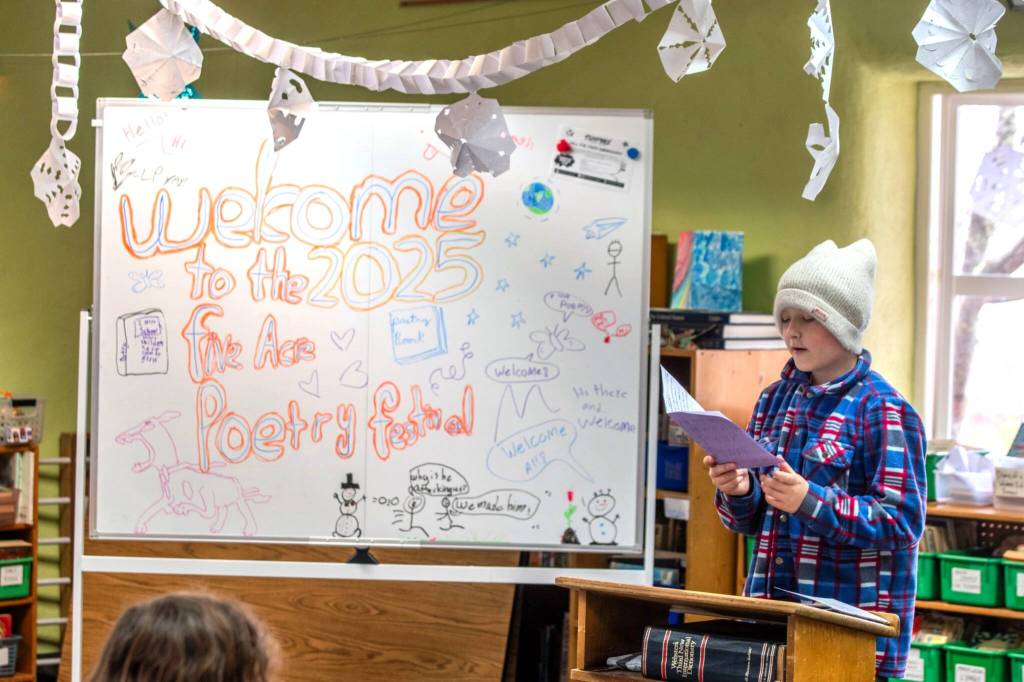
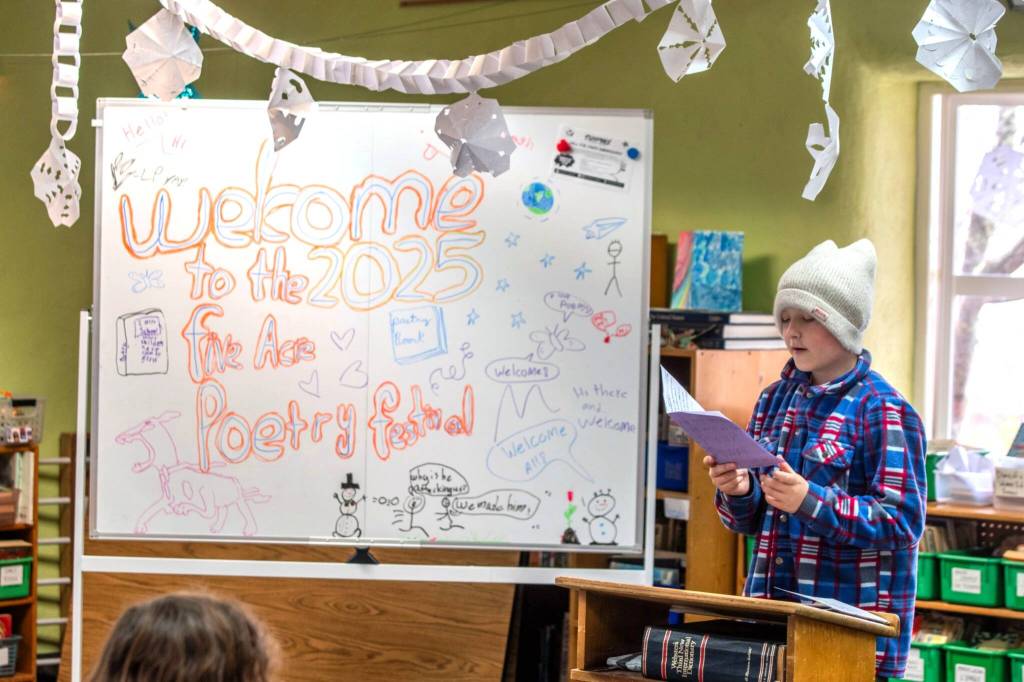
On the last day before winter break, Dec. 19, the young poets of Five Acre School welcomed loved ones to their poetry festival.
It has been a winter tradition at the independent, nonprofit school since 2013, according to school director Sarah Bones, and poetry has been an element of the curriculum since 2001, initiated by former teacher Tom Harris.
“By reading their poems in front of an audience the students participate in an ancient tradition of the poetry reading, a tradition that thrives in our contemporary world,” Harris wrote in a 2020 school newsletter.
Surrounded by white paper chains and snowflakes, the mixed group of second through sixth graders each took a turn reading and then introducing the next poet before a classroom filled with peers and supportive adults and siblings.
“It’s so wonderful to hear our children expressing a part of themselves we don’t get to see very often,” said parent Sarah Tipton-Salazar.
“And it’s neat to see how they’re influenced by their teachers to grow.”
Teachers Hannah Edstrom and Audra Gipson have been working with the younger students for a month, and the older students’ teachers Nellie Bridge, Heidi Pedersen and Gregory Maust have been delving into poetry all year, Bones said.
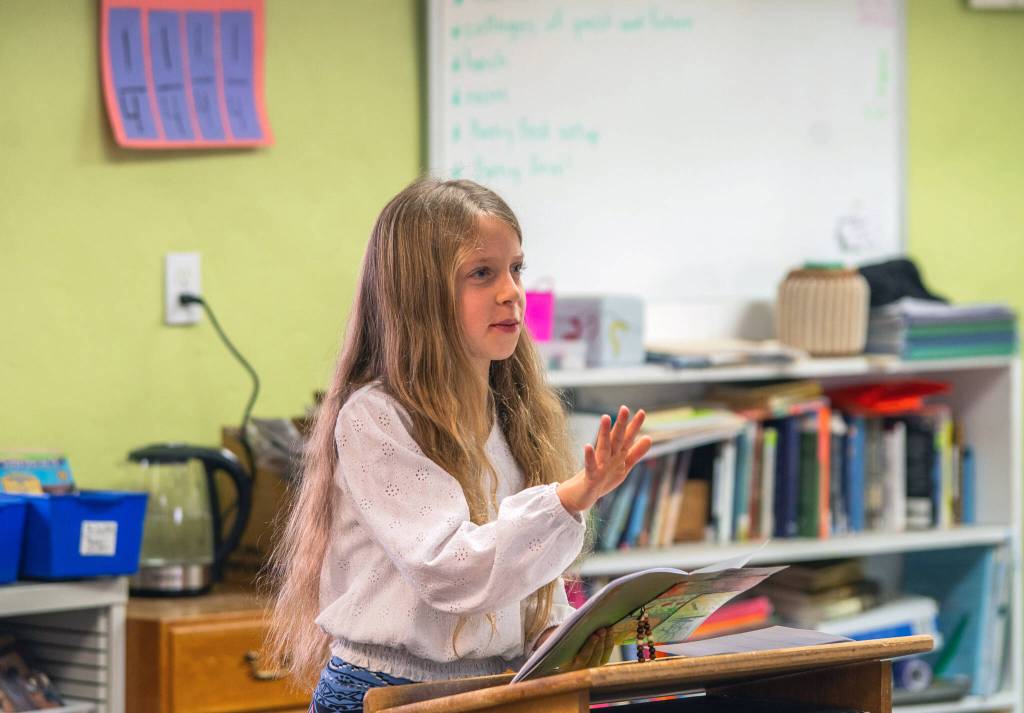
Nine-year-old poet Elle Kazerouninia said she writes poetry at home, and that it is a medium for her to “get my feelings out; I don’t have to share, I can just write.”
When she does share it with other people, Kazerouninia said, “I feel like I’m giving them a different mind for a while, and telling them a story.”
Bones said that the act of reading aloud develops skills that the school also encourages with its annual play and community marimba performances. “Reading to an audience of mostly friends and family and overcoming the sense of being terrified to do it (is an act of courage),” she said. “It takes skill, grit and endurance, reading your compositions out loud.”
Each child had the choice of reading one or more of their own poems or that of another poet.
Most of the young poets chose to read more than one of their own compositions.
These poems covered a range of form, length, style and substance, from humorous to the joy of rhyming to deep and personal topics, revealing gratitude, acute observations of and reflections on the natural and modern world, including a number of dark poems concerning fear, bewilderment and death.
Poetry, said Bridge, “involves finding one’s path through a wilderness, and that there might be discovery both on and off the path. You can make a poem in your own way… Poetry is a way of exploring.”
Bridge said that some of the classroom curriculum included an anthology she compiled of poetry from various places and times that she thought would be fun to read together and discuss, including Percy Bysshe Shelley’s “Ozymandias,” D.H. Lawrence’s “The Snake,” Emma Lazarus’ “The New Colossus,” and William Carlos Williams’ “This Is Just to Say.”
From this, each student memorized a poem of their own choice.
Bridge said, “We often wrote poems during our Friday morning free writes. We often used example poems as starting points, but sometimes also wrote freely without restrictions. We wrote tribute poems to George Ella Lyon’s ‘Where I’m From’ and Sandra Cisneros’ vignette ‘My Name.’”
Poetry study for the younger students, said Bones, can liberate them from the restraints of other types of writing.
“For those that are still learning reading and writing, it gives them a feeling that it can be nonsensical — they don’t have to follow spelling rules and grammar rules,” Bones said.
For example, she said that free writing and acrostic poems can be fun and simple, eliminating fears and facilitating communication.
“It’s fascinating and surprising to hear where they take things,” Bones said.
Academically, poetry helps students learn about deep thinking and connectivity, she said.
“Their perspectives come out in a way we don’t always see in other written work,” Bones said. “The depth that they can connect with a thing is astonishing.”
Bridge said finds that “poems work in all kinds of ways, and some poems are not straightforward or logical.”
“Encountering strange and complex texts can help us build up skills for staying with all kinds of challenges,” she said. “Being able to sit with not understanding things immediately is a good skill for many subjects.”
She ought to know.
Along with teaching at Five Acre, Bridge is also the Clallam County Poet Laureate. She spent her childhood in Sequim with her poetic sensibility nurtured by the land and weather of the region, family and teachers – those in the classroom and the poets who shared their words with the world.
“Poetry lets beauty into our lives, which brings us awe and appreciation of mysteries. It also allows us to practice listening to ourselves,” Bridge said. “Feeling free to experiment and express ourselves truly can bring a sense of peace and balance.”
Having the laureate as a teacher, Bones said , helps students realize that there are people in the wider world who enjoy reading and writing poetry, exposing them to “different perspectives, ideas and experiences … It has definitely inspired more of our students to submit and read their own poetry at events that have been hosted outside of Five Acre School.”
Five Acre students have been consistent contributors to Peninsula College’s “Tidepools” magazine, according to Harris and Bones. The magazine is currently open for submissions from the community until January 9.
“Poetry is an important and special part of attending Five Acre,” Kazerouninia said while closing the festival after reading her poems. “Poetry means a lot to Five Acre, and it means a lot to me because it gets me to think about things in a different way than I normally think about it.”
Read more about Five Acre School, 515 Lotzgesell Road, at fiveacreschool.org.