Honored Pioneers named for 2026
Published 1:30 am Wednesday, March 18, 2026
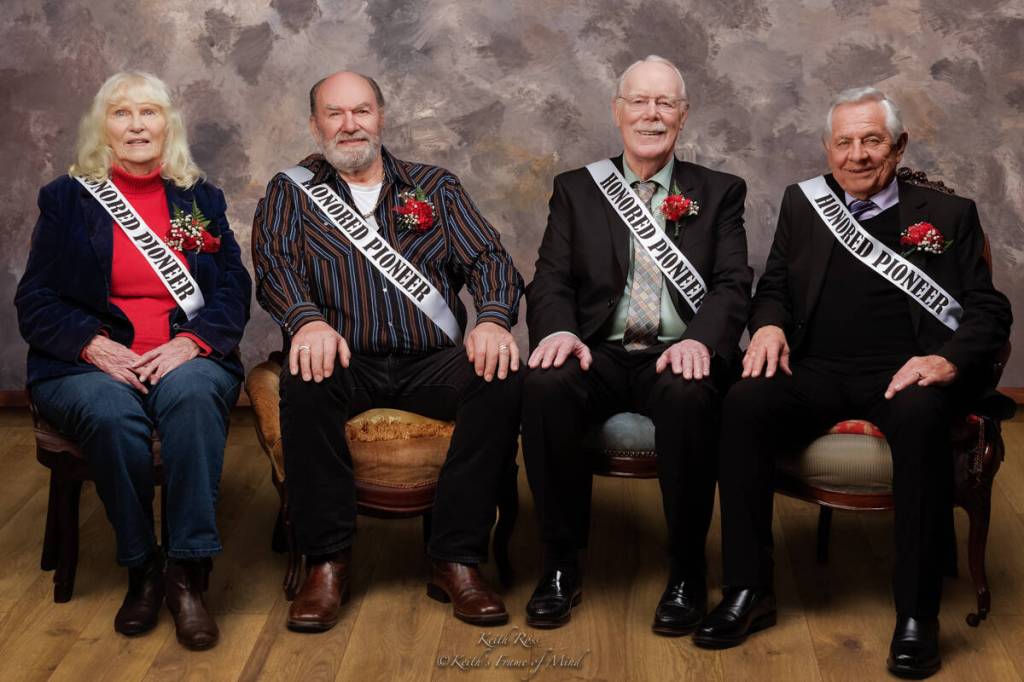

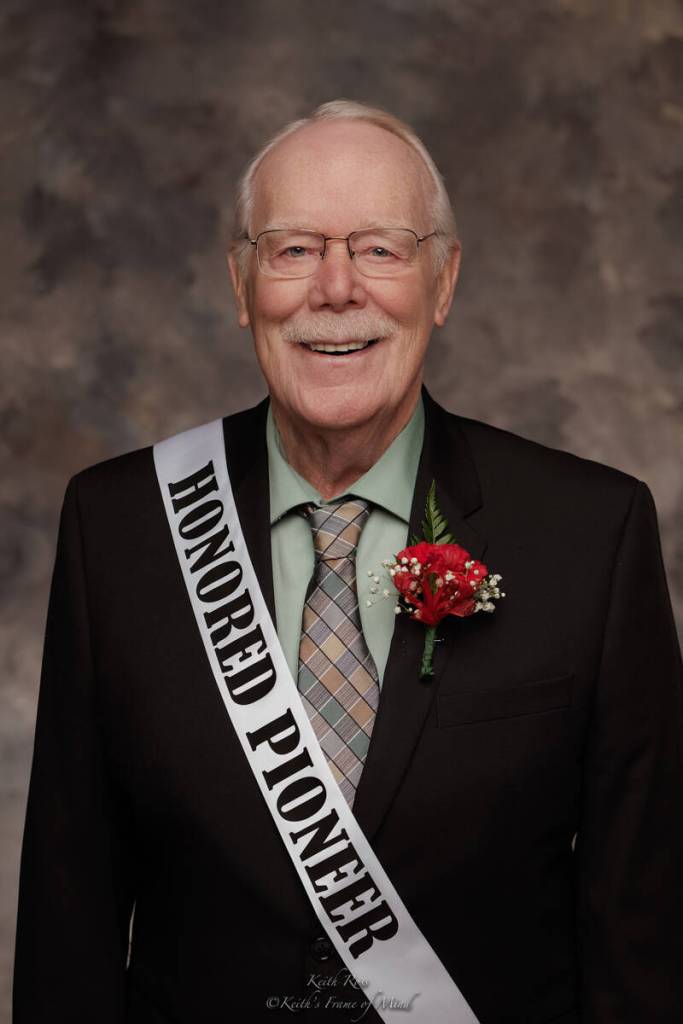






The Sequim Pioneer Association Committee has named its Honored Pioneers for 2026.
Each person must be a descendant who has/had a parent, grandparent or great-grandparent that lived within the current boundaries of the Sequim School District prior to 1950.
They’ll be recognized at Sequim Irrigation Festival events and ride in the Grand Parade on May 9 along Washington Street. For more information, visit irrigationfestival.com.
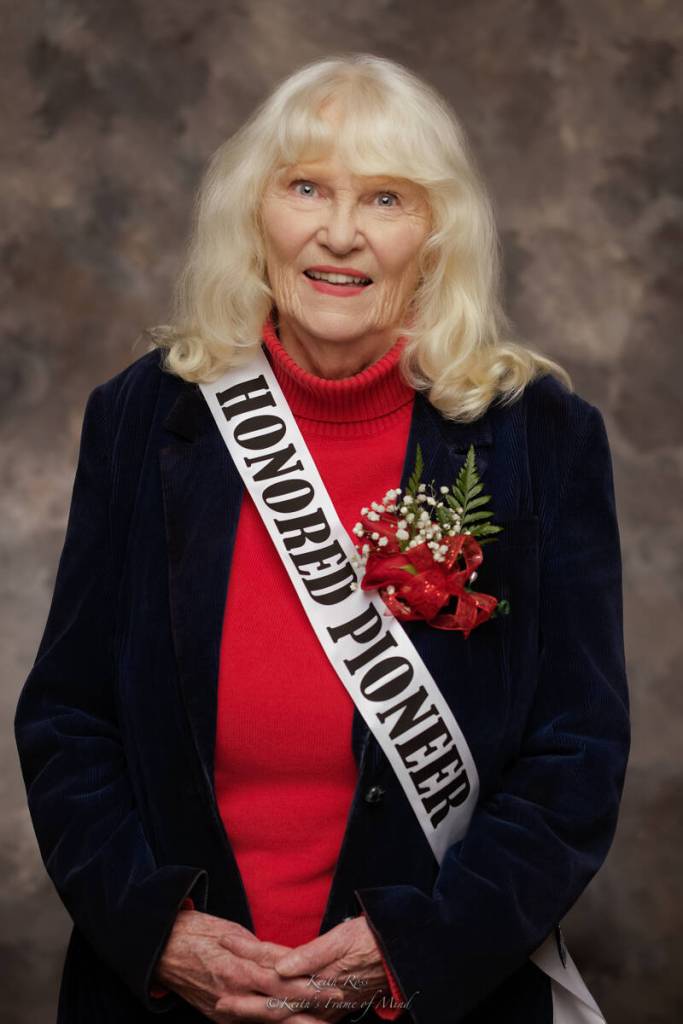
Beverly McInnes
When the Sequim Irrigation Festival celebrates its 131st year this spring, four Honored Pioneers will ride through town as living reminders of the valley’s past. Among them is Beverly McInnes — farm kid, hay-truck driver, Safeway checker, mother, and grandmother.
Beverly was born October 3, 1942, in Port Angeles, but home was the family farm on Jamestown Road — the first place on the left, shaded by towering cedar trees. Bald eagles nested there more than 80 years ago and still do today in the remaining snags. Raised as the youngest in a blended family of much older half-siblings, Beverly grew up “almost like an only child.” Her father, Donald, was about 50 when she was born; her mother, Bertha, 39. While other girls might have been playing with dolls, Beverly was scraping manure, feeding calves and chickens, and helping mend fences on roughly 200 acres of farmland.
By age 12, she was driving the tractor and trailer for hired hay crews. “As long as you could reach the pedals and the steering wheel, you learned.” A couple years later, she was driving the hay truck for the crew — earning a dollar an hour in the summertime. She learned to ease off the clutch so the men on the trailer didn’t go tumbling. Her mother kept watch from the hill with binoculars, ensuring both safety and proper behavior. That watchful eye came into play one afternoon when one of the identical Brown twins — Lloyd or Lyle, depending on who you ask — stole a quick teenage kiss.
“My mother had a fit,” Beverly laughs. “She wanted him fired that very day.” Cooler heads prevailed, but the boys kept a respectful distance after that.
Beverly graduated from Sequim High School in 1960 and married Donald Sparling just shy of her 18th birthday — 17 years, 11½ months, to be exact. No one at the courthouse in Port Townsend asked too many questions about parental signatures.
When her mother found out, “she had another fit,” Beverly says with a grin.
The young couple lived in Port Townsend, where her husband worked at the Crown Zellerbach pulp mill — “it smelled really bad,” she remembers — and Beverly worked at a drive-in burger joint and later at Safeway on the waterfront. One early lesson in customer service from the drive-in involved spilling a chocolate milkshake into the door’s window track of a man’s shiny, new convertible.
“He was really nice about it.”
In 1964, pregnant with her first child, she moved back to Sequim. Later moves took her to Seattle’s Richmond Beach, Wenatchee, and even Gillette, Wyoming. Eventually, life brought her full circle. Two years ago, she returned home to Sequim for good.
Today, Beverly’s family includes her partner, Ron, two sons, a daughter, 11 grandchildren, and seven great-grandchildren.
Her childhood memories of the Irrigation Festival are less about pageantry and more about participation. She rode in the kiddies’ parade with dolls tucked into crepe-papered buggies and remembers carnivals set up on empty lots south of Washington Street.
For Beverly, the festival represents reunion. “When you were on the parade route, you just saw everybody. It was about family and friends coming together.”
Daily life in mid-century Sequim, she remembers, was busy and sometimes exciting. School bus driver Fred Booth would barrel over the famous “Seven Dips” gravel road, briefly sending students airborne before slamming the brakes at the last corner.
“Probably not safe, but it was thrilling,” Beverly admits. The bus radio played Seattle’s KJR, bringing rock ’n’ roll into the valley.
Asked what advice she would give younger generations, Beverly doesn’t hesitate: “Don’t procrastinate. You have to fight it. Otherwise, it just eats at you.”
When told she’d been selected as an Honored Pioneer, Beverly felt surprised — and pleased. “Oh, that’d be cool,” she remembers thinking. Pioneers, after all, are often imagined as figures from the 1850s. But families like hers helped shape Sequim in the generations that followed — milking cows, driving hay trucks, raising children, and showing up for the parade.
This year, as she rides through town once again, Beverly McInnes won’t need binoculars to see the valley she loves. It will be right there — gathered along the parade route — waving back.
Lou Pinnell
Lou Pinnell has been a familiar presence in Sequim for most of his life. Towering in stature and warm in demeanor, Lou embodies the spirit of a town steeped in history and community. This year, he is being recognized as one of the four Honored Pioneers for the 131st Sequim Irrigation Festival — a distinction that he greets with quiet pride.
Lou grew up in the same house his parents had called home for nearly two decades. “I was born here in Sequim. We were living up on 3rd Avenue near Reservoir Road. The oldest of six children, Lou remembers a childhood full of work, chores, and family connection. “My brother and I worked almost every day — cutting wood, digging fence post holes, and building fences. I think that’s why we did well later in life. We had a strong work ethic.”
While work was a constant, Lou also remembers small joys of childhood, riding his bike down the hill on 3rd Avenue. He fondly recalls his days as a Boy Scout hiking into the mountains.
“Back then, we’d go way up in the mountains, spend the night, and come back. Those were different times,” he says. His father also took nephews and neighborhood kids on similar adventures, carrying packs and teaching them self-reliance.
Lou’s memories extend to downtown Sequim, which has changed significantly since his youth.
“Too many people now. There just weren’t that many back then. There was only one stoplight. Before that, there weren’t any lights — just reflectors sticking up from the road,” he says.
He also remembers local businesses that have long since disappeared: Lehman’s Meat Market, where his mother would take him and his brother for a treat, and Duke’s Automotive on Old Olympic Highway, where Duke would land his planes behind his shop and home.
Festivals were a highlight of growing up. Lou remembers participating in the Irrigation Festival parade once, dressed as a pirate and tossing candy from a car advertising a local wrecking yard. He also recalls the carnival, which moved locations over the years—from near Sequim Bay Road to closer to town by the VFW.
“I always remember the octopus ride and the Ferris wheel. There was a game where you threw dimes into saucers. If you got a dime in a saucer, you won a duck. I came home one year with a whole box full of baby ducks,” he says, laughing.
The ducks were real, and Lou’s family raised them alongside the rabbits, chickens, and cows they already kept.
Life on the farm and in the valley taught Lou lessons that shaped his adulthood. He milked cows for several families, including the McInnes family in Jamestown and at McFarland’s in Happy Valley.
“I started at age eleven. I also babysat for many families. I was pretty good at it,” he says. Beyond work, neighbors shared harvests and helped one another, picking cherries, blackberries, and mushrooms together, making jellies, and enjoying community life.
Lou also has vivid memories of local schools and teachers, such as Mr. Patel, who offered students twenty-five cents for every caterpillar nest removed from his cherry tree. “Twenty-five cents was a lot back then,” Lou recalls.
He also remembers attending the Methodist church each Sunday—the building that today houses Olympic Theatre Arts.
As an adult, Lou spent much of his working life at a sawmill in Port Angeles, beginning in 1959 and retiring in 1988. Even after decades of labor, he didn’t seek supervisory roles. “I was fine doing my job,” he says. Today, he enjoys quieter pursuits, particularly coin collecting—a hobby he began in 1961 and continues to enjoy.
Lou’s life story is marked by family and continuity. He has two children, Kimberly and Lou, and four generations of Lous in his family, including one of his great grandsons.
“Every morning is a good morning,” he says simply, reflecting the contentment he feels living in the place he has always called home.
Being named an Honored Pioneer has brought him full circle. “When I was a kid, I’d watch those pioneers ride in the cars during the parade and thought, ‘Those guys are old!’ Gray-haired men waving. Now here I am,” he says with a smile.
Lyle Brown
When Lyle Brown got the call asking if he would consider serving as an Honored Pioneer for the 131st Sequim Irrigation Festival, he was in Arizona. “I was honored. Next October, I’ll have lived here 80 years. We moved here in October of 1946. I didn’t dig any irrigation ditches, and I never milked a cow until I was 28—but I was honored.”
Born May 28, 1940, at the Davidson Hay Hospital in Port Angeles (now the Bayview Apartments), Lyle moved to Sequim with his family when he was six. At the time, the town’s population was under 1,000. “Everything outside was dairy farms. It was a great, great place. Everybody knew everybody.”
Lyle grew up on Bell Street, just steps from where the Irrigation Festival parade passed each spring. His family had a regular parade-watching spot near the old Presbyterian Church, and except for the years he was serving in the Navy, he hasn’t missed many festivals since.
“The festival originally celebrated irrigation coming to the valley. That’s what allowed farming.” I think that meaning has been lost a little bit over time, but it’s still something that brings people together.”
Lyle is an identical twin. He and his brother Lloyd were born into what he jokingly calls a “ten-day twin boom” in May 1940 – when 3 sets of twins were born locally. “It must have been something in the water,” he laughs.
Being an identical twin, he says, creates a bond others can’t quite understand. “If someone asks us a question, we interpret it exactly the same way. I might start the sentence, and Lloyd would finish it. Two identical twins can sure get into trouble, and our father often wondered if we ever thought before we acted!”
In a remarkable twist of fate, Lyle later became the father of identical twin daughters, Lynee and Lynette—making the odds, according to research done by his wife Roxanne, about one or two in a million. “So I had to tell my girls they were phenomenal,” he says proudly. “As they say, one in a million.”
Family has always been central to Lyle’s story. He and his first wife, Leanne, had Patsy, David, and the twins. Today, Lyle and his wife, Roxanne, share a life filled with family, including ten grandchildren and five great-grandchildren.
Lyle credits much of his outlook on life to his father, a blacksmith who later became Sequim’s utility superintendent. “Dad was a humorous, fun-loving guy,” Lyle says. “Very friendly. He’d say, ‘We’re new to this town, and I have a business here. We’re not going to be high-toned with anybody.’”
That friendliness showed up in everyday acts. If a neighbor had a leak under the sink, Mr. Brown would head over to fix it. After work, he’d pack up the kids—and often half the neighborhood—for hot dogs at the state park or a swim at Olympic Hot Springs. “He worked all day, and then he’d take us kids swimming until 9:30 at night,” Lyle remembers. “That was the kind of town Sequim used to be.”
He worked for the Clallam County Road Department, Delhur Construction, and finished his career with 14 years at Blake Sand & Gravel. “If I give credence to any place I ever worked, it would be the Blake family,” he says. “You didn’t feel like you worked for them—you felt like you worked with them. I loved going to work every morning.”
Lyle has never lacked for stories—or humor. From boyhood adventures at the carnival (which set up near today’s Walgreens) to teenage dances at the Grange that cost 25 cents, his memories paint a portrait of a Sequim that was smaller, simpler, and deeply connected.
Asked what makes a good day now, Lyle doesn’t hesitate. “We hang out, do stuff around here, jump in the car and take a ride. We put on a lot of miles on local roads.”
Merle Holden
When Merle Holden learned he had been selected as one of four Honored Pioneers for the 131st Sequim Irrigation Festival, his first reaction was simple and heartfelt.
“Wow,” he recalls with a chuckle. “It was a big surprise. Certainly something I wasn’t expecting at all.”
For Holden, the honor represents more than personal recognition. It reflects generations of family, farming, hard work and deep roots in the Sequim Valley — roots that stretch back to the Jamestown S’Klallam Tribe and to some of the earliest days of irrigation and agriculture in the region.
Born Sept. 11, 1941, at Davidson Hay Hospital in Port Angeles, Holden grew up in Jamestown at a time when Sequim’s population hovered around 1,200 people. “One stoplight, one bank,” he recalls. “That was about it.”
He attended Dungeness School before transferring to Helen Haller Elementary in Sequim — a move that felt monumental to a young boy from Jamestown. “We were scared to death going to the big city,” he says with a grin.
In those days, life revolved around family, friends and the land. Holden remembers roaming freely as a boy, fishing creeks that ran from Graysmarsh down to Washington Harbor.
“I’d be gone all day,” he says. “Mom wouldn’t see me for six hours. She didn’t like it too well, but I’d always show up.”
Doors weren’t locked, and kids ran in and out of neighbors’ homes without a second thought. “Nobody cared,” he says. “It was just a different time.”
Summers meant hard work. As a teenager, Holden bucked and hauled 50- to 70-pound bales of hay for the many small dairy farms scattered across the valley. He also worked at Joslin’s Flower Shop and later joined a hay crew that traveled farm to farm.
One of his favorite memories? The lunches.
“Every farmer would put on a big feast for us,” he says. “Up by the barns or out in the yard — just like you’d see in the movies. Fried chicken, pies, everything. Every farm did it. It was a lot of fun.”
Of course, there was competition, too. “We’d have contests to see how high we could buck those bales,” he laughs. “Seemed like a good idea at the time.”
Holden also worked at Lester’s, a small grocery store and gas station on the west end of town — later known as Tom-Tom’s — where he faced another intimidating milestone: learning to run the cash register. “They said, ‘This week you’re going to learn to count change.’ I was scared to death,” he says. “Now the computers do it all for you.”
Sports were a central part of his youth. He played Little League baseball and went on to compete in football, basketball and baseball at Sequim High School. One teacher, Mrs. Smelling, left a lasting impression. After watching him on the basketball court, she told him, “If you hustled in the classroom as much as you hustle on the court, there’d be no stopping you.”
He never forgot it. “I thought about that my whole career,” Holden says. “If you just hustle — hustle — you can get where you need to go.”
After high school, he served four years in the U.S. Navy, working in communications.
That training led to a 34-year career with Pacific Northwest Bell (now CenturyLink), in outside plant construction. His job took him to Seattle for 10 years and then to Yakima for 25, but Sequim always remained home. “I’d come back and it felt like I’d never been gone,” he says.
Holden’s family story is deeply interwoven with the valley’s history. His father, Arthur Holden, was of Norwegian descent, part of a family that settled in the Pacific Northwest during the Great Depression. His mother was part of the Prince family of Jamestown. His great-great-grandfather was Chief Chetzemoka. His grandparents, David and Lizzie Prince, were among the last in the tribe to have an arranged marriage in the late 1800s. He still carries a faint but treasured memory of his grandmother Lizzie weaving beach grass by hand.
Today, Holden serves on the tribal cemetery committee, helping preserve and restore headstones and honor those who came before. “Family is everything,” he says. “It always has been.”
He fondly remembers clam bakes and salmon bakes on the beaches of Jamestown, gatherings that strengthened family bonds across generations. He and his late wife, Patricia “Patsy” Ward — whose family also has deep Jamestown roots — raised two sons. Today, he is a proud grandfather of two.
As for the Irrigation Festival, Holden remembers the carnival set up near where the Clallam County Co-op now stands, complete with a Ferris wheel and octopus ride. He marched in the parade with the high school football team and attended the Logging Show. “The whole town showed up.”
To him, the festival symbolizes the lifeblood of the valley. “Those irrigation canals — the open ditches — they supported the farms. The flow of water made this area prosper. All because of water.”
Now, as an Honored Pioneer, Holden represents that enduring connection between water, land, family and community.
His advice to young people in Sequim today?
“Don’t be in any hurry to grow up,” he says. “Enjoy your friends. Work hard. Take pride in what you do — no matter how small. There will be mistakes along the way. That’s part of life.”