Field Hall presentation will detail Carnival in Rio celebration
Published 1:30 am Wednesday, April 22, 2026

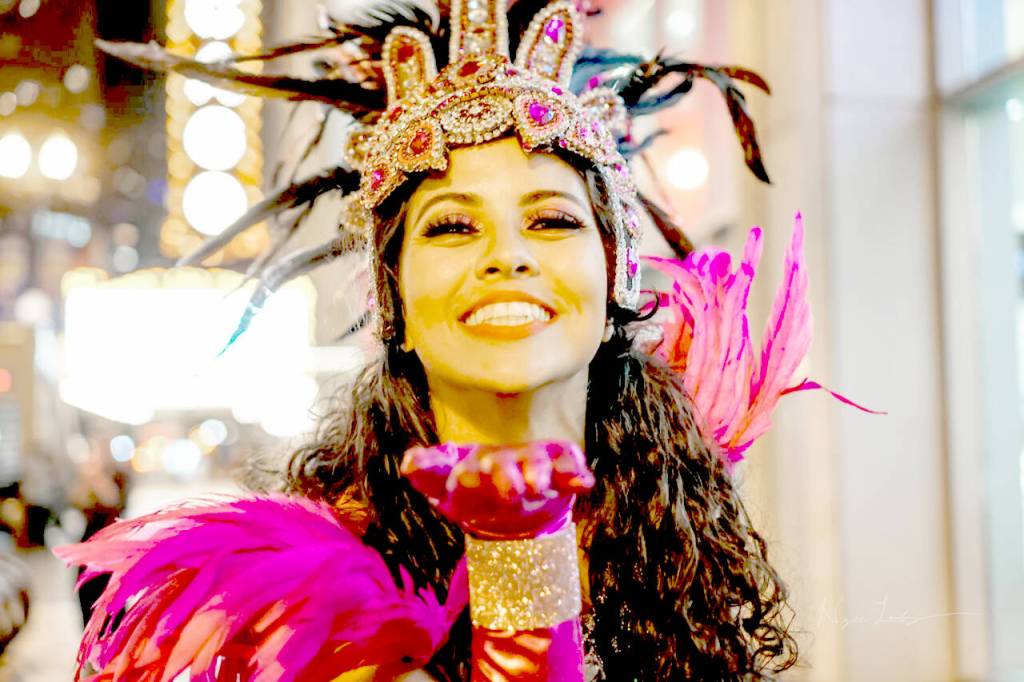

Carnival in Rio is the biggest party in the world, with kaleidoscopic floats 100-feet long and 85-feet tall, thousands of brilliantly costumed samba dancers and millions of people celebrating in one of the most beautiful cities in the world – and you can hear all about it Thursday, April 23, at Field Hall.
Daniel Baldacci, a prominent Brazilian events promoter who grew up with Carnival, will describe the week-long, pre-Lent celebration from his longtime personal experience in planning and participating in the festivities. With him at Field Hall will be samba dancers based in Seattle who perform in Rio de Janeiro during Carnival.
The talk at 5:30 p.m. in the Sunset Lounge at Field Hall, 201 E. Front St., Port Angeles, will be a tantalizing hors-d’oeuvres for the main event, a tour of the celebration to be hosted by the Olympic Medical Center Foundation in February.
Admission to Baldacci’s description of Carnival in Rio is free but RSVP is required. Contact Bruce Skinner, executive director of the OMC Foundation, at bruce@omhf or call 360-417-7144.
Carnival in Rio “is the largest and best event in the world,” Skinner said.
In addition, it’s a warm vacation in what is winter here. The temperature is in the 80s “like going to Hawaii” and the city is backed by mountains, one crowned by the Christ the Redeemer, and open to the Atlantic Ocean.
“It reminds you of Port Angeles,” with both the mountains and the sea, said Skinner, who visited Baldacci in Rio in March.
People in the U.S. may think of New Orleans’ Mardi Gras when they hear of Rio’s Carnival but, Skinner said, “We have nothing that’s close.”
Carnival in Rio celebrates samba, with the samba schools — which act as community clubs in most neighborhoods — creating floats and routines year-round for Carnival, which in 2027 will be Feb. 5-10.
A half-mile of a street known as the Sambadrome is permanently closed off with bleachers that seat 90,000. Those seats are ticketed for those who see the main event, a week of performances among samba schools competing to be part of the grand finale, the Champion Parade.
Each float tells a story.
“It’s like a Broadway show,” Baldacci said. “They make the floats be alive.”
Aside from the Sambadrome, there are hundreds of free blocas – block parties with parades and dancers – at least one of which draws a million people.
During the week are balls, dancing, festive food and drink and a good time, all with a signature African flavor.
Carnival “is part of our culture, a very strong part,” Baldacci said.
Although Carnival dates back to the 17th century, the development of the present-day Carnival culture is attributed to Aunt Ciata of Little Africa, a neighborhood in Rio.
In the late 19th and early 20th centuries, slavery was no longer legal in Brazil but African culture, especially the rhythms of the samba, was deeply distrusted by the ruling elite.
“Once it was not allowed for Blacks to gather,” according to Baldacci. Then Aunt Ciata – who was born Hilária Batista de Almeida – hosted week-long, multi-cultural gatherings in her home and, as Baldacci said, “It became the biggest party in the world.”
Baldacci will offer more details about the growth of Carnival in Brazil during his talk on Thursday.
The idea for the OMC Foundation tour of Carnival in Rio was sparked by the success of the European tour of Carnival.
“The trip to Europe was so successful, we decided to do another event,” Skinner said.
Fifty-two people attended the tour of Nice, France – where Carnival began – as well as the French and Italian rivieras, Florence and a pre-tour of Paris. It raised more than $20,000 for Olympic Medical Center.
In February, the Foundation will host a week in Rio, with a pre-trip to Salvadore, Brazil to see the country’s largest street party, a behind-the-scenes look at Carnival, box seats for the main event, dinner on Sugarloaf Mountain and other treats.
Baldacci is the president of International Festivals and Events in Latin America. Known for producing large festivals, fairs and entertainment events in Brazil, he is one of Brazil’s first event specialists and has led many Behind-the-Scenes Tours at Carnival in Rio.
“It is the largest festival in the world in one of the most beautiful and diverse cities of the world,” Skinner said.
“Come to the biggest party in the world and support OMC.”



Best of Olympic Peninsula