‘Like a light switch, it all changes’: Some clients of Sequim Food Bank never thought they would need it
Published 4:30 am Wednesday, May 6, 2026
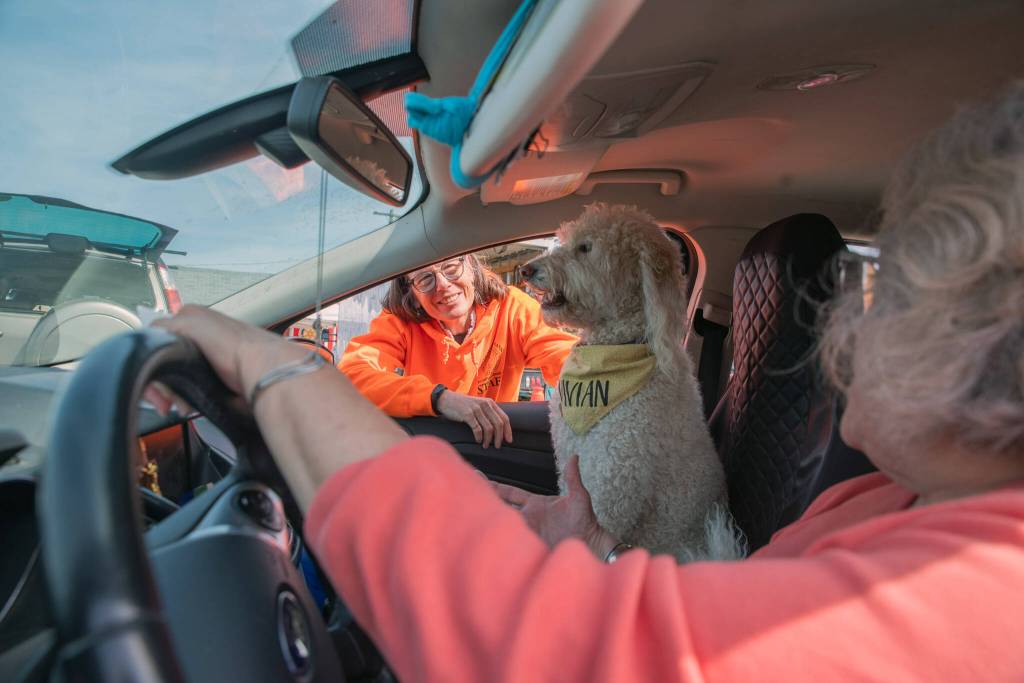



For decades, Christina Fransone had no idea how much she was taking for granted.
Growing up, her dad was an engineer for McDonnell Douglas. Her parents “were like the Brad and Angelina of the ‘60s.” They dressed beautifully, smelled nice, and went dancing. The family ate at restaurants where reservations were made.
As an adult, Fransone’s life followed a similar but unremarkable course. She and her husband lived in a nice neighborhood in Orange County in Southern California. She had regular hair and nail appointments. None of that seemed special or unusual because, after all, she worked hard.
In 2014, Fransone and her husband moved to Sequim in search of a slower pace and small-town charm. But four years later, at age 60, Fransone’s husband “found drugs.” She said she came home from a four-day convention in Salt Lake City to find needles and syringes in their house and her husband “out of his mind.”
“Our life fell apart completely,” she said.
“It’s like, one day your life is completely normal. You know exactly what tomorrow’s going to bring. And then, like a light switch, it all changes.”
Similar stories
Fransone’s story has a theme similar to other clients of the Sequim Food Bank. Life was going okay, until suddenly it wasn’t.
“It doesn’t take much for any of us to find ourselves in a different place than we expected,” said Jen Colmore, director of the Sequim Food Bank. “We meet people all the time who were managing just fine until something changed — a job disruption, a health issue, a family transition. What stands out is not just the challenge, but the way this community responds. It really is neighbors helping neighbors, making sure that when life shifts, no one has to navigate it alone.”
For a long time, Fransone did navigate it alone.
After unsuccessful rehab and intervention efforts, she felt she had no choice but to end her 20-year marriage.
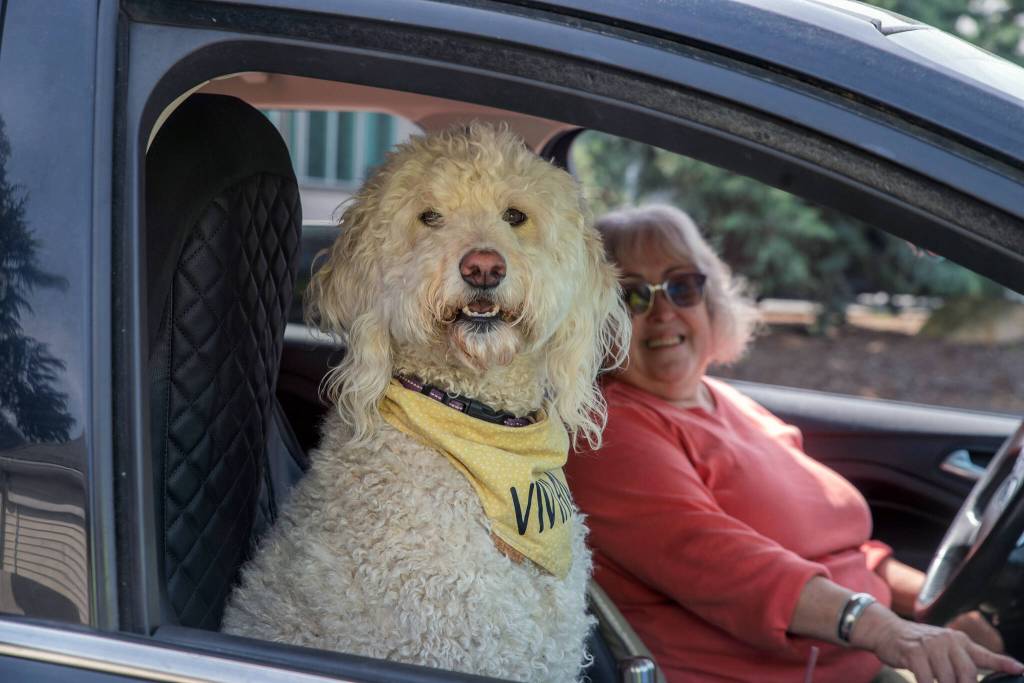
For a while, her business as an end-of-life caregiver brought in adequate income. She was able to support herself and her labradoodle, Vivian. She managed to maintain the large home with a garden that she had kept after the divorce. But then a second crisis hit: she broke her foot. Just like that, she was no longer able to work.
As her finances dwindled, Fransone was forced to sell her home in 2022. She applied for Supplemental Nutrition Assistance Program (SNAP) benefits and received $99 per month in assistance. It’s significantly less than that now due to federal cuts.
Those cuts have affected many others in Clallam County. Thousands of local residents have relied on SNAP.
For Fransone, the modest amount of assistance simply wasn’t enough. For the first time in her life, she went to bed hungry.
Hidden hunger
As she struggled, Fransone kept her dire circumstances a secret. Over time, though, the effects of the hardship she was enduring became visible.
“I lost 20 pounds — not intentionally,” she said. “That was the hard way — going hungry to bed every night.”
Even then, pride and shame kept her from seeking help.
“I was worried about my image more than my hunger,” she admitted.
The turning point came on a Friday afternoon.
Driving past the Sequim Food Bank, where she had driven some of her previous patients, Fransone saw two women in the parking lot. She made a life-changing decision: she pulled into that parking lot. The two women were Andra Smith, then-director of the Sequim Food Bank, and a representative of the food bank in Port Angeles. Fransone shared her story.
“I need some help now,” she told them, “because I’ve lost too much weight.”
The women were very kind and reassuring, Fransone said. Not only was there no judgment at the food bank, there was no cumbersome, humiliating paperwork to fill out.
“They said, ‘If you need food, you just come. No questions asked,’” Fransone recalled. “I cried all the way home. It really changed my life.”
Quality, nutritious food
Fransone’s first visit to the food bank changed every assumption she had.
“I assumed the stuff would be old or moldy or spoiled,” she said. “I didn’t know it was going to be fresh food — beautiful food.”
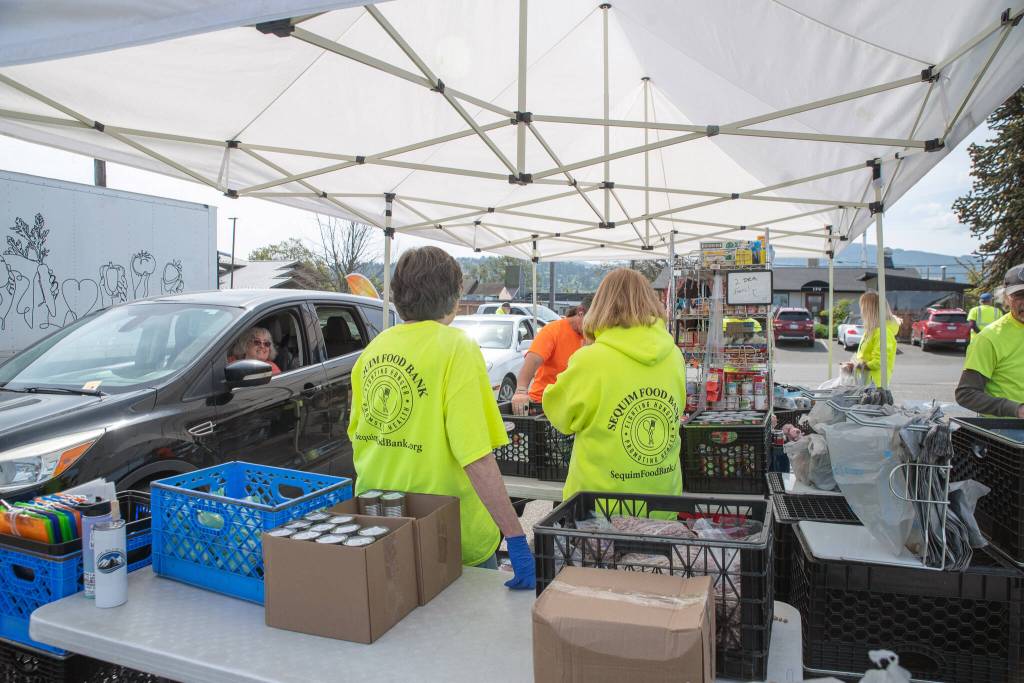
In a farming community like Clallam County, surplus produce is shared with those who need it.
“It’s the best food in the world,” Fransone said. “It hasn’t been sitting in a warehouse… it’s fresh.”
Even the meat is locally sourced from area ranchers.
“It makes the best meatballs I’ve ever had,” she said with a laugh.
But the deeper impact wasn’t just nutritional.
“We’re getting treated with dignity,” she said. “And I love that.”
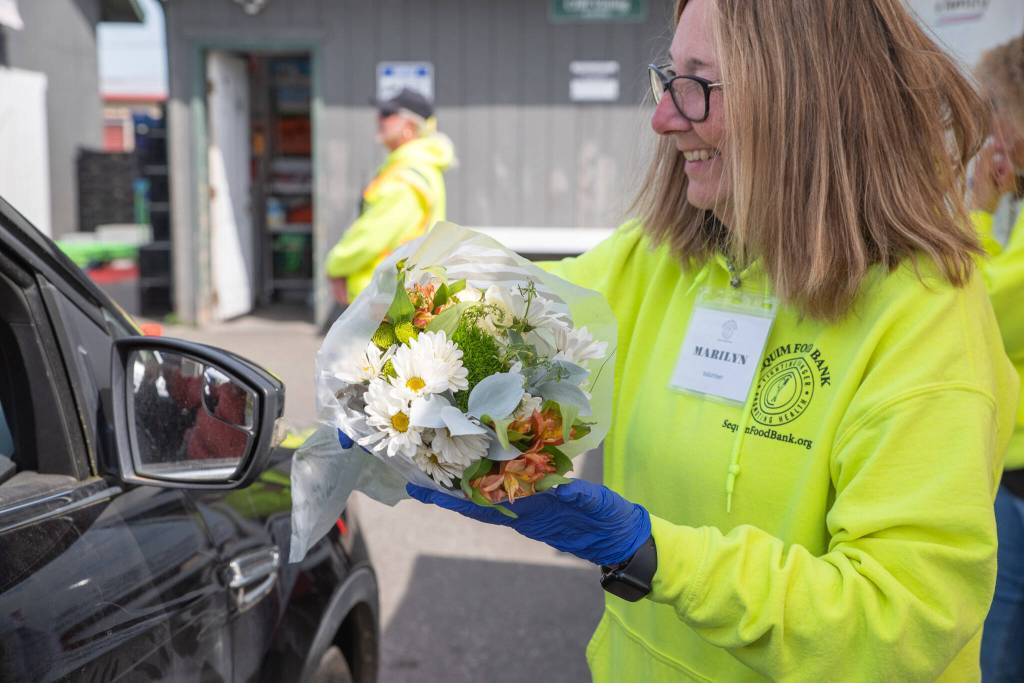
The food bank became more than a place to pick up groceries. It became a place to belong.
“It gave me an outlet,” Fransone said. “I had people to go and visit… and my dog had people she loved.”
The Sequim Food Bank recognizes how important pets are to their owners. They provide food not only for Vivian, but for the pets of other food bank clients.
Lessons learned
Hunger did something unexpected: it pulled Fransone out of her ruminations about things she could not change and helped her see how fortunate she had been all her life. She is better able to understand how others have suffered.
Last summer, Fransone joined the ranks of volunteers at the food bank. When the crew needed someone with an outgoing personality to go car-to-car signing up seniors to receive extra produce distributions, Colmore knew the perfect person for the job: Fransone.
“It was fabulous to get out of my own head,” Fransone said. “You can get stuck on your own problems — poor me, or whatever. It was so exciting to be involved in that community and meeting and serving other people. It was a great experience.”
Fransone saw herself in many of the people served by the food bank — and saw, too, how different some of their paths had been from her own.
“Some of these women were younger than me, and life had not treated them well,” she said. “No one had ever treated them special.”
Amid federal budget cuts and a strained economy, the Sequim Food Bank has been seeing steady increases in the number of families and individuals needing food assistance. The food bank serves an average of 140 families every distribution day. Distribution occurs three times a week — 1 p.m. to 4 p.m. Mondays, and 9 a.m. to noon on Fridays and Saturdays.
Needing the services of a food bank “was never something that I would ever think that I would need in my life — ever — especially at my age. I’m 65 now,” Fransone said.
She hopes to inspire others who might need food assistance but have been hesitant to ask for help. And she reflects often on the life she once considered ordinary.
“I never thought I had a privileged life,” she said, “until all of that went away… and it was like, oh, that was luxury.
“If I never have those advantages again, it’s okay. I know what that’s like. What I didn’t know was how to go without, and still be dignified and happy.”
In the city of lavender, the former resident of The Golden State found something she believes is increasingly rare.
“The core value of this town,” she said, “is helping one another.”


Best of Olympic Peninsula