Jamestown Refuge Management, volunteers remove invasive European green crab
Published 1:30 am Friday, May 15, 2026
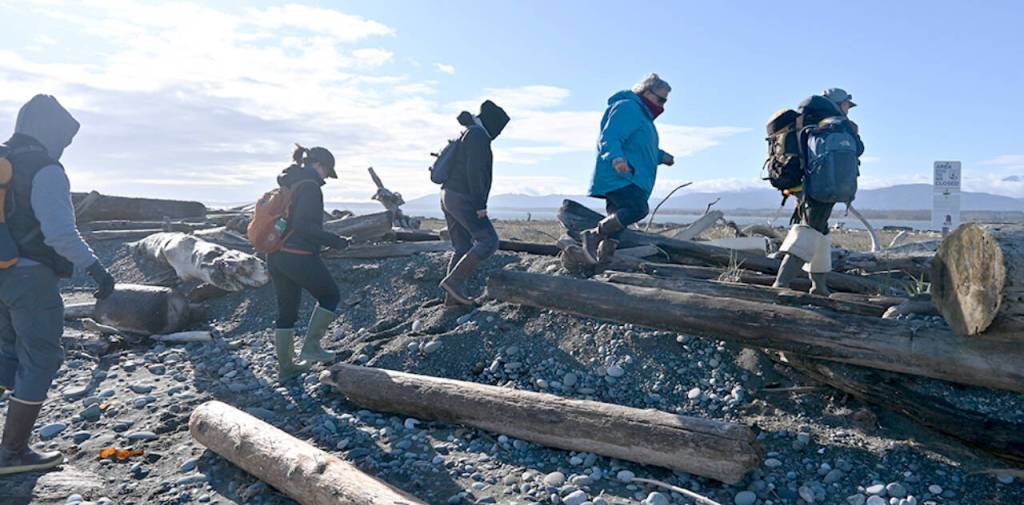
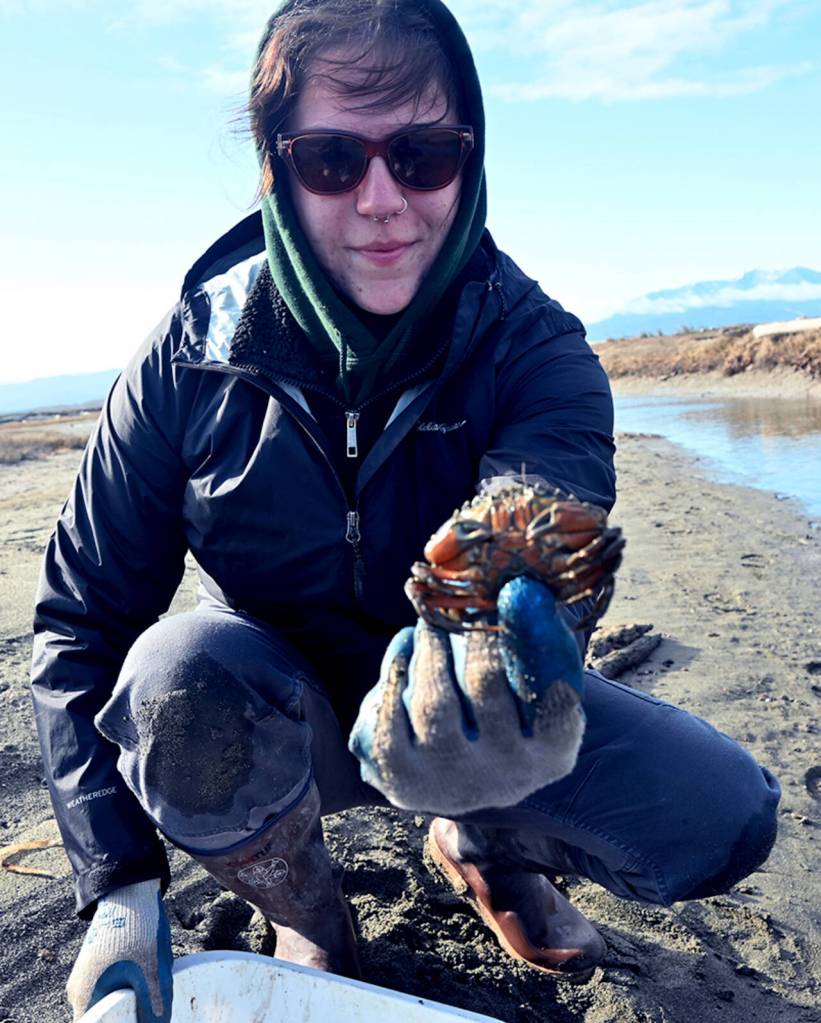
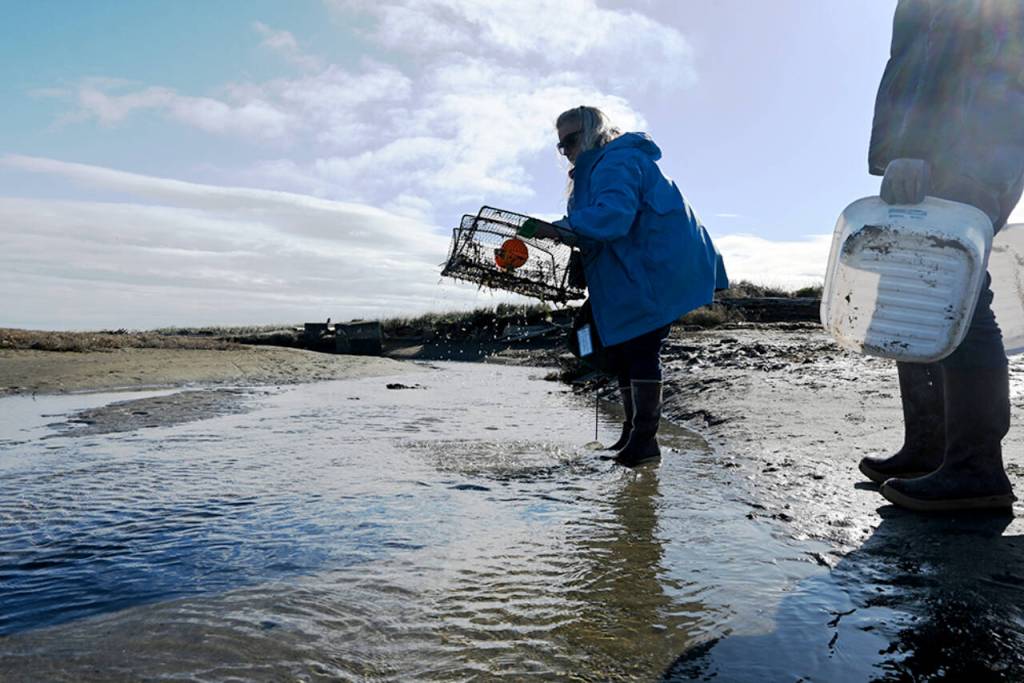
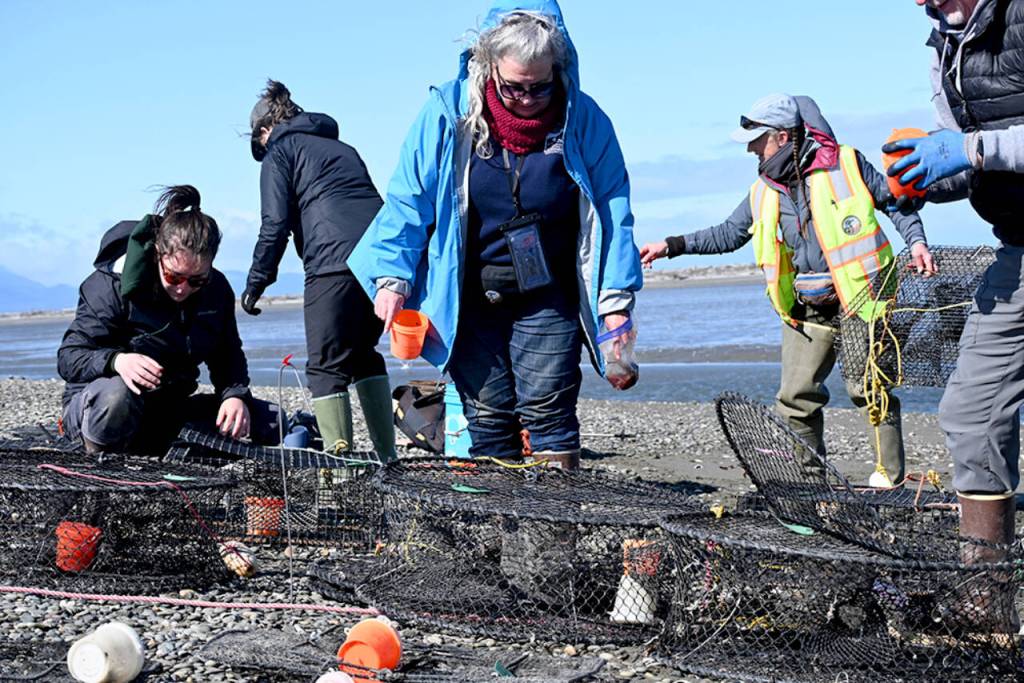
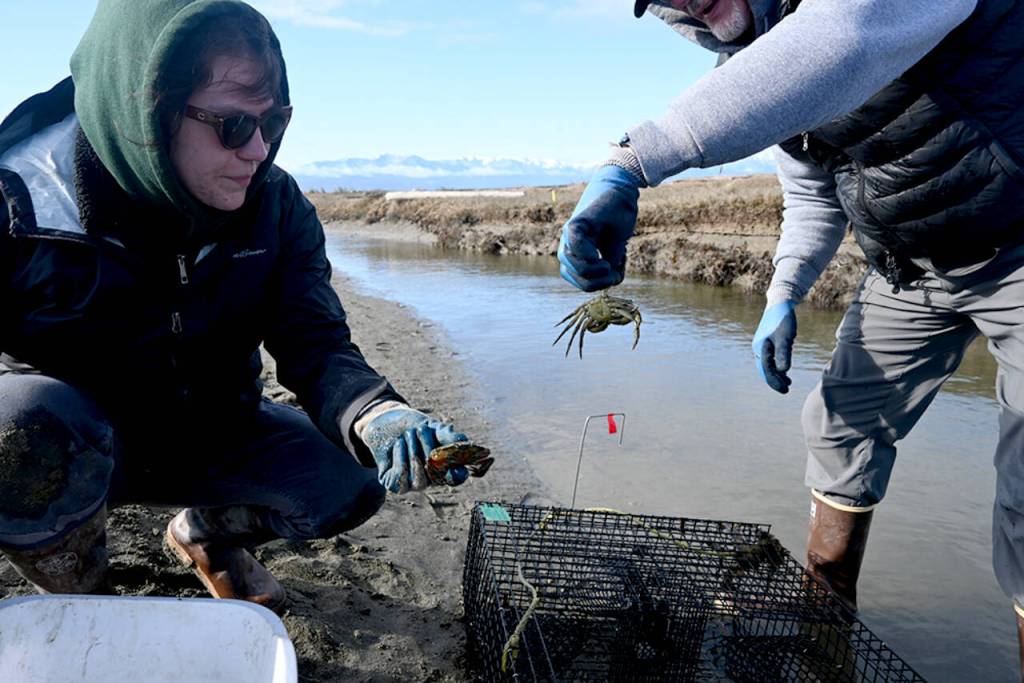
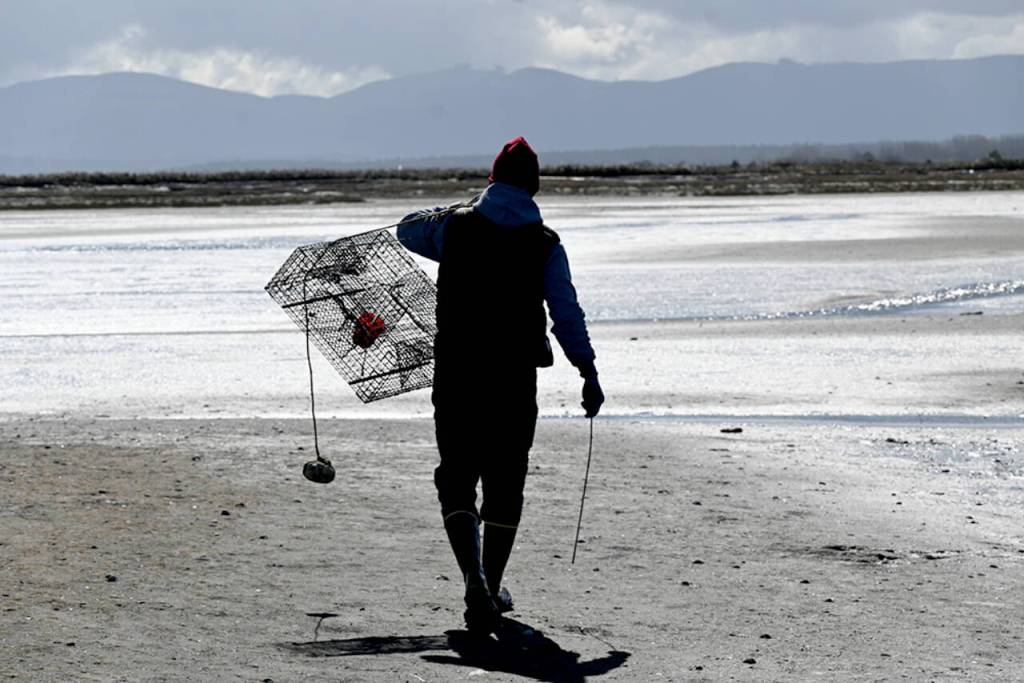
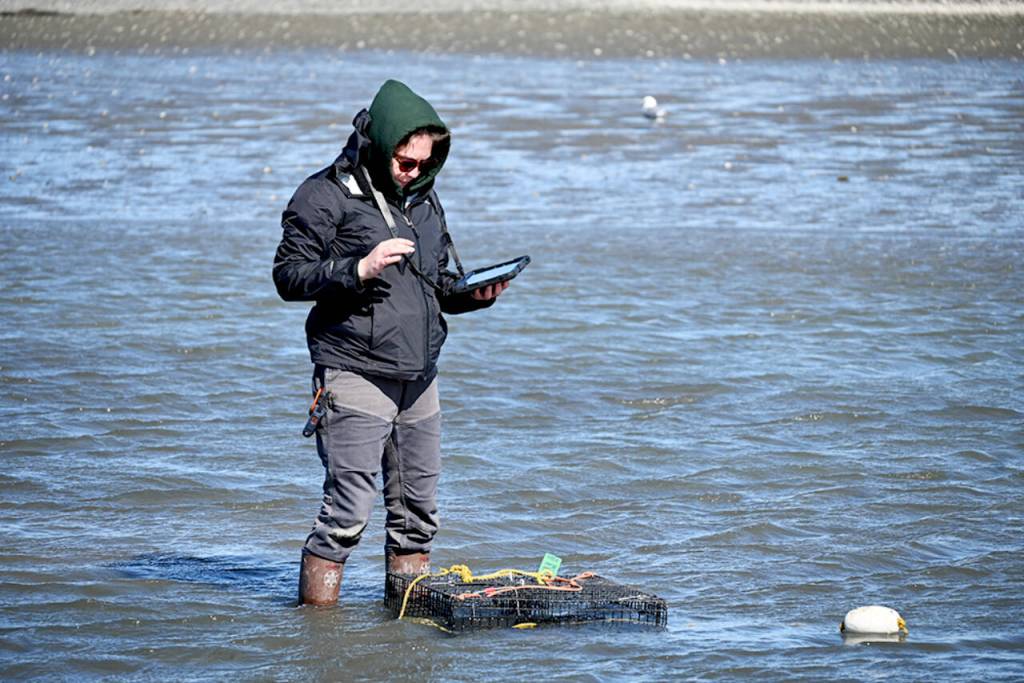
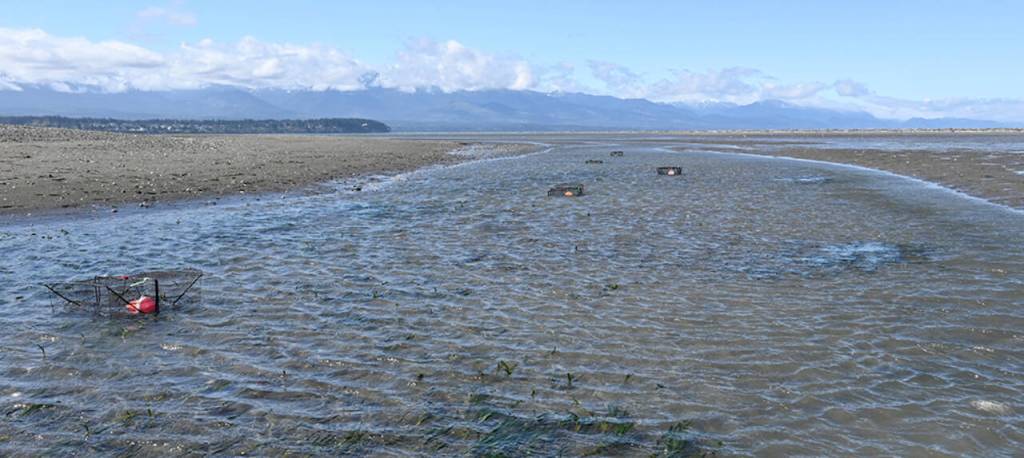


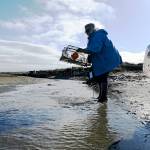
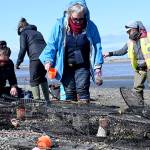
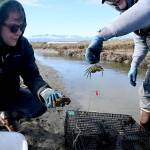

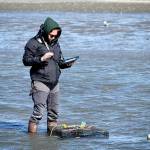

It’s early April, and a hardy group of Dungeness Nature Alliance volunteers and staff with Jamestown’s Refuge Management Program are marching across the rocks and sand, carrying a variety of traps over sun-bleached driftwood logs to place them in shallow channels and lagoons on the Dungeness Spit.
The hunt for the invasive European green crab (EGC) this year began about a full month early, and good thing, too: In 2025, Refuge Management Program staffers and volunteers collected 1,668 individual EGCs. This year? Trapping teams have collected 315 EGCs in the first two weeks alone.
“(Starting early was) getting in front of that invasion; we knew had to extend our trap season,” said Fawn Wagner, Wildlife Refuge manager for the Dungeness and Protection Island National Refuges.
In the Pacific Northwest, the European green crab is particularly troublesome. The EGC prey on and compete with native species like Dungeness crab and shellfish, though the more insidious threat to this part of the Salish Sea is to fragile eelgrass.
Already declining across the Salish Sea, eelgrass habitat is vitally important to forage fish, a vital food source for salmonids, Wagner said. Eelgrass is also essential for birds such as the brant goose, who winter in the area and depend on eelgrass for sustenance.
In other regions such as Northern California and certain East Coast areas, EGC invasions are devastating to aquaculture operations.
European green crabs were first spotted on the Dungeness Spit in 2017. Since Washington State issued an emergency order in January 2022, nearly 3 million invasive green crab have been removed in trapping efforts, including more than one million trapped in 2025, according to state wildlife officials.
Those trapping efforts — often led or supported by tribes and backed by Washington Department Fish & Wildlife’s long-term management plan for European green crab — are the best remedy for the invasive species, Wagner noted, because there is no known preventative measure to eliminate the EGC from Salish Sea waters.
However, removing as many as possible helps preserve eelgrass habitat and gives native species a fighting chance against the invasive creatures.
Volunteers turn out in force
To help combat the growing numbers, Wagner and her team are responding with growing numbers of their own: More than 40 community volunteers with the Dungeness Nature Alliance (DNA) — the volunteer partnership between the Refuge Management Program and the Dungeness River Nature Center — actively participate in setting traps, collecting EGCs and recording data throughout the late spring, summer and early fall months. All told, volunteers contributed more than 800 hours to the efforts in 2025.
“European green crab fieldwork is one of our most sought-after volunteer opportunities; people plan their summers around it,” said Leshell Michaluk-Bergan, volunteer manager for Dungeness Nature Alliance who oversees the DNA.
“This year, we had to redesign our entire scheduling process to make sure shifts were distributed equitably, so that everyone who wanted to participate had a real chance to get out there,” she said.
Having a large group of enthusiastic volunteers is critical to this work, Wagner said, whether it’s out in the field setting traps and collecting crabs or recording biometrics (individual data about each crab), an activity available for those volunteers with mobility issues or those who aren’t interested in the field work.
“One of the core values of the DNA Volunteer Program is inclusiveness — the idea that everybody’s time has value, and if someone wants to share it with us, we’ll find a way to honor that,” Michaluk-Bergan said. “The green crab program is a great example of that in action. When people who couldn’t do the fieldwork wanted to support the program, we found a way. Our biometrics crew is just as important: Without that data, the fieldwork doesn’t mean anything.”
Wagner said with a full crew of volunteers to fill out a six-person team, they can set a hundred traps per day. “We only operate with two or three field staff here, so at most we could set 40 traps per day. And that would be dedicating all of our people, all of their time to that work,” she said.
Trapping and counting EGCs appeals to people, Wagner said, because they can track the numbers and build a picture in their mind of the impact of the trapping efforts.
“And, people are also really connected to the ecosystem and to the Dungeness,” she said. “This is a way for people to get really active in that conservation effort.”
It doesn’t hurt that those 40-plus active volunteers spread the word about the importance of controlling invasive species like the EGC at home and throughout the community, she noted. “That’s just outreach that we could never replace,” Wagner said.
Biological technician Kari Williamson said their team members are quick to pick up how to identify an EGC.
“Our volunteers learn really quick and get really into it,” she said. “With some education and a day or two in the field, most people can work it out.”
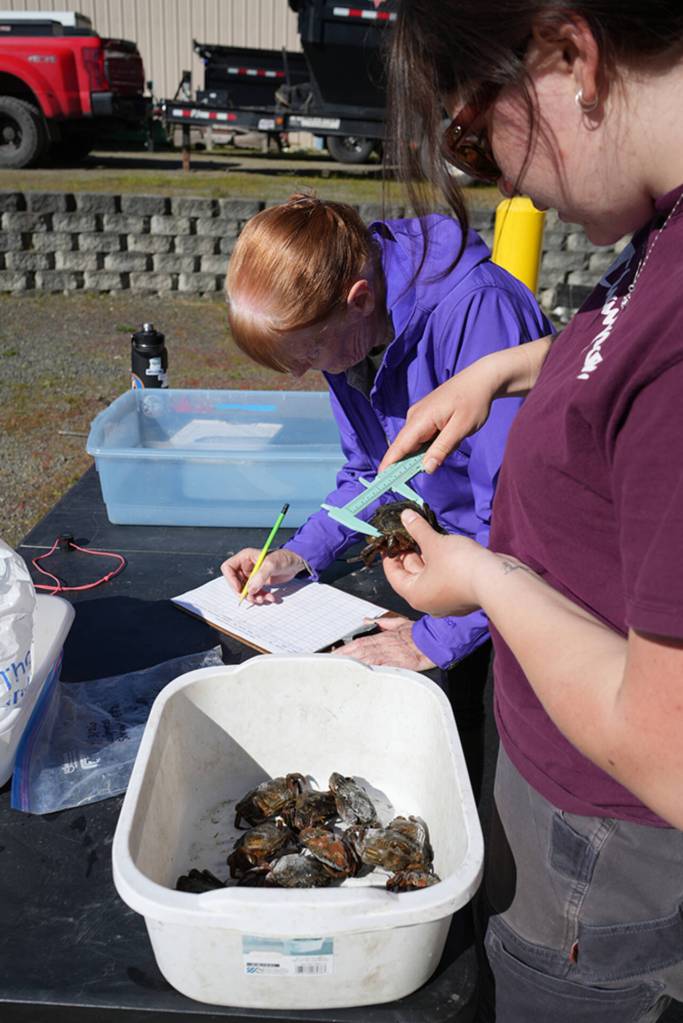
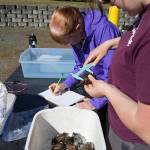
Sue House, a volunteer on the crew, was an environmental science teacher for several years. She said she was “book-smart” about invasive species but was interested in doing more to help out. She started with the “biometrics” part of the trapping process — recording the date, time and location of the catch, and the crab’s sex, size, color, and missing parts (if any) — before heading out on the Spit.
“It’s really fascinating out here,” House said on a recent trapping session in early April, her second time in the field. In early April, a team led by Williamson that included House, intern Kiah Brown, and volunteers Tim Shank and Paula Walsh, ventured out to count/collect EGCs, and reset traps of various sizes in channels and lagoons, and set new traps in eelgrass beds. Team members checked dozens of traps, weeding out EGCs from other crabs and small fish and collecting them in plastic bags while returning the other creatures to the water, while other team members marked EGC trap location data on an iPad.
Back at the Refuge’s administration facility, the EGCs are stored in a freezer before volunteers record their individual characteristics.
“The green crab work doesn’t happen in isolation; it’s part of something much bigger,” Michaluk-Bergan said. “All of our volunteers, whether they’re pulling green crab off the Spit, restoring habitat, or connecting with visitors at the Refuge or River Center, are working toward the same thing: a healthy Dungeness watershed. That shared purpose is what makes the DNA Volunteer Program something special.”
Tracking trends
In early 2026, the refuge’s EGC trapping teams are focusing on areas with a concentration of eelgrass. Wagner noted that, while EGCs are found in various channels on Graveyard Spit or the lagoon abutting the Dungeness Spit’s shoreline, many more are being found in the critical habitat it tends to destroy.
“Last year we realized that [the eelgrass] was a hot spot, so we’re following that data,” Wagner said. “We’ll focus traps where (trapping rate) areas are highest.” Efforts here can help EGC trapping further east as EGC populations migrate, Wagner said. The Dungeness Spit acts as a kind of “tipping point.”
A trend they are noticing in early 2026 EGC catches on Dungeness Spit is an abundance of gravids — female crabs carrying fertilized eggs. Wagner said this could be because the early trapping is catching the EGCs in prime reproducing time. Or, she said, the local EGC population is counteracting these control efforts by reproducing at greater numbers.
Either way, the early trapping comes at a good time: Wagner said the Refuge Management Program has captured more gravids in the first couple of weeks than in all of 2025, and each gravid can be carrying between 180,000-200,000 eggs.
Willapa Bay, near Long Beach, has some of the highest numbers of EGC catches, state biologists said. Williamson noted that their trap teams are having some success trapping gravids using PVC pipes — the females may be seeking out these protective tubes as shelter for their eggs — and are starting to use some on the Dungeness Spit to gauge their effectiveness.
The Refuge Management Program may also be getting some extra sets of eyes in their fight against the European green crab: Wagner and a company are looking at the viability of an underwater camera that could track EGCs.
Lend a hand
So how can people help? For those who spend time in and on the water, Wagner said, keep an eye out for European green crab. (See wsg.washington.edu/crabteam/greencrab/id for tips on identifying features, and note that EGCs can be colored bright yellow, red and orange, not just green).
Once spotted, report the find to the Washington Invasive Species Council at invasivespecies.wa.gov. European green crabs are illegal to possess, so Wagner advises that people place them back where they were and report the find. (Note: You can report the time/date, location, number of crab and even upload images, and reporting can be done anonymously.)
Want to volunteer? Volunteer opportunities within the Dungeness Nature Alliance are available by contacting the Dungeness River Nature Center at dungenessrivercenter.org/volunteer. While the Refuge Management Program is not recruiting for EGC efforts now, Wagner noted there will be volunteer onboarding opportunities in the fall.


Best of Olympic Peninsula