Ask a Master Gardener: All about air plants
Published 1:30 am Wednesday, July 1, 2026
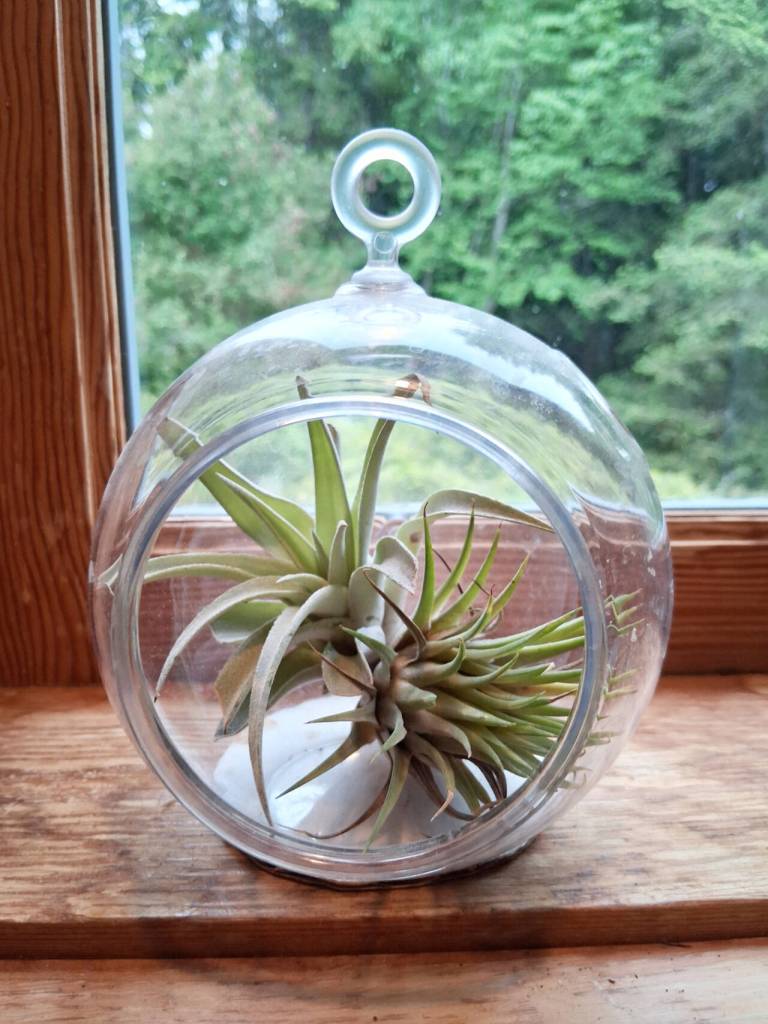
Q: Air plants are not planted in soil. So how do they stay alive?
A: Air plants (genus Tillandsia) are members of the Bromeliad family. Unlike most plants, air plants do not absorb water or nutrients through their roots. Instead, they trap moisture and dust, which provide nutrients, from the air using fuzzy scales on their leaves called trichomes.
Most air plants consist of a small rosette of leaves. Some have a few roots at the base intended only for anchoring the plant.
Species adapted to hotter, drier climates (often called desert types) have a sprawling growth habit and narrow leaves. They tend to have a greater number of trichomes, causing the leaves to have a dusty white appearance.
Species adapted to moist and more humid locations grow more upright; their leaves are greener due to fewer trichomes.
In the wild, air plants are epiphytes, attaching themselves to rocks or tree branches for support. They do not harm these other plants and get what they need to survive from the air.
Air plant care
Air plants don’t need much attention but can suffer from inappropriate planting, placement, or care.
Do not plant an air plant in soil or cover its base with wet potting mix. This will cause the plant to rot. Instead, display your air plant on an attractive dish or in a specialized hanger or terrarium.
Some gardeners place the plants in the canopy of a larger houseplant such as a Ficus tree to mimic their growth in the wild. To keep them in place, the plants can be wedged into a branch fork or gently tied in place with twine or other soft material.
Place your air plant in bright indirect light. Although some varieties can tolerate direct morning or evening sun (i.e., the desert types), direct sunlight can quickly deplete moisture reserves in their leaves, resulting in leaf scorching.
Air plants perform best in settings with consistently high humidity. A kitchen or bathroom are good locations. Avoid placement near air conditioners or heating vents, which also dry out their leaves.
Misting the plants to increase the humidity is not recommended because the moisture evaporates quickly and must be repeated multiple times a day to be effective. Proper watering is the answer.
Water your air plant once a week (or so) by submerging it in water for 30 to 60 minutes. Most sources suggest using room temperature tap water that has been allowed to sit overnight so that the chlorine has dissipated.
Gently shake off excess water and place the plant upside down on a paper towel in a well-ventilated area for a few hours. Letting the plant dry helps prevent rotting and other diseases.
The frequency of watering depends on the level of humidity in the plant’s growing environment and light exposure. If your plant’s leaves are curling inward excessively, turning pale, or developing crispy brown tips, it may not be getting enough water.
Air plants grow slowly and do not require as much fertilizer as other houseplants. Fertilize your air plant once a month during periods of active growth (i.e., in spring and summer).
The easiest way to fertilize your air plant is to soak it in a bromeliad or balanced houseplant fertilizer solution diluted to one-quarter or one-eighth of the strength recommended for other houseplants.
Air plants bloom only once in their lifetime, producing vibrant, showy flowers. After blooming, the plants will die. If you are lucky, however, the mother plant will slowly produce “pups” (i.e., small offshoots) at its base before dying.
Help for gardening problems
Get help solving your gardening problems from Clallam County Master Gardeners. Bring your gardening questions to Swain’s General Store from 10 a.m. to 1 p.m. on the first and third Fridays of each month or the Sequim Farmers’ Market from 8:30 a.m. to 2 p.m. on the second and fourth Saturdays of each month.
You can also email your questions to mgplantclinic.clallam@gmail.com. Please bring samples of the problem or close-up, high-resolution photos as well as photos of the whole plant and nearby plants.
________________________
Jeanette Stehr-Green is a WSU-certified Clallam County Master Gardener.




Best of Olympic Peninsula