OPAS checks in on purple martin nest box tenants
Published 1:30 am Friday, July 24, 2026
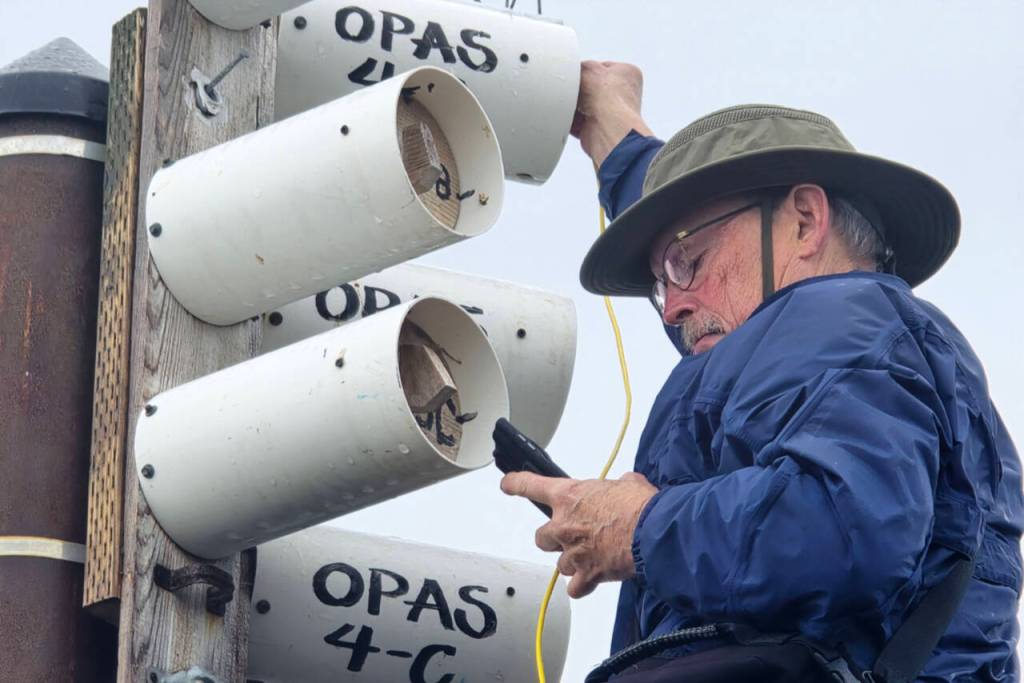
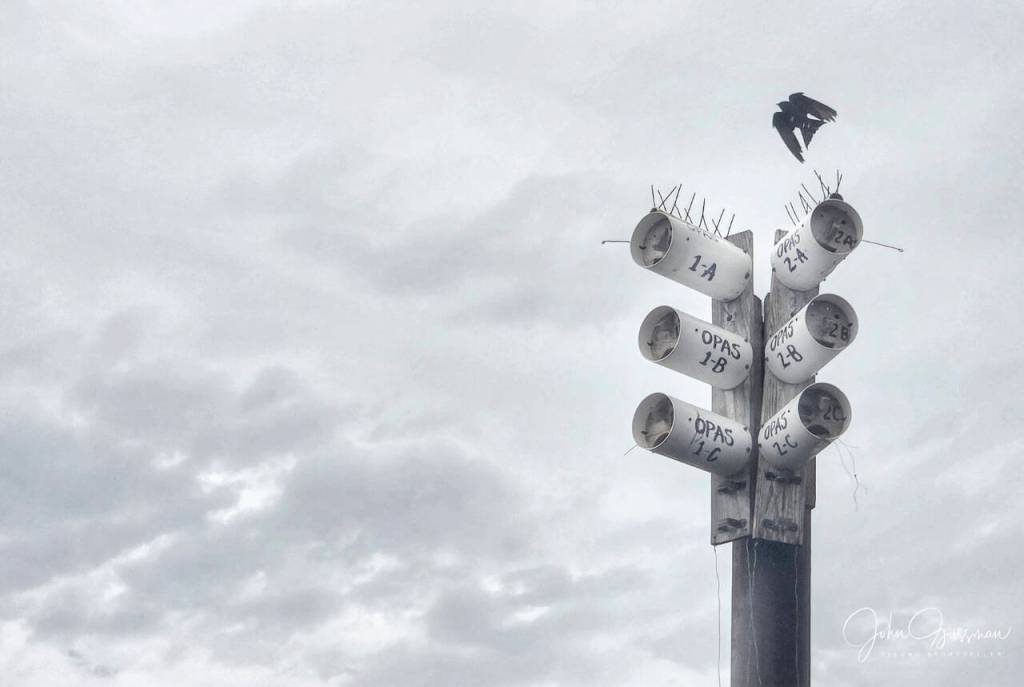
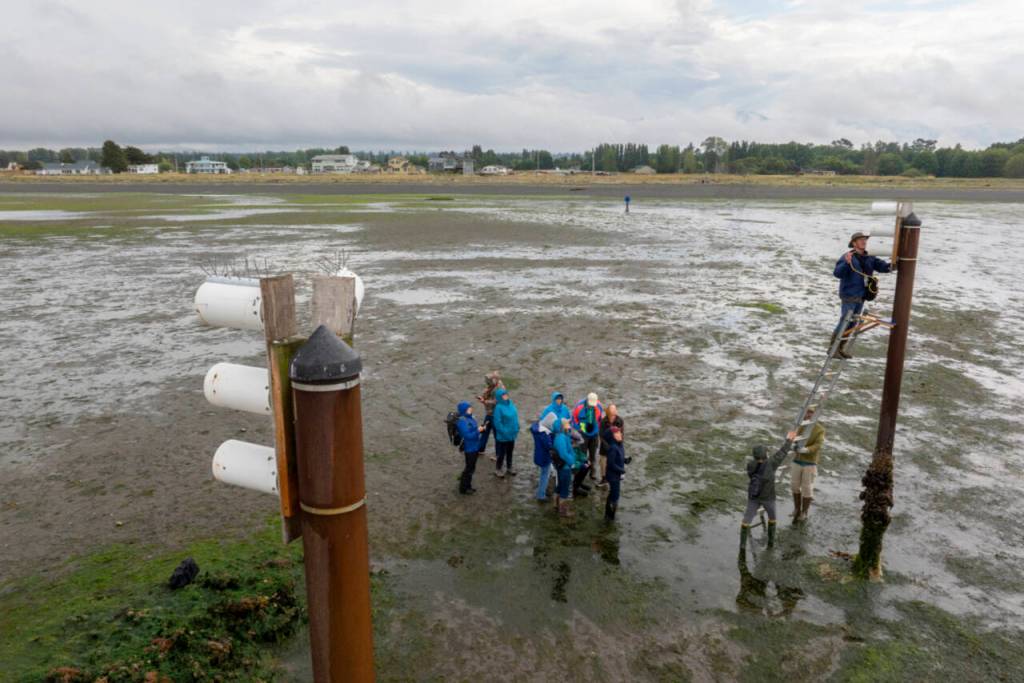
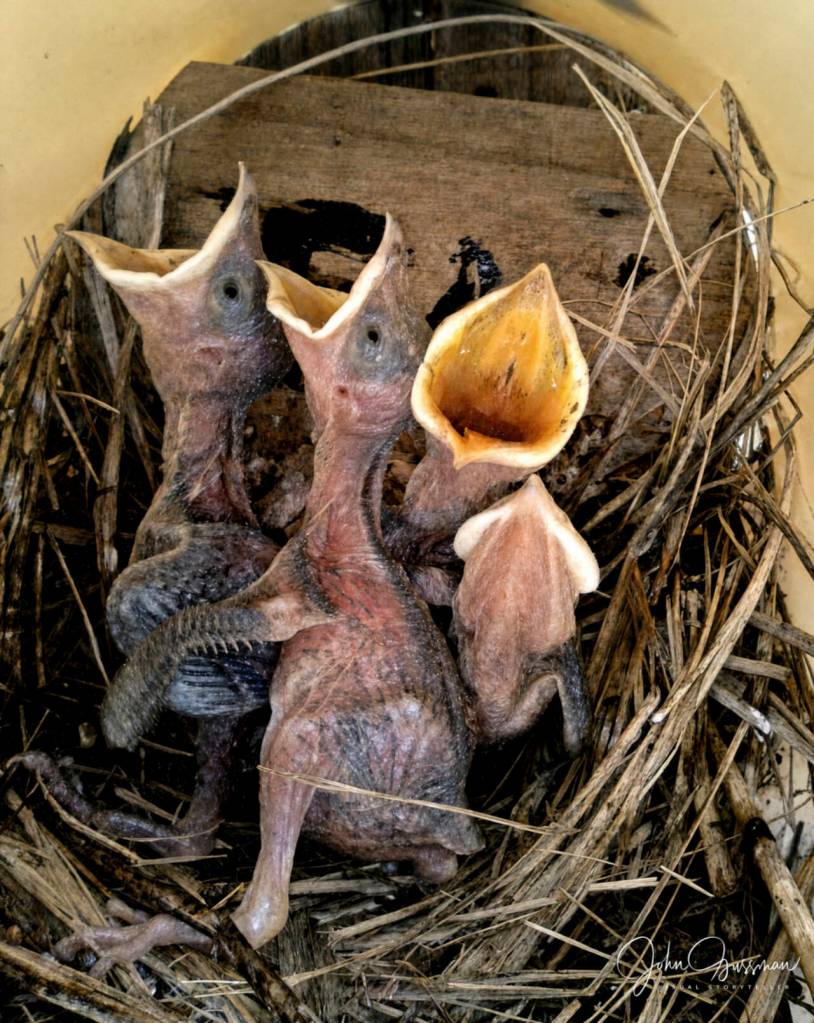



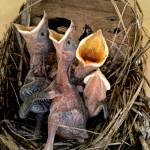
Local nature photographer and Travel Journal speaker John Gussman went along with volunteers with the Olympic Peninsula Audubon Society (OPAS) on one of their scheduled checks of poles with nest boxes for purple martins.
According to Gussman, when there is a low tide the group checks the number of eggs and chicks using an endoscopic camera on a cable tethered to a smartphone app. There are 18 nests on three steel poles, he said, and they are removed after the nesting season.
The purple martin is a perching bird in the swallow family Hirundinidae and is the largest swallow in North America. Despite its name, its feathers are not truly purple but rather dark blackish-blue with an iridescent sheen giving them a bright blue to navy blue or deep purple appearance.
Purple martins are migratory, with their breeding range including all of the eastern United States and southeastern Canada, as well as the coastal Pacific Northwest, Baja California, Arizona, and New Mexico.
Known for their speed, agility and rapid flapping and gliding flight patterns, the birds will dive from the sky at great speeds with their wings tucked when approaching their nest.




Best of Olympic Peninsula