Seniors learn ways to avoid financial scams at free seminar
Published 5:30 am Wednesday, August 5, 2026
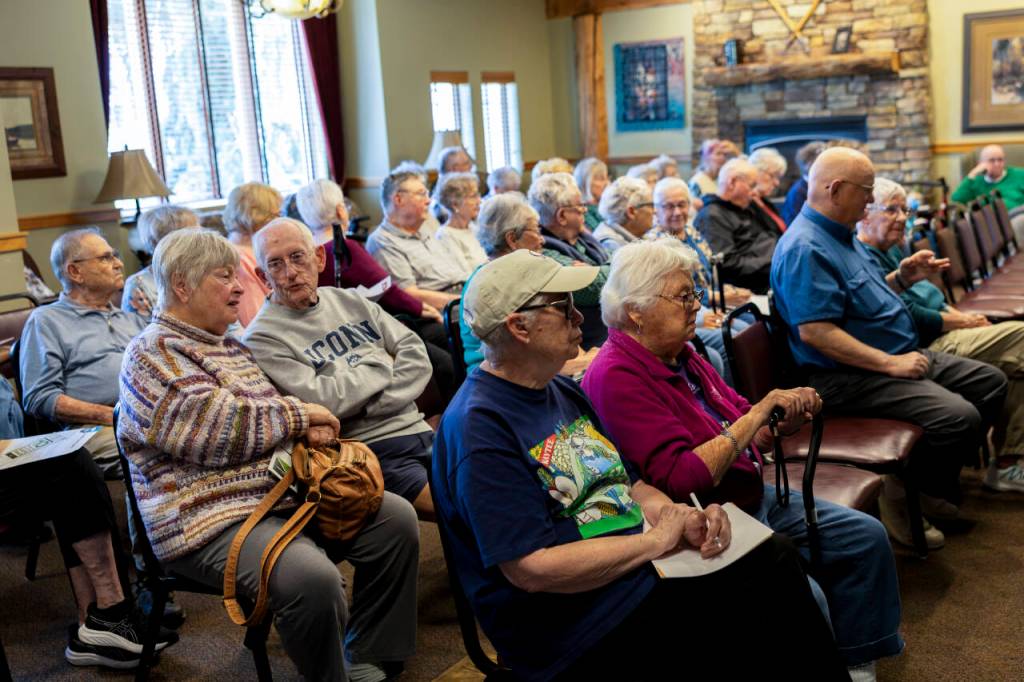

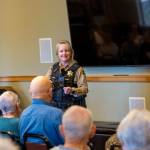

The first warning at a financial scam prevention seminar held last week in Sequim came from the presentation computer.
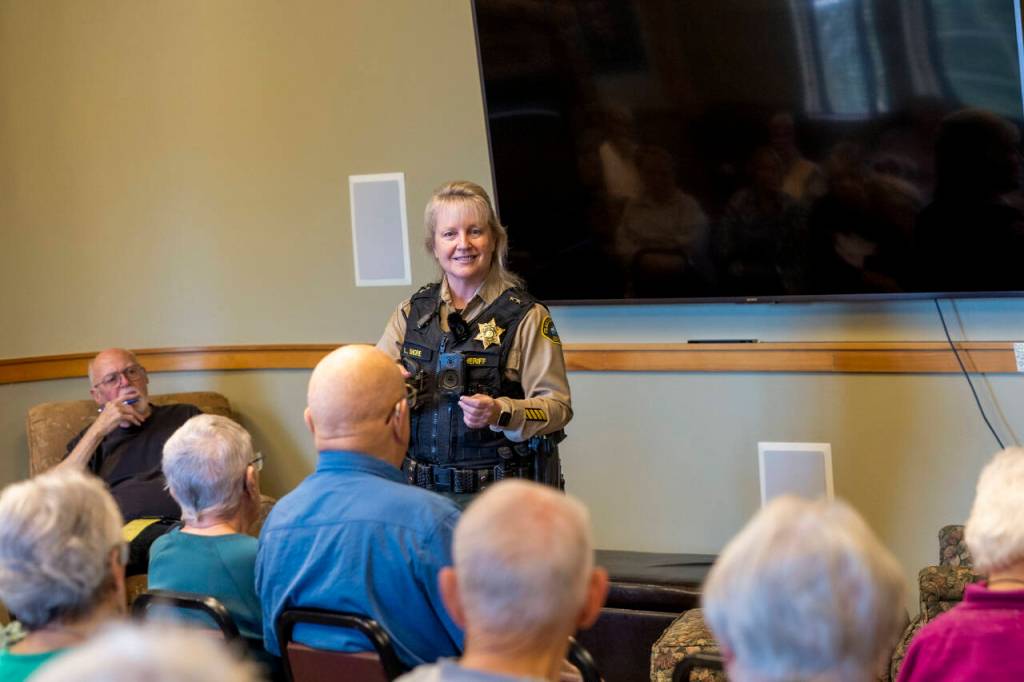
When Undersheriff Lorraine Shore tried to open her slides, a security alert blocked the program. The timing drew laughter from the crowd in the meeting room at The Lodge at Sherwood Village.
“Our computer thinks that we’re scamming because it says ‘security alert,’ and here we are talking about a scam presentation,” Shore said.
The humor gave way quickly. Shore told those attending the free July 27 seminar that Clallam County residents have lost millions to fraud, some of it converted into gold or Bitcoin and handed to people posing as government agents.
“It’s almost impossible to make you whole if you are a victim,” Shore said. “So prevention is the best.”
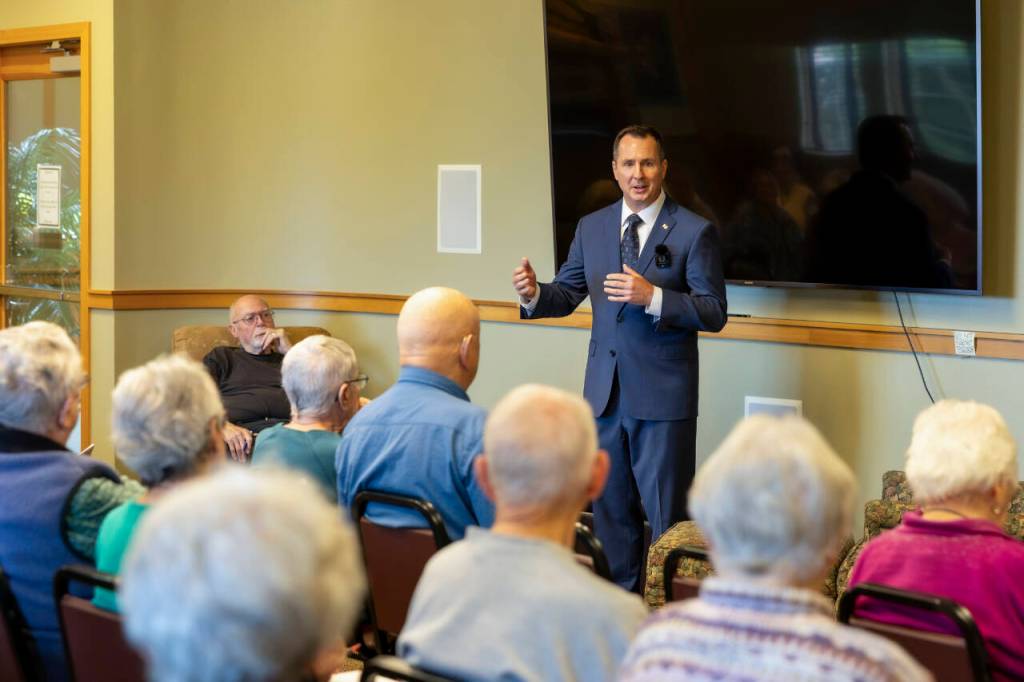
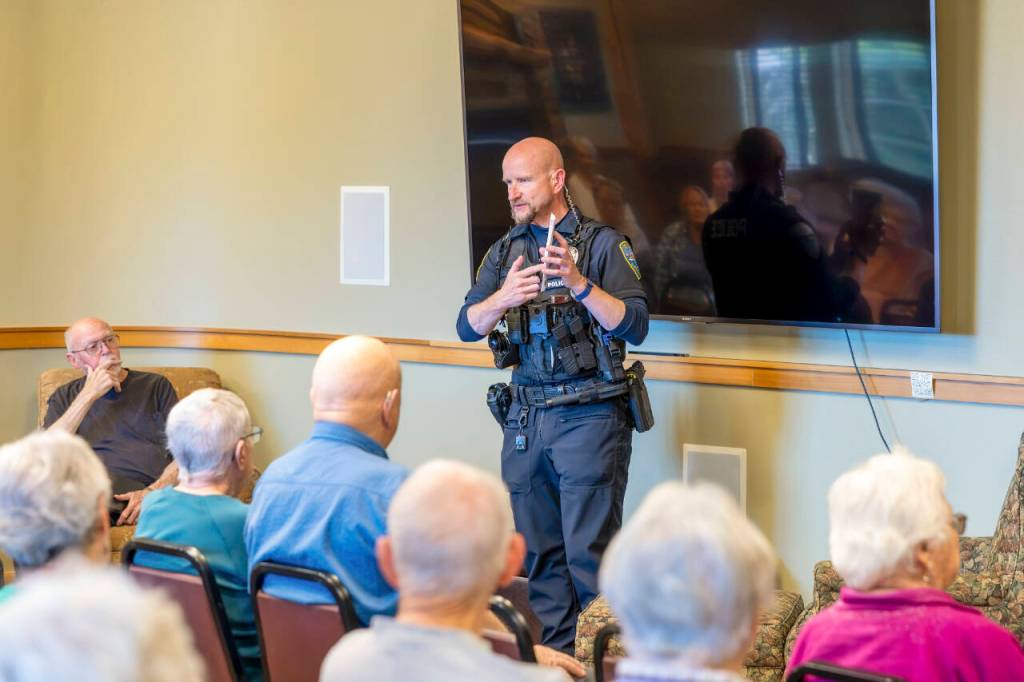
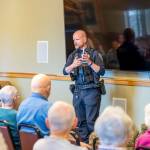
Shore, of the Clallam County Sheriff’s Office, presented alongside Officer Roderic Sisk of the Sequim Police Department and Clallam County Prosecuting Attorney Mark Nichols. All three landed on the same conclusion: The crime is hard to investigate, harder to prosecute and far easier to prevent.
Sisk called it a strange crime, almost the reverse of a street robbery, where police usually catch the person and the loss is what was in your wallet.
“The potential risk to you is everything you’ve ever earned,” Sisk said. “That guy with a gun is hard to stop. This is easy to stop.”
Within the past year, Shore said, several residents have lost hundreds of thousands of dollars to callers posing as Federal Trade Commission agents. Victims are told their accounts have been compromised, then walked through emptying them, converting the money to gold and handing it to the scammers.
The scammer often stays on the phone while the victim is at the bank. Shore said tellers and deputies have told people at the counter they were being scammed and have been waved off because the victim has spent two days with the voice on the phone.
“They won’t believe the people at the bank,” Shore said. “They won’t believe us.”
“We have a lady now who lost her house,” Shore said. “They sold her house from underneath her. She has no house now (at) 83 years old.”
The room was not an audience of the unaware. A woman who spent her career in health care said she lost about $40,000 in a scam two years ago.
Nichols said scammers keep targeting the senior population because that generation has a sense of trust.
“It’s what is your strength, ironically, that can also present as a weakness,” Nichols said.
The cases that actually get charged are rarely the ones that begin online. Nichols said his office is prosecuting roughly 15 felony fraud cases in Clallam County Superior Court, and nearly all of them involve paper. People work county roads checking unsecured mailboxes. A renewed driver’s license is the prize.
Sisk cautioned, “Do not put that red flag up that basically says, ‘I have something to steal in my box. Please come and take it from me.’”
“Words to live by,” Nichols said.
Nichols recommended three things: A locking mailbox, a monthly look at the bank statement, and the free annual credit report. He noted that identifying the computer used in an online fraud does not identify the person at the keyboard, and extradition is not feasible over what is often a few thousand dollars.
Sisk pointed to the quick list on the back of his brochure. Don’t give in to pressure, he said. Nothing legal or governmental has to involve action right now.
“No legitimate transactions take place with a stack of gift cards,” he said.
The hardest cases, he said, are the victims who cannot stop. One woman kept buying gift cards at Safeway for people who contacted her online. After Sisk intervened, she started going to Walmart.
“Once you’re a victim of it, it becomes psychologically easier to continue to be a victim than to face the realization that you’ve been tricked,” Sisk said.
“In my business, we’re the last to show up,” Nichols said. “This is one of the precious few opportunities that I have to do something proactive.”
Red flags that it’s a scam:
• Pressure to act immediately.
• A request to pay in Bitcoin, or to buy gift cards on someone else’s behalf.
• A request to move the conversation to WhatsApp or Signal.
• A request to install software that lets someone else control your computer.
• A caller you did not contact claiming to be your bank, the IRS, Medicare, Social Security or law enforcement.
• Anyone who tells you to keep the arrangement secret from your family.
If you think you have been scammed:
• Call your bank or card issuer first, ideally within 48 hours. Call law enforcement second.
• If someone is at your door or waiting to meet you in a parking lot, call police immediately.
• Freeze your credit with all three credit bureaus and request your free annual credit report.
• If your computer is acting strangely, take it to a local repair shop rather than trusting a caller or a relative.
Helpful contacts:
Sequim Police Department: 360-683-7227
Elder Fraud Hotline: 1-833-372-8311
Adult Protective Services: 1-877-734-6277
Internet Crime Complaint Center: www.ic3.gov



Best of Olympic Peninsula