City approves $51.6M budget for 2026
Published 4:30 am Wednesday, December 3, 2025
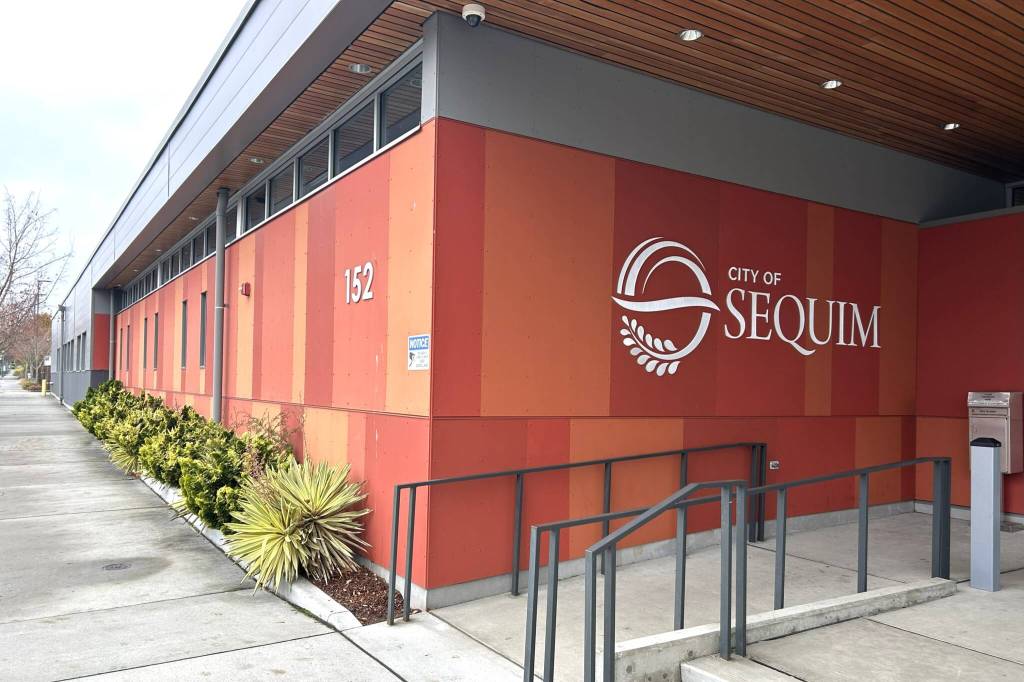


Sequim’s 2026 budget is moving forward balanced at $51.6 million with utility rate increases set for the next five years, municipal funding capped, and project costs and loads set to account for inflation, tariffs and other fluctuating variables.
City councilors approved the budget 5-0 on Nov. 24 with councilors Dan Butler and Nicole Hartman excused from the meeting.
Following two public hearings on Nov. 10 and 24, no budgetary numbers changed, according to Finance Director Sue Hagener; however, councilors agreed in another 5-0 vote to use Rainy Day Funds to fully fund a pair of two-year contracts they previously reduced.
Municipal funding
In the summer, councilors voted for a new policy that limits Sequim’s Municipal Funding Program to 1.5% of the city’s General Fund. For 2026, that total for six agencies is $207,700 in contracts, about $200,000 less than total requests from eight agencies.
Shipley Center and YMCA of the Olympic Peninsula were under two-year contracts going through 2026, with Sequim’s senior center set to receive $10,000 of a $15,000 contract to offer low-cost educational classes and seminars, and the YMCA $28,750 of $42,500 to continue the YMCA Youth & Family Resource Navigator within the Sequim School District to help students and families with housing, food, and/or financial insecurity to access basic community resources.
On Nov. 10, Michael Smith, Shipley Center’s executive director, asked the city to fulfill its obligations to both nonprofits for 2026 to finish the contracts and then move forward with the policy decision the following year so it’s fair.
Most councilors agreed, including Mayor Brandon Janisse who said reducing those contracts after agreeing to them the previous year “makes us look bad” and they should honor their requests.
Councilor Kelly Burger agreed, saying that if they were to fully fund the request of Shipley Center, then they should honor the YMCA’s second year as well.
City Manager Matt Huish and City Attorney Kristina Nelson Gross told councilors that contract applicants were alerted to the municipal cap and reduction in funds, and that contracts stated monies were contingent on availability and/or council’s approval.
On Nov. 24, Janisse said he agreed with the municipal funding cap, but reiterated the city needs to honor the two-year contracts. Councilors Burger, Harmony Rutter, and Vicki Lowe verbally agreed.
Deputy Mayor Rachel Anderson disagreed saying she knew during the difficult process of determining who gets what in the summer with a new municipal cap, it would null the second-year contracts. She recommended keeping the determined amounts from the summer.
Ultimately, councilors agreed to fund the remainder of the two contracts — $18,750 — using the city’s Rainy Day Funds with about $900,000 available. Councilors agreed last year to fund the YMCA’s original contract for year one with the same funds ($42,500).
Financial changes
As part of the budget process, councilors unanimously approved on Nov. 10 revised rates and fees for 2026, including new higher utility rates.
City councilors decided in the summer to follow a five-year plan following a utility rate study to increase rates each year through 2030 with water rates going up by 5.5%, sewer rates by 4.5%, and general facility charges, a one-time charge for new developments to connect to city utilities, by 3%.
City staff report that most households using up to 500 cubic feet of water and sewer services will see about a $5 increase per month starting in February 2026, while it will cost a new single-family development to connect into the city’s water and sewer in 2026 about $473 more than this year.
Staff wrote in budget materials that the increases in part avoid major periodic cost increases, reflect actual costs of services, and follow quantitative data while helping pay down utility debt service, and support major repair, replacement and expansion projects.
Sequim continues to offer a Low Income Utility Discount that reduces base charges by half. For more information, visit sequimwa.gov/440/Low-Income-Utility-Discount.
Along with updated utility charges, councilors voted 6-1 with Janisse opposed on Nov. 10 to increase the city’s allowable property tax levy by 1%. Hagener said this will add about $19,000 to the city’s general fund to support general services, and those funds could be used, as an example, to help pay for a seasonal parks worker.
She also noted that the city hit a milestone with an estimated assessed value beyond $2 billion. She said as the city’s assessed value grows, it takes some taxing pressures off of other homeowners.
More budget info
Next year’s budget is about 11% less than 2025’s budget with sales tax revenue anticipated to come in at about 4% more in 2026 ($4.7 million) than this year.
Salaries and benefits will cost Sequim $13.2 million, about 5% more than 2025, with three new bargaining unit contracts, cost-of-living, market adjustments, and comparative data for non-represented staff.
Staffing will go up to 101.60 full time equivalent employees next year, an increase of 1.1 FTEs, following the retirement of a 0.38 public works continuity adviser for the Simdars Interchange project, and a FTE being reduced to part time (0.2) while adding an Asset Analyst 1, and two street seasonal employees (0.66).
Staff budgeted $17.4 million in capital projects next year with many dependent on grants, low-interest loans and/or bonds. As previously reported, the city’s 2026-2031 Capital Improvement Plan includes 133 projects worth $190 million with more than half unfunded.
One of the city’s largest projects, Flaura’s Acres ($6.3 million), continues to make traction as city staff work towards permanent sewer and water repairs through securing grants to replace the neighborhood’s septic system and connect to the city’s utilities.
A few other notable projects include $1.84 million to start construction on the multiyear, $4.83 million Silberhorn Deep Well No. 4 that adds a new water supply well and control center to increase water capacity, and about $2.2 million in water and sewer improvements along West Sequim Bay Road over multiple years to expand water and sewer services on a portion of the road to anticipated residential developments and Pacific Northwest National Laboratory (PNNL-Sequim).
One grant worth $949,000 is set to help improve multiple traffic and pedestrian signals, while a $546,000 grant will go towards designing and constructing a multi-use path on Keeler Road between West Sequim Bay Road and the Olympic Discovery Trail.
A third grant worth $435,000 will help Sequim conduct a feasibility study and design of a sidewalk and multi-use trail along East Washington Street from Blake Avenue to Simdars Road.
City staff also budgeted $410,00 to help begin playground improvements at Margaret Kirner Park, and $77,000 to develop a master plan for the 16.6 acre McCord Park at 764 W. Hendrickson Road.
For more about the proposed 2026 budget, visit https://www.sequimwa.gov/1327/2026-Proposed-Budget.


Best of Olympic Peninsula