Get it Growing: September hydrangea harvest in Sequim
Published 5:08 pm Tuesday, September 23, 2014
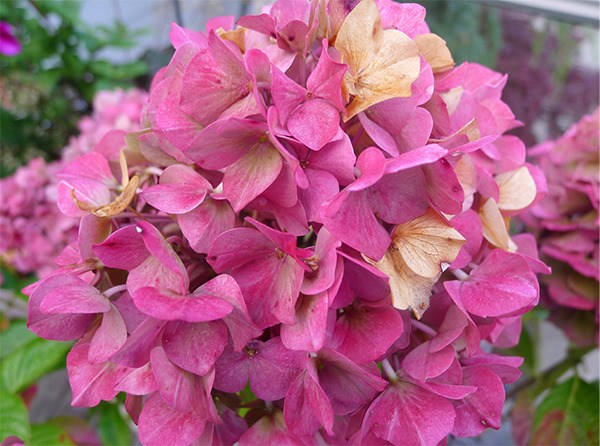
Would you like to have the hydrangeas that are now blooming in your garden brighten your home during the winter months? You can, by drying those blooms yourself!
Much of the following information is from Marie Iannotti, gardening expert, and can be found online.
The best time to cut hydrangeas for drying is between August and October, depending on the variety. The blossom color beginning to change is one indicator that the blooms can be cut. Another is when the petals start to feel papery. You might just want to wait until the blooms have dried on the plant and then cut them.
The best time of day to cut hydrangeas for drying is after the morning dew has dried. It’s best not to cut them on rainy days as the blooms will not retain their color and may become moldy. Cut the stems into 10- to 18-inch lengths. Remove all leaves.
There are several methods for drying the blooms. The first is to simply allow the flowers to dry naturally on the bush and then cut. Another is to place the cut stems, the sturdier the better, into a vase.
Fill with enough water to reach half-way up the stems. Allow the water to evaporate; do not add additional water. Keep the vase out of direct sunlight. Good air circulation also is important.
Once the water has totally evaporated, in about 10 to 30 days, your flowers should feel dry to the touch.
If your bush has wonderful blossoms, but spindly stems, the water method probably will not work because the stems will droop. Instead, try drying them by hanging upside down. Twist a rubber band around no more than five or six stems and hang in a cool, dry place.
Within 3 to 7 weeks the blooms should be dry, with hard stems. However, the blooms may be more delicate and brittle than by drying in water.
Finally, you can dry almost any flower in silica gel, including hydrangeas. Purchase the silica gel at any arts and crafts store. Pour the silica gel into a clean and dry container to ½-inch thick. Cut the hydrangea head from the stem, leaving just a 2- or 3-inch stem.
If your container is large enough, you can dry several heads at a time. Tip the container several directions so that the silica crystals completely cover the petals. After four days, pour out the contents onto newspaper.
Pick out the blossoms, tap gently to remove excess crystals and either display or store in plastic bag for later use. If the flower head is kept in the silica longer than four days, the petals will become too dry and will break.
If you plan on making a wreath with your dried hydrangeas, then you must soak the flower heads in warm water for at least 15 minutes. This allows the flowers to become more pliable. You’ll be able to cut them apart into whatever size is needed with little or no breakage. While working, keep the other flowers in the water.
Upon completion of the wreath, it will take about a day for the wreath to dry out.
You might wish to spray with silver, gold, red or green paint for the holidays. In that instance, it doesn’t matter what color your dried flowers are.
Just remember that the timing for cutting is much more important than the method used for drying. When blooms on the bush have begun to turn brown, it is too late to dry them.
Take action now to preserve the beauty of your summer garden by drying hydrangea blooms. They will brighten your home and can be given as holiday gifts to your very special friends.
Marilynn Elliott is a Washington State University-certified, Clallam County Master Gardener.