Get It Growing: A lesson in water conservation
Published 1:30 am Wednesday, June 17, 2026
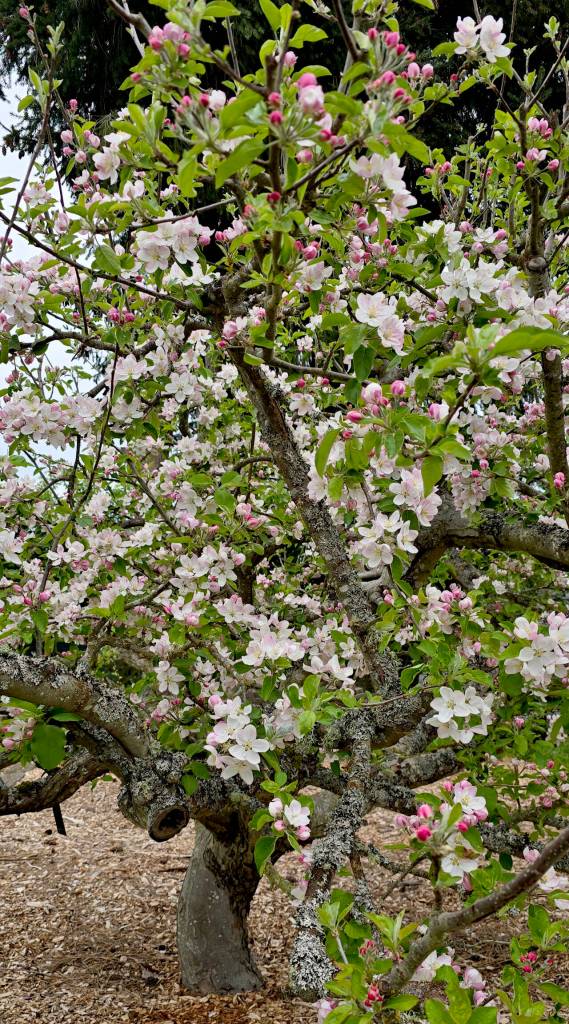
One blistering September day, I entered the Woodcock Demonstration Garden in Sequim to learn about water conservation in the orchard. I interviewed Mr. Tom Del Hotal, a Master Gardener and self-described “Dr. Frankenstein” of the orchard.
Del Hotal believes a garden should combine a beautiful landscape with home-grown food. In his opinion, this combination is a water conservation strategy. Water coming out of the hose is doing double duty: keeping the garden healthy and reducing a person’s reliance on water-intense imported produce. Del Hotal gave me a full tour, so I could learn to grow tree fruit with less water.
Multi-graft fruit trees
Woodcock Garden is home to many multi-grafted fruit trees. Multi-graft trees (trees with more than one variety of fruit spliced onto them) save space and water and let the gardener experience a cornucopia of flavors.
Grafted fruit trees provide a more approachable harvest. Instead of hundreds of pounds of fruit ripening at once, a multi-graft tree can give several handfuls each week. This supplies much of a family’s fruit needs and leaves more gardening space for drought-tolerant vegetation.
Another thing I noticed in the Woodcock orchard is the thick carpet of black weed mat. This serves to keep out horsetail but also to keep in moisture. Del Hotal is a strong proponent of some sort of groundcover or weed mat in an orchard.
Soil moisture meters
As the day grew warmer, one of my biggest questions was “When should I water?” In my own yard I have an ancient Italian prune plum that almost died during last year’s drought. Del Hotal told me the Master Gardeners have installed moisture meters in the orchard to answer this question. These meters tell them when their soil needs water, so they can water just the right amount and not too much.
Master Gardeners get much of their information from the science-based publications that come out of Washington State University (WSU). One such WSU publication entitled “Drought Advisory Tree Fruit” provides information about when and how much to water.
The most rapid cell growth in a fruit tree is during flowering and a few weeks after. This period will determine the quality of the final fruit. It is also the time of fruit set. If the tree is too dry during flowering, this might affect the harvest.
A few weeks before harvest is very important as well. Soil dryness during this time can reduce the fruit size and quality. For cherries, plums, and pears, an important time is the last three weeks before harvest.
If gardeners want good fruit, but are concerned about water conservation, they can concentrate on watering around bloom time and a few weeks before harvest. They should also water if the leaves look dry or wilted.
Once the tree is entering fall dormancy, watering is not as critical.
More water conservation ideas
As we are facing a statewide drought this year, here are some other tips to keep trees healthy while conserving water.
1. Keep the area around trees clear of thirsty weeds and grass to prevent water competition.
2. Thin fruit heavily to reduce water consumption. This will increase the quality and size of the remaining fruit and keep the tree healthier for the next year.
3. Use an irrigation scheduler so as not to overirrigate.
4. Consider heavy pruning of the tree to reduce water use if the drought is severe. This will greatly reduce production this year but will keep the tree alive for the next year.
In my own yard, I plan to experiment with a few of these strategies. I will water during flowering and two weeks before harvest, but not much in between if the leaves look healthy.
I plan on putting mulch or drought-resistant groundcover plants near the base of the tree instead of grass. If the drought gets severe, I might prune a bit of my old prune plum tree to keep it going.
To learn more, I would highly recommend a trip to the Woodcock Demonstration Garden. Try to visit during the hottest days of the summer to really see these water conservation strategies at work.
My favorite area of the Woodcock Garden, besides the orchard, is the native plant shade garden. Our native plants and trees evolved to handle the dry summer soil and can create a cooling oasis. The temperature difference in the native plant garden was striking. The shade made for a welcome and enjoyable visit.
For more information, search “WSU Extension Publications” online. In the WSU search bar, type “drought advisory tree fruit” for a free pdf file on the subject.
___________________
Sharah Truett has worked for the WSU Extension Office since 2018. She has coordinated the Backyard Fruit Gleaning Program during that time and has recently been teaching classes about Water Conservation for the home gardener.