What the cougar on the Dungeness was saying
Published 4:30 am Wednesday, July 29, 2026
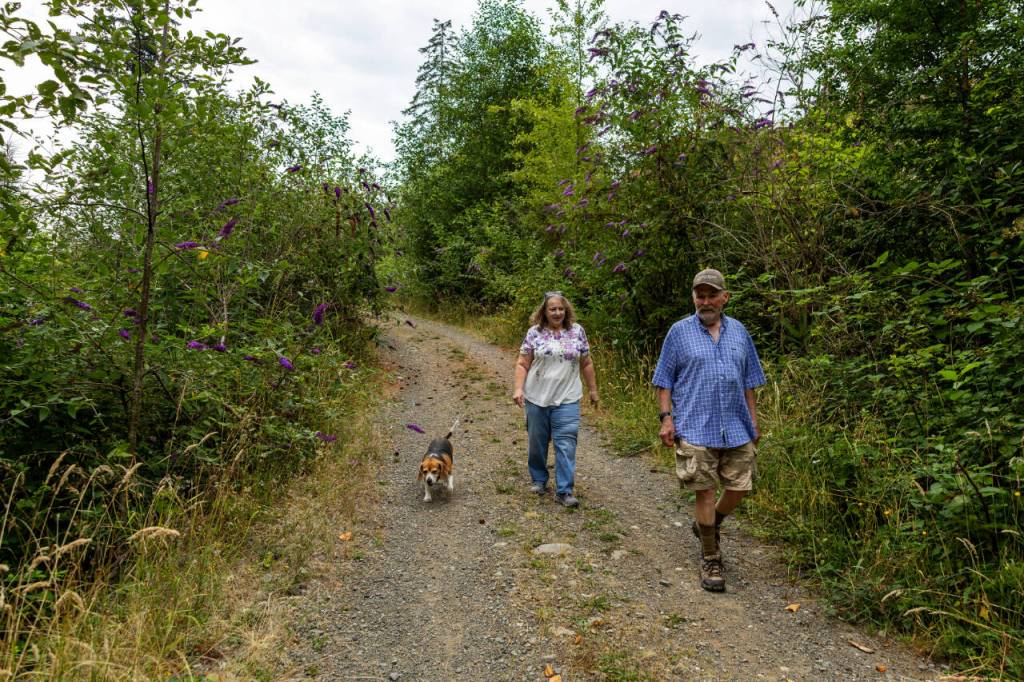
David Breithaupt heard her before he saw her.
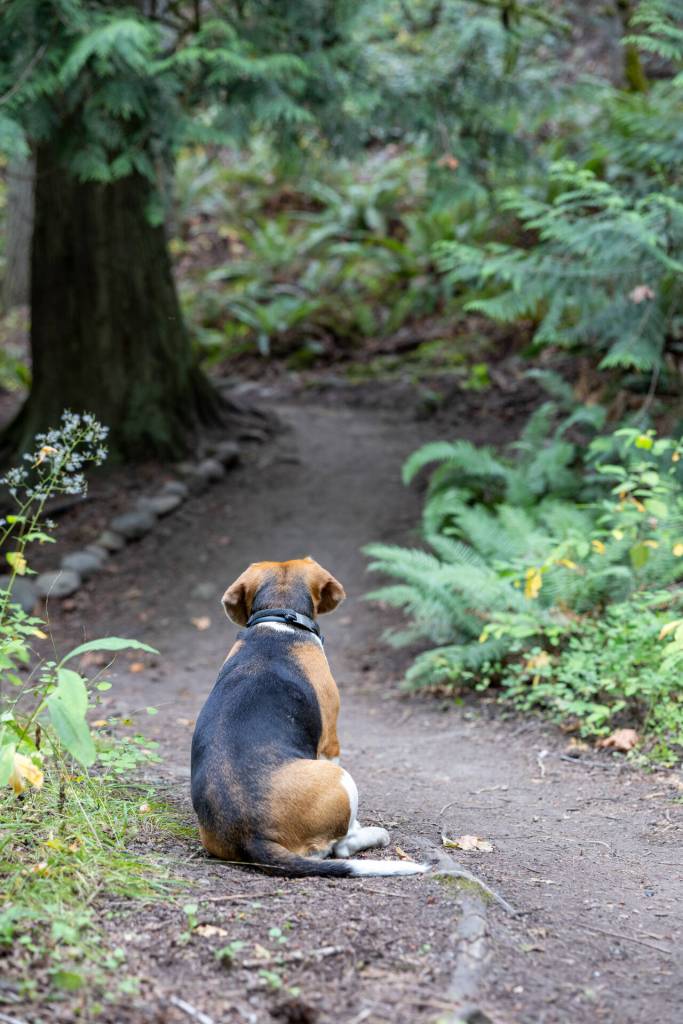
It was a little after 6 a.m. on Friday, July 17, and Breithaupt was walking Lily, his 8-year-old beagle, on the Dungeness Trails he covers six days a week. From about half a mile off, a sound came down the corridor. It was not a scream. It reminded him of a house cat wandering through the house and calling out, only louder.
It kept getting louder as he walked.
Around a corner, he found the source: a cougar.
Twenty-four hours earlier, Breithaupt and Lily had encountered a cougar — a first-time event for them — about 100 feet from the spot where they were now experiencing run-in number two either with the same cat, or a different one
The cougar was moving along a ledge below the cliffs, in the open, the hillside behind it and almost nothing in the way. He and Lily stood still. For about five minutes Breithaupt watched the cat travel 300 to 400 feet, at one point passing within roughly 50 feet of them. It never turned its head.
“I could see it open its mouth to do it,” Breithaupt said, referring to the noise the cat was making. “It was a thrill to get to see it.”
Breithaupt, who is almost 79, was born in Sequim, moved back last summer and found the trails on his second day here.
What he heard was almost certainly a female cougar advertising for a mate, according to Mark Elbroch, director of Panthera’s puma program and the author of “The Cougar Conundrum,” who has studied the Peninsula’s cougars for close to a decade.
Female cougars require physical contact with a male to ovulate, Elbroch said, so a brief meeting brings a female into heat. She then calls almost continuously, wanders and largely stops hunting. At that early hour, with less background noise, the call could carry a considerable distance.
It also explains why she walked past a man and a dog without a glance.
“She’s just not acknowledging,” Elbroch said. “Hormonally, she’s super distracted in those moments. Her mind is elsewhere.”
Gestation runs about three months. On the Peninsula, unlike the Rocky Mountains, cougars breed and give birth year-round, and Elbroch’s team has documented births in nearly every month. If she bred that week, kittens could be on the ground by mid-October.
With Breithaupt’s first cougar encounter on Thursday, July 16, a cougar jumped from the brush onto the trail 60 to 70 feet ahead, landing with its back turned. It swung around, saw Breithaupt and his dog, and was gone in about five seconds.
Lily went after it.
Breithaupt carries a handheld transmitter for a training collar that vibrates on Lily’s neck. He uses the vibration feature rather than the audible beeper so that no sound carries to wildlife, and Lily has been through two full obedience courses. That morning the unit had switched itself off overnight. Breithaupt verbally called Lily back, and she obeyed.
“I wasn’t particularly worried until the dog took off,” he said. “And then I was worried about her.”
The next morning the collar was working, and he kept Lily at his feet until the cat had gone over the top of the cliff.
That control matters more than most hikers realize. Elbroch pointed to research on verified encounters, which found that people walking dogs are more likely to have an encounter turn negative than people without them. Cougars key in on dogs, he said, and not always as prey. A dog moving fast and erratically off trail draws the attention of an animal that watches everything, and curiosity is not something to encourage.
The pattern in those accounts is a dog that chases a cougar. The cougar realizes the dog is something it could chase, turns, and follows the dog back toward its owner.
A beagle, Elbroch said, does not hold much of a chance against a large adult cougar. That risk is one reason the Washington Department of Fish and Wildlife (WDFW) advises keeping dogs leashed in cougar habitat, and it is why reliable recall is worth the training.
Dogs are still rarely the animals killed. Of nearly 3,000 cougar kill sites documented across the Olympic Peninsula during almost 10 years of research, about 50 involved domestic animals, Elbroch said. He recalled that roughly eight or nine were house cats and only one was a dog.
“If you’re not in deer country, you’re not in cat country,” Elbroch said. The lowlands north of Highway 101 near Sequim have essentially no resident cougars, although young cats may occasionally pass through searching for territory. Burnt Hill, the first rise above town, is prime cougar habitat. Deer concentrate there because winter conditions are milder and food is abundant, making the area a main travel corridor for cougars.
His team estimates roughly 300 cougars across the Olympic Peninsula. The Dungeness area above Sequim was among the lowest, at about 1.9 independent cougars per 100 square kilometers, while density began increasing immediately west of Port Angeles.
“You don’t have to fear them,” Elbroch said. “They’re out there, but they’re not common.”
They may also be saving lives on the highway. Elbroch’s team compared deer-vehicle collision locations with deer activity recorded across a grid of about 550 cameras and data showing where cougars were active. He said deer-vehicle collisions were 79 percent lower in areas where cougars were most active compared with the areas where they were least active.
“It’s not because they’re killing the deer,” he said. “It’s because they’re essentially scaring the deer away from the road.”
A paper detailing the analysis is expected soon.
Encounters remain rare and attacks rarer still, said Bridget Mire, coastal region communications specialist for the Washington Department of Fish and Wildlife. She cautioned that a run of reports often means one animal seen more than once. WDFW advises hiking in daylight and in groups, making noise, keeping dogs leashed and children close, and carrying bear spray, an air horn or a walking stick within reach.
Breithaupt continues to walk the trails regularly, hoping for another glimpse of a cougar. The possibility of seeing wildlife remains part of what makes the Dungeness Trails such an exciting and beautiful place to explore.
“You don’t get to see that very often,” he said.
How to handle a cougar encounter
• Stop, pick up small children, and do not run, crouch or hide.
• Face the animal and keep your eyes on it.
• Look larger. Step onto a rock or stump, open your jacket, stand shoulder to shoulder in a group.
• Speak firmly and back away slowly, leaving the animal an escape route.
• If it does not leave, shout, wave your arms and throw objects at it. Elbroch notes cougars do not always flee at noise alone, but thrown objects are more likely to get them moving.
• If it attacks, fight back, stay on your feet and use bear spray if you have it.
• To report a non-emergency cougar safety concern, call WDFW Police at 877-933-9847. For an immediate threat or other emergency, call 911.



Best of Olympic Peninsula