Get It Growing: Nutrient deficiencies
Published 1:31 am Wednesday, August 24, 2016
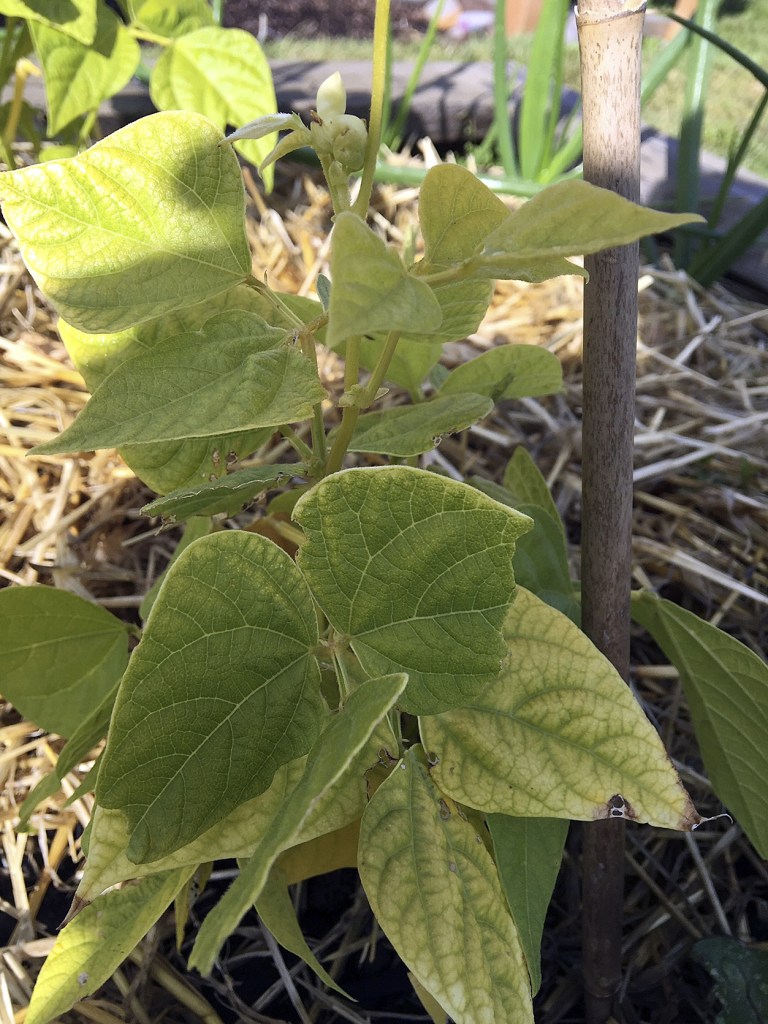
Plants need the right combination of nutrients to live, grow and be productive. When plants don’t get the nutrients they need, they will show symptoms of being unhealthy. Too little or too much of any one nutrient can cause problems.
Healthy soil supplies 13 essential nutrients to plants. These nutrients are classified as primary nutrients, secondary nutrients and micronutrients depending on the amount needed by plants.
Primary soil nutrients are needed in the greatest quantity by plants and include nitrogen (N), phosphorus (P) and potassium (K for the Latin kalium).
Nitrogen plays a vital role in nearly all aspects of plant growth and development. Because nitrogen leaches from soil with watering and rain, nearly all soils lack enough available nitrogen for ideal plant growth.
Phosphorus deficiencies are widespread in native soils and potassium deficiencies are common west of the Cascades; however, since phosphorus and potassium accumulate in soils, gardens with a history of fertilization are seldom deficient in these two nutrients.
Secondary nutrients are needed in lower quantities than the primary nutrients and include sulfur (S), calcium (Ca) and magnesium (Mg). Secondary nutrients are deficient in some soils in the Pacific Northwest; in particular, calcium and magnesium can be deficient in acid soils which are typical west of the Cascades.
Micronutrients are only needed in very small amounts and include zinc (Zn), iron (Fe), copper (Cu), manganese (Mn), boron (B), molybdenum (Mo) and chlorine (Cl). Except for boron and zinc, micronutrients are rarely deficient.
Boron deficiency occurs primarily west of the Cascades in brassica crops (for example, broccoli) and caneberries such as raspberries, and zinc deficiency normally affects fruit trees in alkaline soils.
Seeing the symptoms
Each nutrient deficiency causes characteristic symptoms.
In addition, affected plants grow more slowly, yield less and are less healthy than plants with adequate levels of nutrients.
Deficiencies in the primary nutrients lead to the following symptoms:
• Nitrogen deficiencies — Leaves are small and light green; lower (older) leaves are lighter than upper leaves.
• Phosphorus deficiencies — Foliage is dark green; lower (older) leaves may be yellow between veins.
• Potassium deficiencies — Mottled lower (older) leaves with dead leaf tips and margins; yellowing of leaf between the veins.
Deficiencies in the secondary nutrients and micronutrients also can cause characteristic symptoms.
Because there is a lot of overlap in symptoms due to nutrient deficiencies, visually diagnosing the nutrient that is lacking often is inaccurate. If you suspect a nutrient deficiency, you should conduct a soil test to determine the nutrient level of your soil. (See sidebar.)
If soil is found to be deficient in a nutrient, fertilizers can provide the additional nutrients needed.
The key to applying fertilizers is to meet the needs of the plant without causing excesses that can be harmful to the plant or environment. For example, too much boron is toxic to plants. Too much nitrogen can lead to excessive foliage production, increasing the risk of disease, wind damage and delayed flowering, fruiting and dormancy. Excess nutrients can harm the environment (such as causing water contamination through run-off.)
A soil test done every three years can help you keep your soil (and plants) in good health.
Testing your soil and adding recommended amendments before planting will help to get your plants off to a healthy start and avoid stunting or more serious plant development problems caused by nutrient deficiency.
Pearl of wisdom
Plants can move some nutrients (including nitrogen, phosphorus, potassium, magnesium and chlorine) from older leaves to newer leaves.
Deficiencies in these nutrients show up in older leaves first because plants preferentially move nutrients to new growing tissues. Some nutrients (including calcium, boron, copper, iron, manganese, molybdenum, zinc and to some extent sulfur) are not mobile within the plant. Deficiencies in these nutrients show up in new leaves and growing tips first.
And more
For more free gardening help, visit a local Master Gardener plant clinic. The clinics are from 9 a.m.-1 p.m. Saturdays at the Demonstration Garden on 2711 Woodcock Road in Sequim and 9 a.m.-1 p.m. Mondays at the Clallam County Courthouse, 223 E. Fourth St., in Port Angeles.
Bring your gardening questions, samples from problem plants and garden pests.
Judy English is a WSU-certified Clallam County Master Gardener.