Dr. Ajay Joseph to speak on ‘lifestyle medicine’ at OMC fundraiser luncheon
Published 4:30 am Wednesday, February 25, 2026
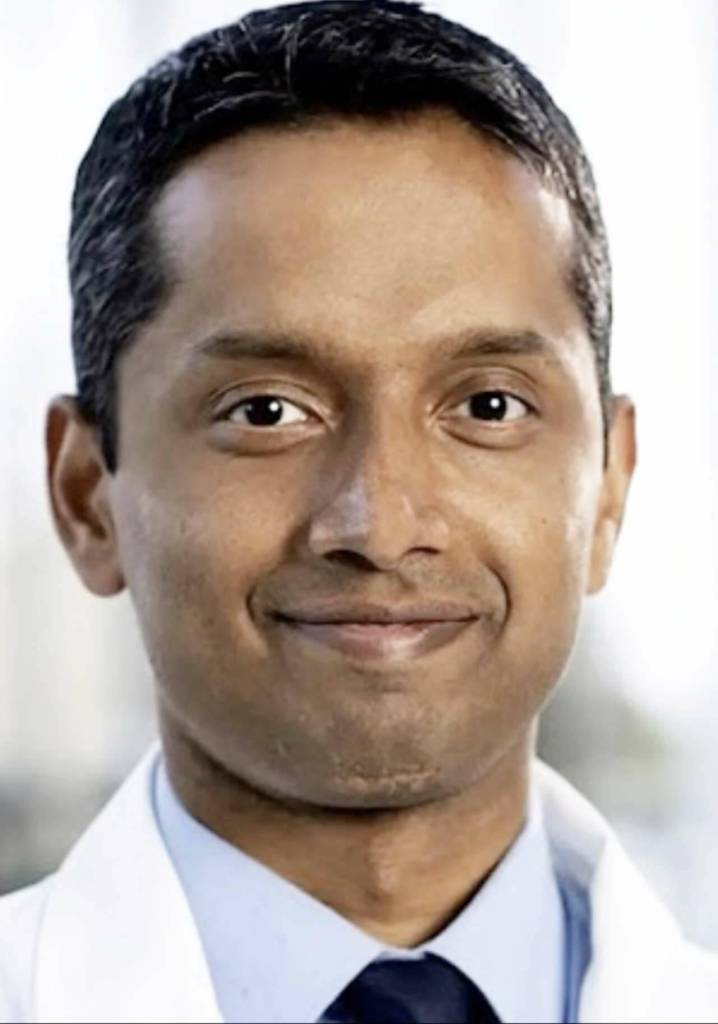
Make it a habit to live well.
That’s what interventionist cardiologist Dr. Ajay Joseph aims to see all his patients achieve to help them address the root causes of disease.
“I want people to know the immense power of lifestyle medicine,” said Joseph, who will speak at the 19th annual Red, Set, Go heart health luncheon on Friday, Feb. 27.
“A lot of the disease processes that we think are out of our control actually are within our control,” he said.
The Olympic Medical Center Foundation’s luncheon will begin at 11:30 a.m. Feb. 27 at the Vern Burton Community Center, 308 E. Fourth St., in Port Angeles. Tickets are $100 per person and $800 per table of eight. Proceeds support the Olympic Medical Center Heart Center.
For tickets and more information about the Red, Set Go luncheon, see omhf.org/, call 360-417-7144, or go by the OMC Foundation office at 1015 Georgiana St., Port Angeles.
Putting the tools for long-term health into the hands of patients improves lives while cutting health care costs, said Joseph, an interventional cardiologist from Tulsa, Okla., who is a leader in the growing national movement to focus upon tackling chronic disease at its roots rather than only treating symptoms.
“Eighty-five percent of what we see in hospitals is from lifestyle conditions,” he said.
“We’re facing an epidemic of chronic diseases. Unless we address the root causes, whatever we do is just mopping the floor.”
Joseph directs the Lifestyle Medicine Program that he launched in addition to administering the Cardiac Rehab department of the Saint Francis Health System, the largest medical system in northeastern Oklahoma.
“Dr. Joseph is a part of the American College of Lifestyle Medicine, and believes in ‘whole person health’ – treating not only the physical illness, but also the emotional, mental, and social dimensions of each of his patients,” said Bruce Skinner, executive director of the OMC Foundation.
“We are extremely fortunate to have him come all the way from Tulsa, Oklahoma, as he is one of the country’s leaders in treating the whole person,” Skinner said.
Joseph joined the Saint Francis system after completing cardiology training at Rush University in Chicago under the mentorship of Dr. Kim Williams, a pioneer in plant based nutrition and preventative cardiology.
After completing training in internal medicine and cardiology, he became board certified in lifestyle medicine and has completed courses in plant based nutrition (which is focused on eating whole foods, not necessarily eating vegetarian) from Cornell and culinary medicine from Harvard. Once at St. Francis, he started building an interest in lifestyle medicine by creating a pilot program for employees.
The employee pilot program in 2022 saw across-the-board improvements – in diabetes, weight loss, blood pressure and other areas, according to Joseph.
“Based on that, the results were so overwhelming that our system said we should open it up to all of the community,” Joseph said.
That began the first and only comprehensive Lifestyle Medicine Program in the state of Oklahoma.
The program focuses on six areas: Nutrition, exercise, sleep, stress management, risky substance abuse and social connections.
The point is to not only tell patients what they could do to help themselves, but also to teach them how to do it.
“If the patient doesn’t know how to cook, it’s pointless to tell him to eat healthy,” Joseph said.
“The idea is to give them tangible skill sets so that they can actually benefit.”
To that end, the St. Francis program has a dietitian and a therapist in the office and highly motivated patients signing up for cooking and exercise classes.
“I can put a stint in for anyone but if I don’t teach the patient” how to succeed in these six areas, then the patient will be back needing more intervention, Joseph said.
For instance, he told of performing an angiogram on a patient who had been getting care every six months. Instead of putting in another stint, he had the patient go through the lifestyle program.
“And that was the last time he had a procedure,” Joseph said.
The Lifestyle Medicine Program has two parts. In the clinic, the patient is asked about meals, hours of sleep, stress level and other aspects of life.
“We make an individualized plan for each person,” Joseph said.
The more hands-on portion of the program features a hospital gym for exercise sessions and a kitchen space with a chef teaching basic cooking skills.
According to Joseph, if all six areas are addressed successfully, then the risk of heart attack can be cut by as much as 90 percent and dementia risk by 89-90 percent; the risk for all cancers drops by about 50 percent.
“That’s the beauty of the human body,” Joseph said. “If you do the right things, it will run like a Ferrari.”
Many in the medical field urge patients to help themselves through making changes in the way they live.
But “the health system is not incentivized for prevention,” Joseph said. “That is changing. There is a growing interest in lifestyle medicine.”
Much of what his program does is covered by insurance companies, including Medicare, which he said is going to “value-based care.”
However, “Medicare does not cover the cooking class or exercise sessions. That needs to change,” Joseph said.
“From a business standpoint, when you employ lifestyle medicine as a tool, it can decrease the costs of care.”
As an example, he said: “If you control diabetes better, there’s less chance of a stroke or heart attack.”
Although this style of medicine isn’t a quick fix, even small adjustments can lead to notable improvements.
The body “bounces back,” Joseph said.
“I had a 78-year-old gentleman who wanted to get healthy for his granddaughter’s wedding.” Nine months later, “he had lost about 70 pounds,” Joseph said.
“It’s never too late.”