Get It Growing: Wander, ponder, and then prune
Published 1:30 am Wednesday, May 20, 2026
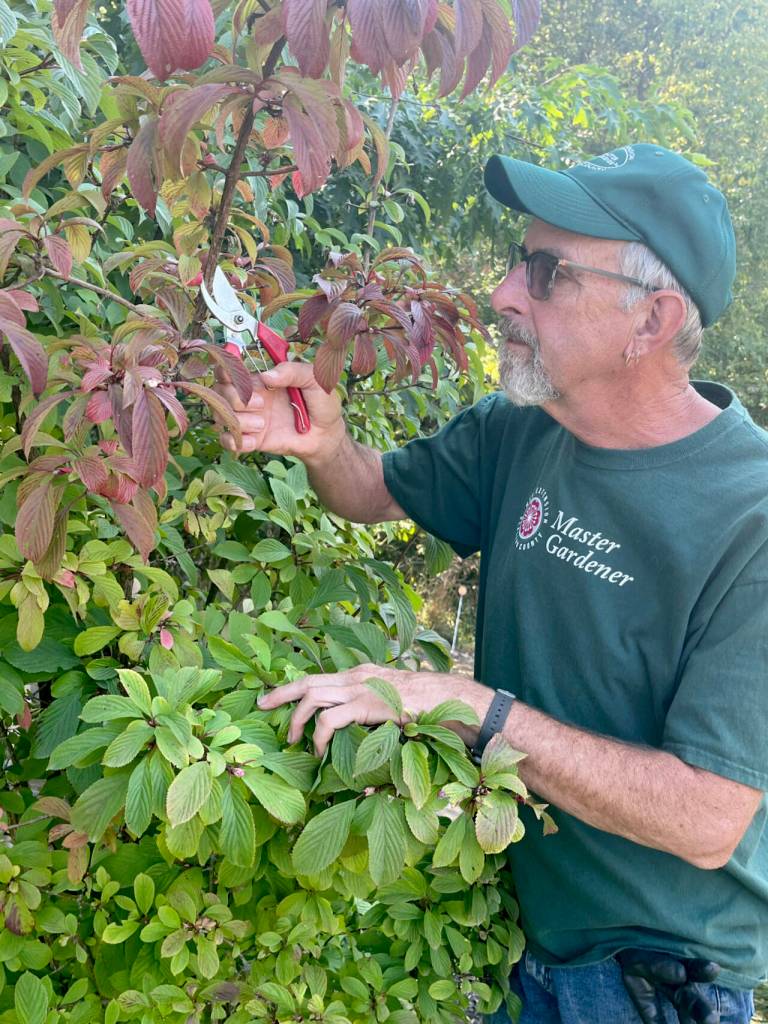
Proper pruning is a skill that requires a little knowledge. With it you can enhance the beauty of almost any landscape tree or shrub, while improper pruning (or malpruning) can ruin or greatly reduce that plant’s landscape potential.
In many cases, it is better not to prune than to do it incorrectly. More trees and shrubs are killed or ruined each year from improper pruning than by pests.
You can save yourself a lot of work and heartache by selecting the proper plant for the location. This concept is called “Right Plant, Right Place[JH1.1][BG1.2].” The most common mistake is to plant a tree or shrub too close to the house, sidewalk, or to other plants. By learning how large that plant will grow, we can place it where it will retain its natural growth habit and require minimal pruning.
Prune with a plan
The goal is to create or maintain the tree or shrub’s natural shape. It may seem the easy way, but a rounded “poodle haircut” on a tree or shrub is not natural growth. This kind of trimming will simply mean that the plant will very soon need another haircut.
Consider the reason or purpose before cutting begins. Are the branches too crowded and rubbing? Are you trying to increase fruit production? More flowers? Take time to wander, ponder, and then prune.
Trees
Start by removing all dead, diseased, or broken branches by making the cut where they grow from the trunk or at a strong, healthy branch. This often opens up the structure sufficiently so that no further pruning is necessary.
The next step in pruning is to make any “training cuts” needed. To properly train a plant, one should understand its natural growth habit. Take time to identify your plants so that you understand what to expect. Remove rubbing branches or growth that interferes with the plant’s shape.
Shrubs
When pruning most shrubs, cut off a branch or twig at its point of origin from either the parent stem or right at the ground level. Thin out the oldest and tallest stems first.
This method results in a more open plant and will not adversely affect the plant’s blooms. It does not stimulate excessive new growth, but does allow room for growth of side branches.
Considerable growth can be cut off without changing the plant’s natural appearance or growth habit. Plants can be maintained at a given height and width for years by thinning out. Use hand pruners, loppers or a saw, but not hedge shears.
When to prune
Pruning can actually be done at any time of year; however, recommended times vary with different plants. Contrary to popular belief, pruning at the wrong time of year does not kill plants, but continual improper pruning can result in damaged or weakened plants.
In general, the best time to prune most plants is during the late winter or early spring before growth begins. There are exceptions to that rule.
If you shear a spring-blooming shrub before it blooms, you will have little or no blooms that year. If you feel you must shear your blooming shrub, do it after it blooms. Repeated shearing can create a very dense shrub that no longer gets good air circulation or sunlight and can lead to insect and disease problems.
Pruning equipment
Using the correct tools is important. Select tools that will do the job, keep a sharp edge, and are relatively easy to handle. Good quality equipment, properly cared for, does a better job, lasts longer, and is easier to use.
Clean and lubricate your tools regularly. Keep cutting blades sharp using several passes with a good sharpening stone or fine file. Silicone or plant-based spray lubricants will keep your tools working like new.
Tools rusty? Soak them in white vinegar overnight and the rust will come off. Store your tools indoors when not using them.
All pruning “wounds” a plant, therefore the fewer wounds the better. Pruning early in a plant’s life means smaller wounds.
Scientists have found that wound dressings are strictly cosmetic and do not prevent insect or disease damage. Pruning paint may, in fact, slow down the healing process.
To encourage rapid healing of wounds, make all cuts clean and smooth. This requires good, sharp pruning equipment. After cutting, let the wound air dry.
By learning a few basic principles, the job of pruning will become easier over time. You will enjoy the work more, admire the appearance, and your plants will be healthier.
For more information on pruning your landscape plants go to
https://wpcdn.web.wsu.edu/wp-ecommerce/uploads/sites/2/product-3731-sku-FS182E.pdf. You might also check out PlantAmnesty at plantamnesty.org.
Learn more
If you are interested in learning more about pruning, attend the Digging Deeper Saturdays workshop “Pruning: How, Where, and Why” on May 23 at 10 a.m. This workshop will be held rain or shine at the Woodcock Demonstration Garden, 2711 Woodcock Road,
Sequim.
Also, Master Gardener Tom Del Hotel and the Olympic Orchard Society invite the public to learn about conserving water in a fruit orchard. The presentation will be Wednesday, May 27, at 7 p.m. in the Carver Room South at the Port Angeles Library, 2210 S. Peabody St., Port Angeles.
________________________
Keith Dekker is a WSU Clallam County Master Gardener with a love of pruning and a long career in ornamental landscapes.


Best of Olympic Peninsula