Get It Growing: Smart watering
Published 2:30 am Wednesday, May 27, 2026
Residents of the Olympic Peninsula only need to look to the mountains to realize that the snowpack is low. If you are curious, Google NRCS SNOTEL and go to the real-time map. What you will find is a lot of red indicating the snowpack is less than 50% normal.
The snowpack is the primary source of water to keep the rivers flowing during the very dry season here in the Olympic Rain Shadow. So, it’s a good time for gardeners to start thinking seriously about water conservation.
Like plentiful sun and healthy soil, water is an essential element in the garden. If vegetable gardens are water-stressed, a decrease in vitality and yield may result. Landscape plants that are chronically over- or under-watered perform poorly and are more susceptible to diseases, pests, and failure.
To conserve water and to protect a natural resource, not to mention the hard work and investment put into a garden, developing a water plan is a smart idea. The plan doesn’t have to be expensive; it can be as simple as attaching a manual timer to a soaker hose.
A few things to keep in mind for summer watering on the North Olympic Peninsula:
• Most plants, even those labeled as drought-tolerant, will need supplemental water during the dry summer months.
• Grouping plants with similar water needs or hydrozoning makes watering more efficient and effective.
• Frequent, shallow watering encourages shallow roots, which makes plants more vulnerable to heat stress. Applying water thoroughly is the key to proper watering.
• Watering early in the morning is best as it reduces evaporation and helps prevent disease.
Overwatering can be just as harmful as underwatering. The importance of a timer for any watering method truly can’t be stressed enough. A timer is a valuable tool to help prevent costly plant and property damage from unattended irrigation!
Generally, established trees, shrubs, lawns, and groundcovers only need to be irrigated thoroughly once a week during the dry period (some established plants might need even less than that). For these areas, a soaker hose or even a sprinkler (on a timer) might be best. Keep in mind that anything newly planted, even those labeled as drought resistant, will need regular water for the first year.
In-ground vegetable gardens and ornamental plantings should be considered separately from raised beds and containers. They typically require less frequent watering because native soil in the ground tends to retain moisture better and allows roots to grow deeper, accessing water stored below the surface.
Containers and raised beds often have faster-draining soil mixes and increased exposure, so they tend to dry out more quickly. As a result, potted plants and raised planters usually need more frequent attention, sometimes daily, to maintain consistent moisture levels, especially during hot or windy conditions.
Having such diverse watering needs is a good reason to consider installing a zoned drip irrigation system. A drip system will direct the water only to the root zone of a plant, which can conserve water and reduce weeds and disease, making for healthier plants. Using an automatic timer with multiple zones will provide consistent and adequate moisture to all your varied plantings during the dry season.
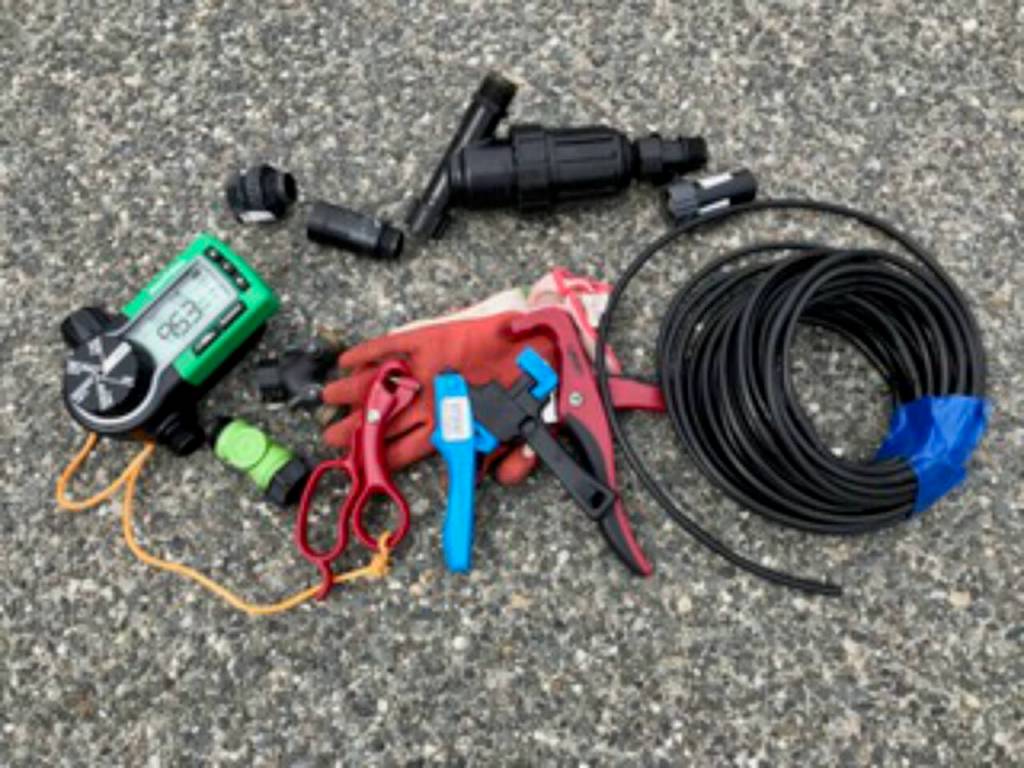
A very basic, easy-to-install drip system does not require any expensive tools. A good tube punch and a few parts found at the local hardware store can get you going. There are also kits available locally and online that provide everything you need for a quick start.
The major components, which include a timer and pressure regulator/filter, can be attached at a hose bib and connected with compression fittings to distribution tubing. Emitters can be soaker-type hose, pre-drilled drip hose, or individual emitters. All are connected with barbed fittings that are pushed into the distribution tubing.
More extensive systems can be complex and physically demanding to set up, so hiring an irrigation specialist may be the best option. If you do work with a contractor, be sure to stay involved in the installation and take time to understand how the system works. This knowledge will make future DIY repairs quicker, easier, and more affordable.
After a little research and some quality YouTube time, most homeowners find this a very satisfying project. The savings in time and water alone are reason enough.
There will be a Digging Deeper workshop focusing on simple DIY drip irrigation on Saturday, June 6, starting at 10 a.m. at the Woodcock Demonstration Garden in Sequim.
An excellent resource on drip irrigation can be found at pubs.extension.wsu.edu. Enter “FS030E” in the search box for the WSU publication “Drip Irrigation for the Yard and Garden.”
Facts about hydrozoning
Hydrozoning is grouping plants with similar water needs together so each area can be irrigated efficiently. For drip irrigation systems, each hydrozone is placed on its own drip line (zone) and controlled by a separate valve/timer setting. High-water plants (like vegetables) get more frequent, longer watering, while low-water plants (like established shrubs or natives) receive less frequent runs. Emitter types and spacing can balance the plants in each zone. Zones are not just predicated on location but on similar requirements, especially frequency of water needs. Separating often watered and less watered plants on specific zones will save water and improve plant health.
_________________
Susan Kalmar is a WSU Clallam County Master Gardener.



Best of Olympic Peninsula