Powering Communities: Reliability and resilience at what cost?
Published 1:30 am Wednesday, June 10, 2026

Your PUD procures the majority of its power from Bonneville Power Administration (BPA). This is done through a long-term power sales agreement, selecting from the available product choices. The current agreement expires at the end of September 2028.
The new contract term with BPA is Oct. 1, 2028 through Sept. 30, 2044 granting us access to at-cost, low- to no-carbon federally generated power that matches the shape of our load. This contract provides us the highest stability in terms of access to power as and when needed to all PUD residential, commercial, and industrial loads (currently at under $40/MWh).
The energy market fluctuates hourly like other commodity markets and price depends on supply and demand characteristics. So, instead of buying power on the market and subjecting the rates to substantial fluctuations, the PUD procures all the required power from BPA through its Load Following product under the long-term power sales contracts. The Load Following BPA power product shields us from real time power market volatility (~$10 – $1,000+/MWh), but it contractually limits our ability to generate our own energy and serve our customers.
The contract allows us to pilot small generators (up to 5MW generation) without triggering additional costs. Intermittent renewable generation needs to be converted into a consistent, predictable power supply and this “conversion,” termed as Resource Shaping Services or RSS, comes at a cost.
We, the PUD commissioners and staff, often get asked, “Why not generate our own power, using low-cost intermittent renewable resources like wind and solar?” A key goal of our strategic plan is to develop local generation to improve resiliency and mitigate the persistent upward pressure on costs and consumer rates.
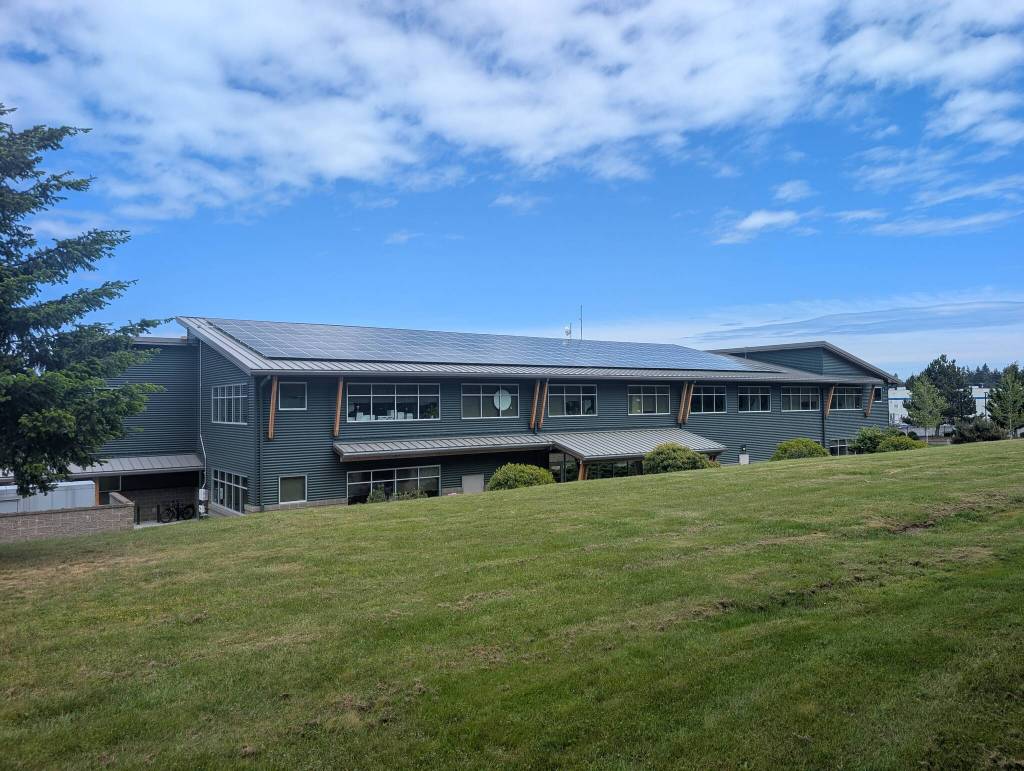
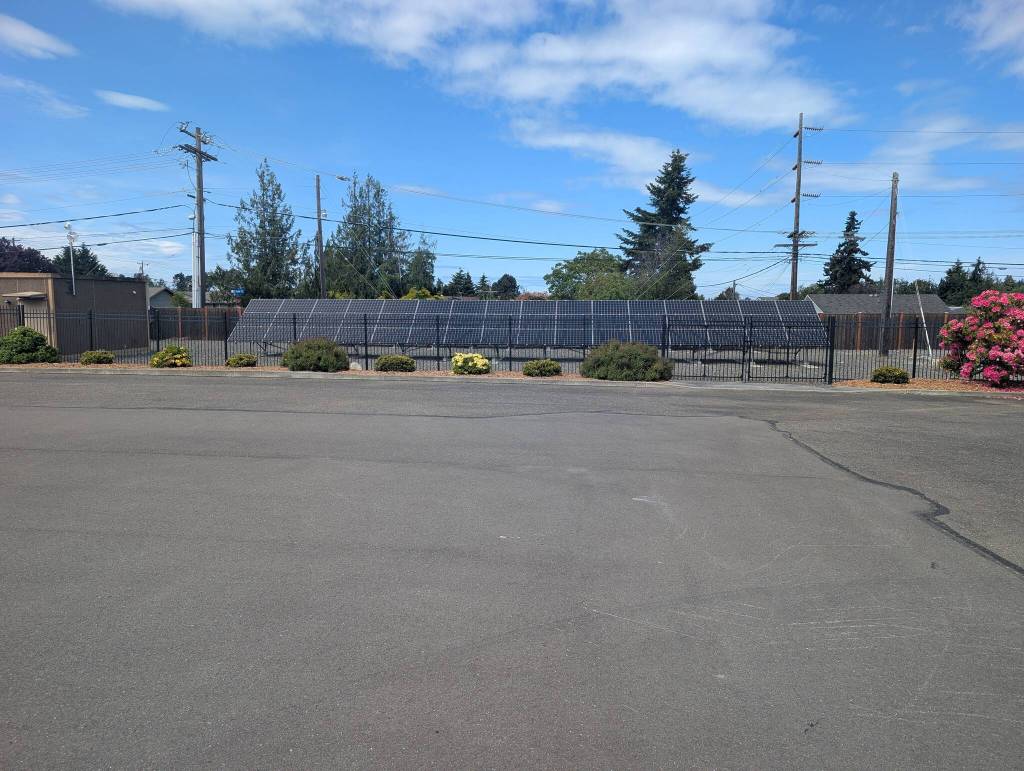
Towards that goal, your PUD owns and operates three rooftop solar projects (31kW, 42kW, and 91kW) which collectively generated a total of 195,350 kWh or 195.35MWh in 2025. This was less than 1% of the total load served to our customers. These types of resources, valuable to the overall portfolio of energy resources and necessary to meet the long-term clean energy goals mandated by Washington’s Clean Energy Transformation Act (CETA) and Climate Commitment Act (CCA), are not firm, base load resources, only generating energy at certain times of the day and variable by weather and season, leaving gaps in the supply.
Market purchases of power are typically required to fill in those “gaps.” Note: BPA allows PUDs with their hydro system to use it as a “battery” for up to 5MW, but beyond that these market purchases (and resources shaping services) become necessary to maintain uninterrupted power.
At Clallam PUD, we are actively evaluating local generation options to achieve our resiliency goals. Eventually this may require us to make changes in our BPA product choice and navigate power market volatility. We are engaging with subject matter experts, keeping current with technological advances, and funding opportunities to reduce rate impacts working towards our strategic goal of local generation.
Additionally, we are factoring environmental and cultural impacts, community benefit, community impact (noise, traffic, etc.), safety, fuel availability, cost of construction, per-unit cost of energy generation, and costs of RSS to analyze the best mix of generation resources to meet the resiliency goals of the region.
Many of the costs to develop and operate local generation resources are predictable, varying by type of resource, but one cost component is not: the mechanics of BPA’s RSS are being changed for implementation over the next 20 years.
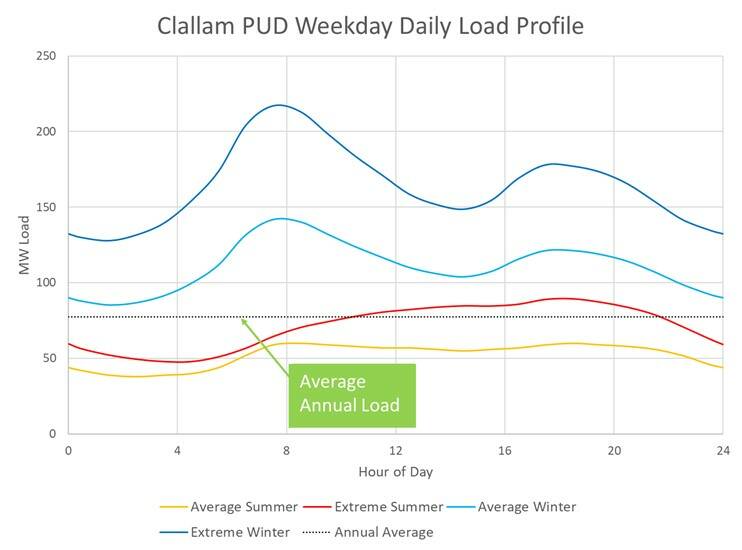
This change introduces a wide range of RSS costs for different types of generation technologies. For each hour all types of non-dispatchable (intermittent) generation are obligated to generate a specific amount to match your PUD’s load shape, creating multiple scenarios impacting costs, and ultimately rates, to our customers. The scenarios are complex involving PUD generation, energy market rates and whether local generation is producing excess power or a deficit in power, each scenario having different impacts. Intermittent resources (wind and solar) often are out of sync with the load shaping required for a given hour of the day, etc.
That being said, intermittent resources provide higher resiliency as there is no dependence on fuel delivery. Intermittent resources in a microgrid design provide high value to critical loads allowing them to remain powered through outages.
Today or in the near term they may not be a cost-effective option on a large scale because the PUD has access to low-cost BPA power. For example, the annual PUD load is roughly 685,000 MWh (before system losses). To generate an equivalent amount of energy from a solar generator, it would require an estimated system size of 615MW. At roughly 4 to 5 acres per installed MW, it would require 2,500 — 3,000 acres of land. Outside of procuring this much land it would also involve a centi-million-dollar installation cost plus significant RSS costs.
Local generation is complicated and can create significant financial risk depending on when that power is produced. As we navigate the new era of resource adequacy, your PUD is committed to evaluate all options and deliver a solution that enhances resiliency, improves reliability, and keep the rates stable.
_______________________
Ken Hays is board president of the Clallam County Public Utility District and its District 1 commissioner.



Best of Olympic Peninsula