Get It Growing: Understanding slugs — one of western Washington’s most familiar garden visitors
Published 2:30 am Wednesday, July 15, 2026
When newcomers move to the Pacific Northwest (PNW), they may be in for a surprise when taking an evening stroll after a warm summer day. Perhaps an evening with high humidity or a light mist forming in low-lying areas sounds inviting, i.e., the kind of evening where dampness hangs in the air.
They may see what looks like a small stick or dry rhododendron leaf inching across the sidewalk. It doesn’t seem to be pushed along by a breeze so they bend down for a closer look.
It is alive! The creature is yellowish, a few inches long, somewhat spotted, and equipped with tiny horns. It slowly moves with remarkable determination across the cooling pavement, leaving behind a glistening trail.
That is their introduction to the infamous banana slug (Ariolimax columbianus). Over time they will learn they are quite common. In fact, many PNW residents are rather fond of banana slugs, viewing them as iconic members of the forest ecosystem.
Slugs, as a group, are among the most familiar — and frustrating — residents of Western Washington gardens. While banana slugs themselves generally feed on decaying plant material, several other slug species are well known to gardeners who have discovered holes in lettuce leaves, disappearing seedlings, or slime trails across prized hostas.
Where slugs thrive
Our cool, moist climate provides ideal conditions for slugs, particularly in shaded areas. They thrive where the environment offers exactly what they need: damp soil, mulch, dense vegetation, and fallen leaves.
For every slug you see there are many more nearby out of view. And that is especially true during daylight hours.
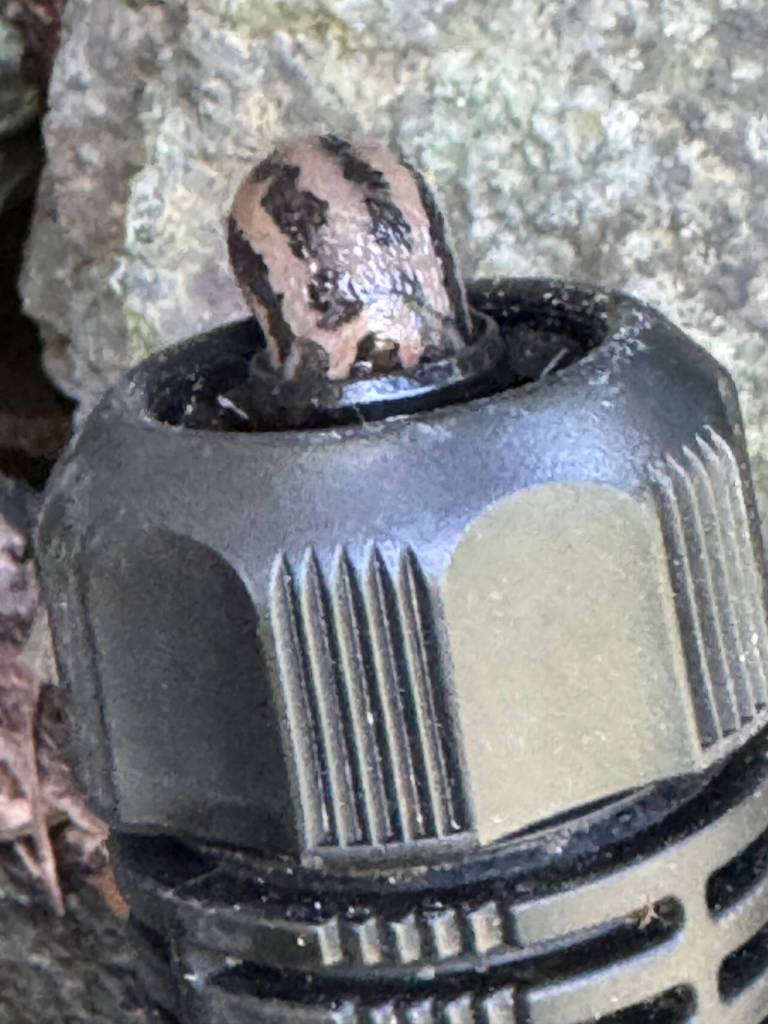
Slugs can be creative where they hide. They can be found in overturned watering cans, inside birdhouses, under rocks and boards, or even in the inside tip of a frequently used, damp gardening glove.
Contrary to popular belief, slugs are not just active during rainy weather. They feed whenever temperatures are moderate and moisture is available.
Winter doesn’t eliminate slug populations. Many species survive our mild PNW winters either as adults or as eggs hidden in soil, mulch, or protected garden areas. During periodic cold snaps they may burrow deeper into the soil and wait. Those eggs hatch when conditions become favorable, helping explain why slug activity often increases during early spring.
PNW slugs
Slugs are not all equally harmful to the garden. Some troublesome species here are often the following:
• Gray (Grey) Field slug (Deroceras agreste) — fawn to dark grey with netted markings. They have been nicknamed the “milky slug” because when irritated they emit a milky mucous.
• Garden slug (Arion hortensis) — grey to bluish-black with bluish or reddish tentacles. The sole is orange or yellow.
• European black slug (Arion ater) — deep black but lighter colors (even red) in juveniles. The foot fringe is black and is larger than the first two listed.
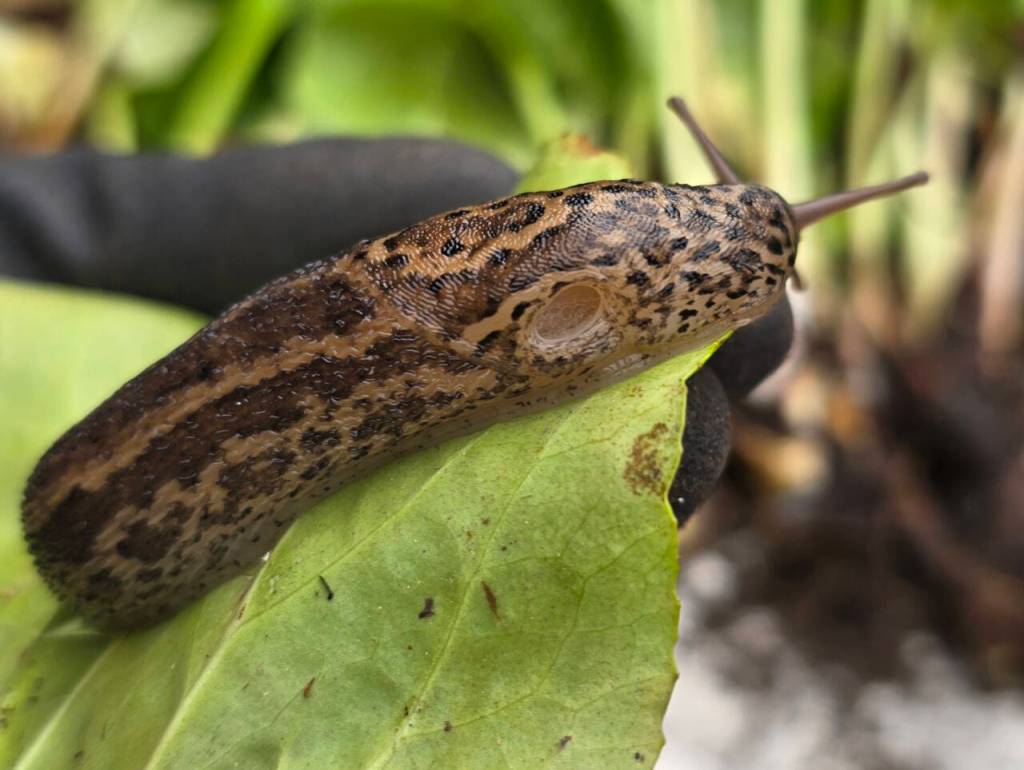
• Leopard slug (Limax maximus) — mixed reputation, as it also feeds on decaying material. Largest of all the others listed except for the Banana slug, it is grey with black marks and spots. It has long tentacles with an ash or yellowish foot. It is more common around human habitats than open fields, preferring damp cellars, sheds, woodpiles, and rain barrels.
The eggs of slugs resemble small, clear or slightly yellow beads and are found in a cluster. They are somewhat elastic and hatch in about a month.
Not all plants are equally appealing to slugs. They prefer tender young growth. Favorite vegetable targets include lettuce, spinach, cabbage, kale, broccoli, beans, peas, and strawberries. In ornamental gardens, slugs commonly feed on hostas, delphiniums, dahlias, marigolds, primroses, and other plants with soft foliage. The damage typically appears as irregular holes, ragged leaf edges, or seedlings that seem to vanish overnight.
Integrated Pest Management
Fortunately, Integrated Pest Management (IPM) offers gardeners several effective tools.
The first step is reducing favorable habitat. Remove boards, unused pots, dense weeds, and excess debris where slugs hide during the day. Keep the vegetation around garden beds trimmed. Consider watering in the morning rather than the evening so that soil surfaces have an opportunity to dry before slugs become active after dark.
Monitoring can also be surprisingly effective. A piece of cardboard, a board, or an overturned flowerpot placed in the garden often becomes a daytime gathering spot for slugs. Checking these shelters regularly can help gardeners assess activity levels and remove slugs before significant damage occurs. Evening flashlight patrols can also reveal where feeding is taking place.
Physical barriers may help protect especially vulnerable plants. Copper barriers can discourage slug movement, and raised beds and gardening containers on stands often makes monitoring easier.
For gardeners who choose to use baits, products containing iron phosphate are generally recommended within an IPM approach. These baits can be effective when used according to label directions and have a favorable environmental profile compared to some older slug control products.
Perhaps the most important thing to remember is that the goal is to keep their numbers low enough that our vegetables, flowers, and landscape plants can thrive.
Slugs are part of the natural ecosystem and contribute to the breakdown of organic matter. After all, in Western Washington, slugs may be permanent residents — but they don’t have to be in charge of the garden.
For more information, check out Community Horticulture Fact Sheet #92 Slugs from Snohomish County Extension online.
Digging Deeper event
The Master Gardener Digging Deeper series presents “Summer Orchard Care and Pruning” at 10 a.m. on Saturday, July 18 at Woodcock Demonstration Garden, 2711 Woodcock Road in Sequim.
The event is free and open to the public.
Dress for the weather as this presentation is held outdoors and may take you into the orchard to observe summer pruning techniques.
_______________________
Jan Lewis is a Clallam County Master Gardener from the Class of 2025.



Best of Olympic Peninsula