Sequim man receives recognition for quilt-making talent
Published 1:30 am Wednesday, March 11, 2026
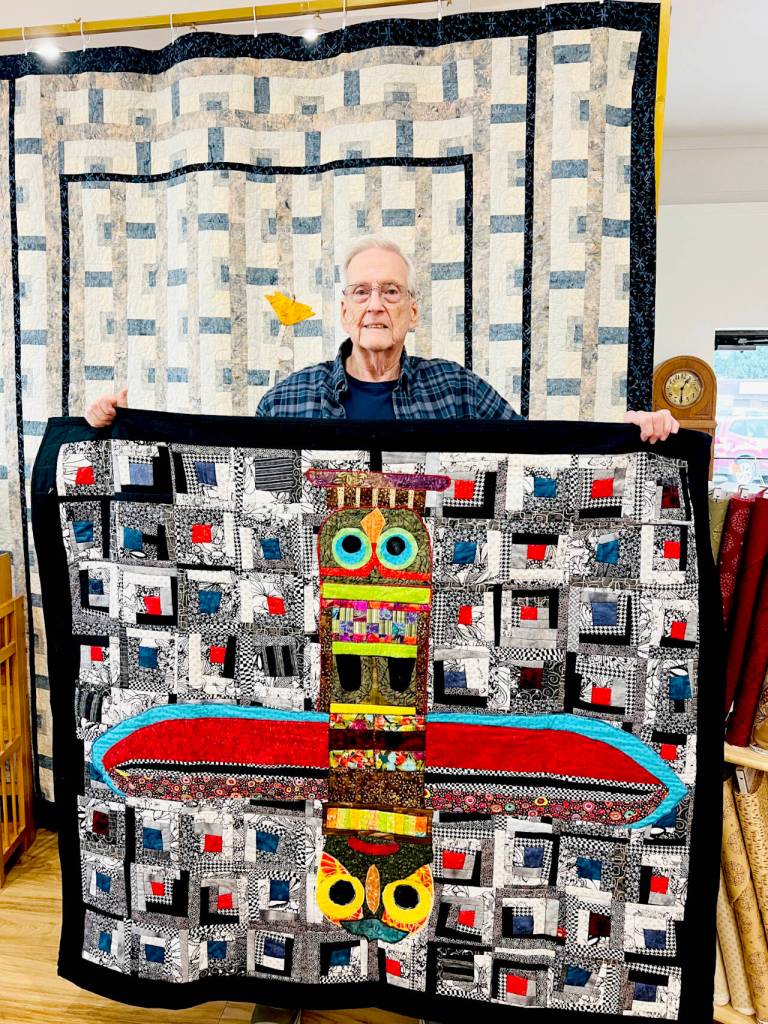
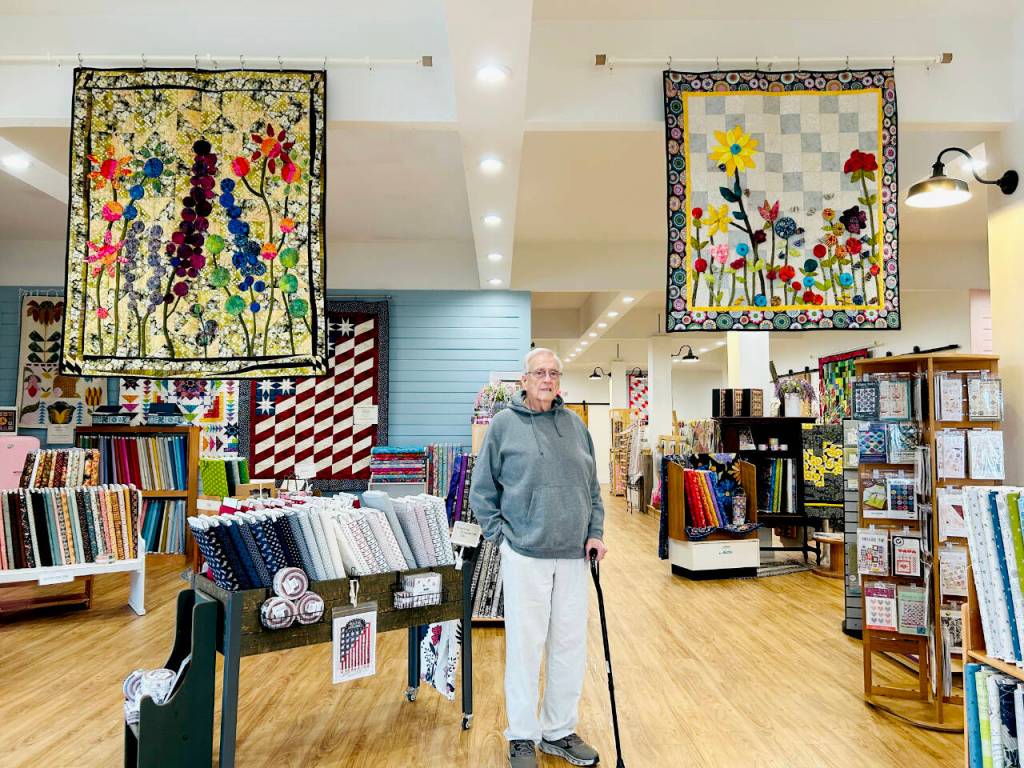


What image comes to mind when thinking of someone who sews quilts? Most likely, the image is a stereotypical one of a woman, perhaps one who is grandmotherly.
But that would be, well, a bit sexist. There may not be nearly as many male quilters as female ones, but they do exist — and Sequim’s Tom Green is a fine example in the opinion of Nicole Driggs. The owner of A Stitch in Time Quilt Shoppe at 225 E. Washington St. in Sequim, Driggs currently has about 25 of Green’s quilts on display. They will hang there throughout the month.
For Green, quilting has never been about proving anything. It’s about color, composition and the quiet satisfaction of making something lasting. He holds a master’s degree in art and once planned to teach high school art in Washington state. But when he was nearing graduation, he discovered there wasn’t a single high school art teaching job available.
“I’d just gotten married,” he said. “I thought I better do something.”
He pivoted to elementary education. He taught for years, eventually serving as a school principal before retiring. Along the way, he became known as the elementary teacher who was pretty good at art.
Quilting, in retirement, became a way to once again tap into his creative streak.
“I don’t follow patterns very easily,” he admitted. “So I just make up my own as I go.”
Over three decades, he estimates he has made at least 100 quilts — perhaps more. He shops at Driggs’ store and last year she asked to hang some of his quilts there.
“I said, ‘But you’ve never seen all my quilts,’” he recalled. “She said, ‘I’ve seen enough.’”
The display recently sparked unexpected recognition. One day, while standing in line at a craft store with his daughter, Green struck up a conversation with a woman who was also in line. She praised “this man’s quilts” hanging in Sequim — bright, bold pieces she found incredible.
“I wonder if you know him,” the woman said.
Green smiled but kept quiet for a moment before thanking her. “That was kind of fun,” he said.
Green’s quilting hobby was sparked by his wife Sandy, to whom he has been married for almost 60 years. Thirty-plus years ago, she enrolled the two of them in a quilting class as a way to keep him busy in retirement.
“My wife signed us up,” he recalled. “We argued about it for about three days. Finally, I said, ‘Oh, fine, I’ll do it.’”
He was the only male student enrolled.
The class was in Juanita, near Kirkland, just before the couple moved north. Sandy made one quilt and a couple of baby blankets, and that was it. Green, on the other hand, took off with it. He had found a new hobby.
The class sessions were not without a bit of comedy. Green related that he and Sandy had purchased a new sewing machine, one equipped with a button start instead of a traditional foot pedal. Having never used a sewing machine before, he opted to use the button. Midway through a class, a woman across the room raised her hand to alert the instructor.
“He’s not using a foot pedal!” she declared.
Green laughs at the memory, and shrugs off the teasing he sometimes received. He said the women eventually “got used to me being there.”
Over the years, the former educator has gifted his quilts to friends and family and to the Boys & Girls Club for fundraising auctions. He doesn’t quilt as much anymore due to arthritis.
His quilts have never been for sale.
“People say, ‘Oh, I’ll buy that — I hope it’s less than $50.’ You can’t make one for that,” he explained.
Fabric alone runs $13 to $15 a yard, he said. A medium-sized quilt can cost $300 to $400 in materials, not counting tools and the sewing machine itself. He occasionally has allowed friends to cover material costs, but more often, he has given his quilts away. He still has two trunks full at home.
One particularly meaningful project involved finishing a quilt started decades earlier by a 103-year-old woman. The fabric was no longer manufactured, and some pieces needed replacing. Green and the woman’s daughter found a creative solution — locating similar fabric and turning it upside down so it appeared faded to match the original.
“She just loved that quilt,” Green said of the woman. After her passing, the quilt became a keepsake for the family.
For Green, quilting hasn’t just been a creative outlet; it has filled a void. He once swam, hiked and stayed active. But health issues have limited what he can do.
At one point, Green declared he would stop quilting altogether at the start of the new year — citing age, expense and aching hands. His youngest daughter responded by arriving days later with 30 yards of fabric.
That daughter, now 50, has taken enthusiastically to quilting herself, working alongside her father.
Green’s creativity extends beyond quilting. He decorates homes for friends, arranges flowers and once earned a certificate in floristry.
He still occasionally encounters teasing, but he no longer minds.
“It’s different to see men doing quilts,” he acknowledged. “But I don’t care if people want to make fun of me about it.”




Best of Olympic Peninsula