Get It Growing: Watering your garden with ollas
Published 1:30 am Wednesday, August 12, 2026
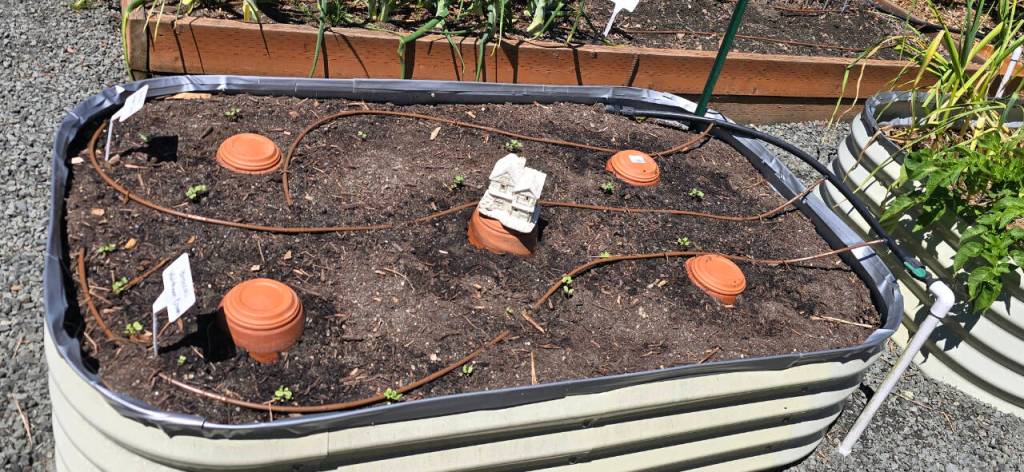
Our current water supply in Clallam County is far below normal. Because of that, gardeners have the task of determining the most water-efficient way of keeping their gardens producing. The benefits of drip irrigation was discussed previously by Susan Kalmar in a June “Getting It Growing” column.
The Woodcock Veggie Team is currently experimenting with another option called the olla. What is an olla, you ask? First of all, it is pronounced OY-YUH.
Olla history
Ollas have been around since ancient times, possibly for 4,000 years. They have been used across China, Iran, and North Africa. It is thought that the Spanish brought them to North America. Olla usually refers to an unglazed terra cotta pot that can be used for cooking, storage, or irrigation. The word comes from the Latin word for pot or jar.
When used for irrigation, olla refers to a below-ground watering method that uses unglazed clay pots to distribute water to the roots of the plants. They can reduce water usage by up to 70%! This is because the water remains in the pot until the surrounding ground is dry, and then it seeps through the clay, directly watering the roots.
How an olla works
• Porous seepage: Water slowly weeps through the clay walls only when the surrounding soil dries out.
• Self-regulating: Plant roots naturally grow toward the moisture, taking up water as needed without over- or under-watering.
• No surface evaporation: Because the pot is buried, water doesn’t bake away in the sun or run off.
How to use
1. Dig a hole in your garden bed or large container and bury the olla up to its narrow neck, leaving the top opening exposed.
2. Position seeds or seedlings within a foot or two of the buried pot so young roots can reach it. (We recommend watering seeds by hand until roots are established, then the olla can take over.)
3. Fill the olla with water and top it with a lid to keep out debris and prevent mosquitoes or evaporation.
4. Finally, top off the water level in the olla as needed. This will depend on the weather, soil type, and plant size.
Ollas are available at many local gardening centers, online, big box stores, or the best yet, you can make them yourself.
At the Woodcock Demonstration Garden, there are two raised beds that incorporate different types of ollas. One is a commercial system that is fully self-watered by using our drip system to fill the ollas as the water seeps into the soil.
Make one yourself
The second uses a series of DIY ollas that you can make yourself with just a few supplies. It took less than an hour for our team to put together the ollas using two unglazed terra cotta pots, some silicone, drywall tape and putty, and a saucer to place over the top hole.
Four-inch diameter pots work well for raised bed gardens. You will need to plug the drainage hole in one of the pots. A cork will work for this or you can fill the hole with silicon or waterproof glue. Attach the tops of the pots together with the silicone or glue. After it has dried, wrap the seam with the drywall tape and apply the putty. Let that dry. The goal is for the DIY olla to hold water and allow seepage through the clay and not the seams.
You will need multiple ollas for a raised bed. They can effectively water an area 12 to 18 inches around the pot.
Both systems are working well. One is very basic and inexpensive. The other system requires additional set up and costs more, but saves money in the end by conserving water.
If you are looking for waterwise irrigation options, using ollas in your garden is a simple method that has been around for many years. They are cost effective, efficient at conserving water, and easy to maintain.
For additional information and history on ollas, search online for Arizona Cooperative Extension’s paper titled “Irrigating with Ollas.”
Next Digging Deeper event
The Veggie Team at Woodcock Demonstration Garden invites you to a Digging Deeper presentation on Saturday, Aug. 15 at 10 a.m., where we will be speaking on the topic “Raised Bed Gardening.” We will discuss types of raised beds, soil health and crop rotation, potatoes, onions, sweet potatoes, tomatoes, drip irrigation, and other veggie-related topics.
_______________________
Jennifer Blackwood is a Clallam County Master Gardener from the class of 2025 and a member of the Veggie Team at the Woodcock Demonstration Garden.




Best of Olympic Peninsula