The people who carry the mountains
Published 4:30 am Wednesday, August 12, 2026
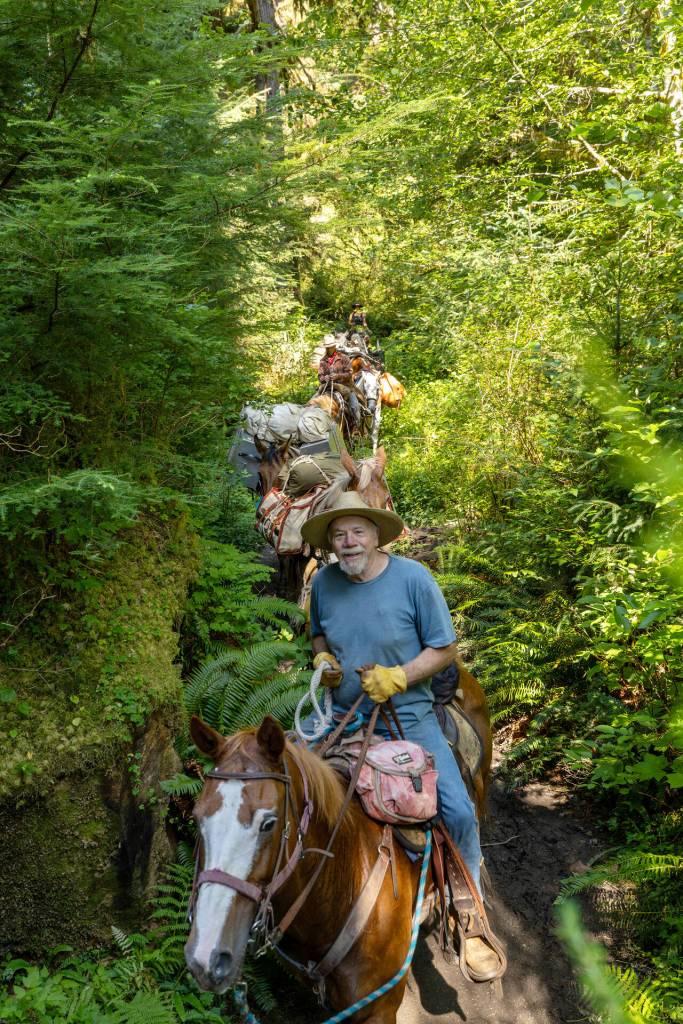
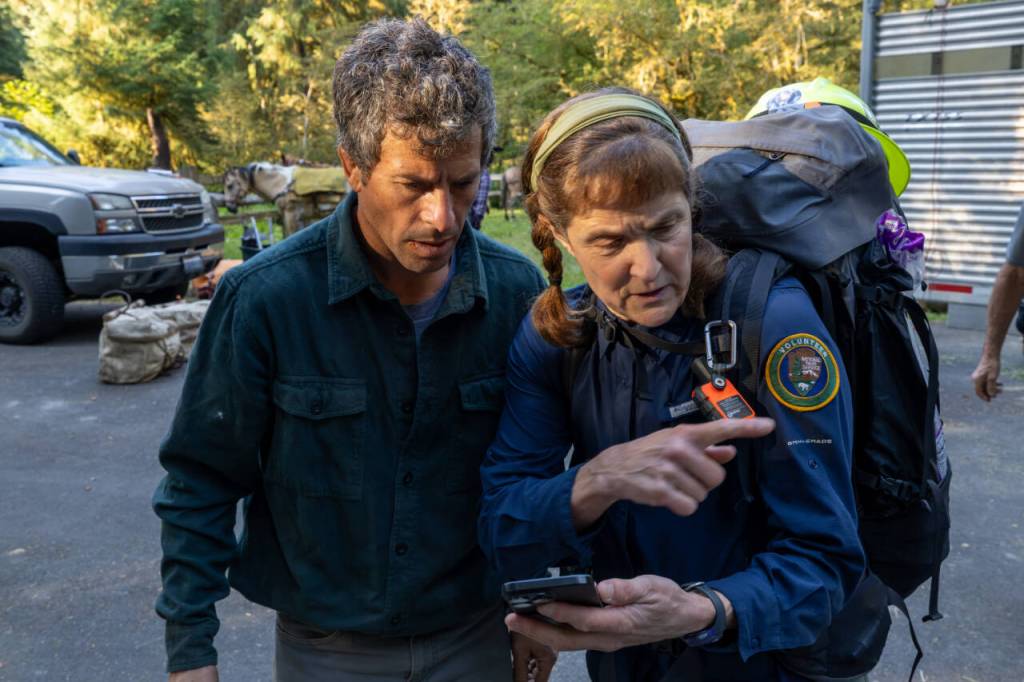
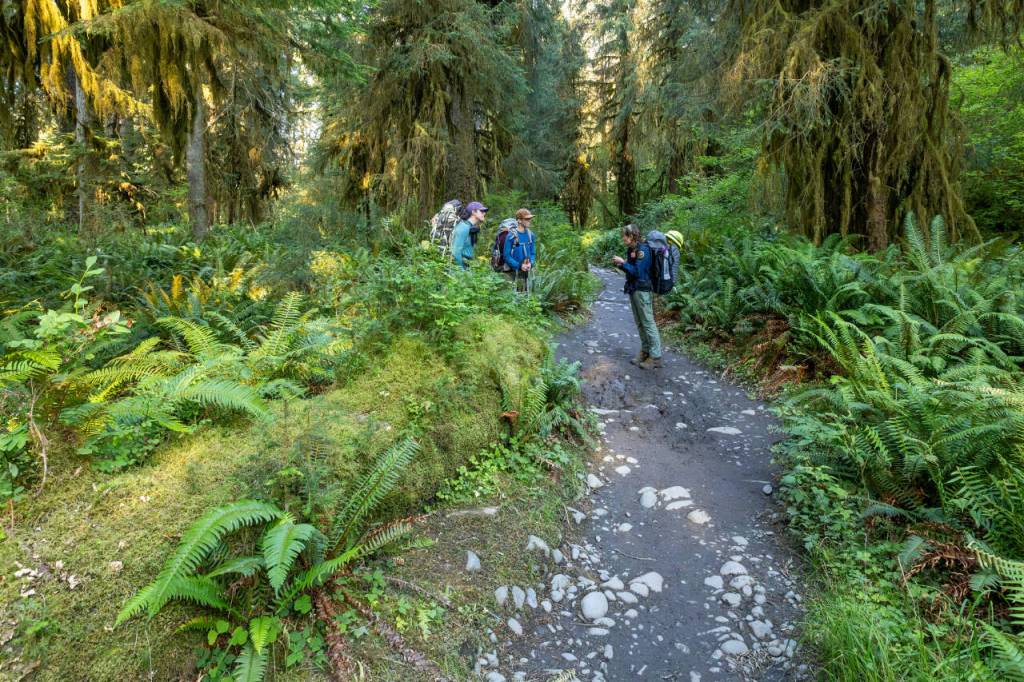
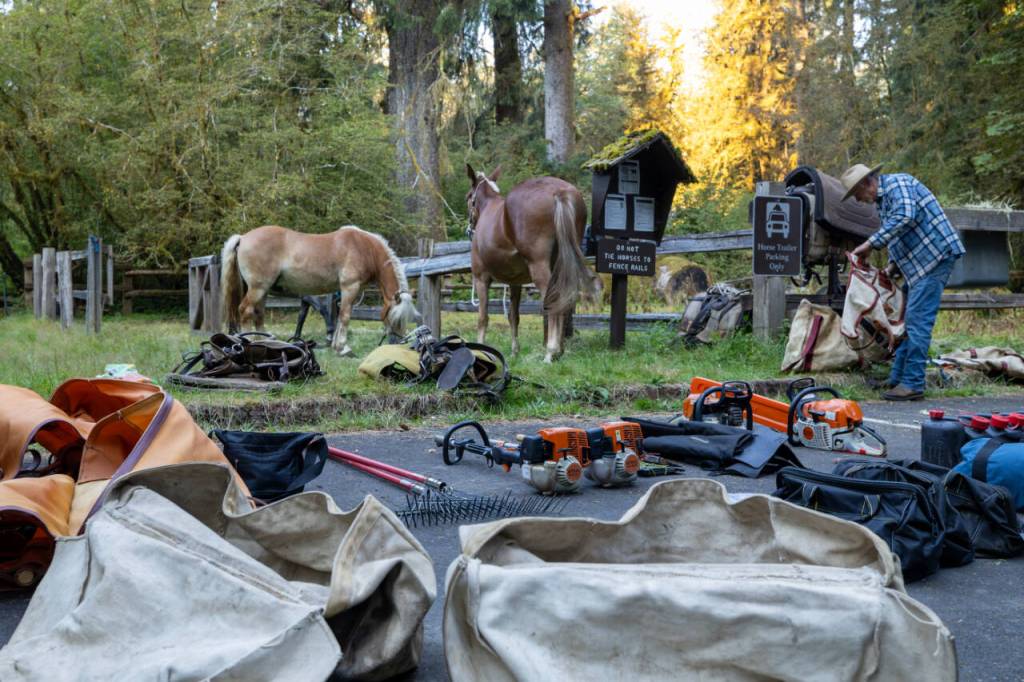

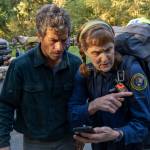
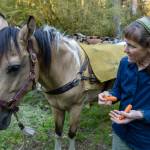
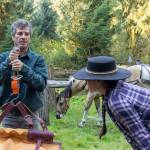
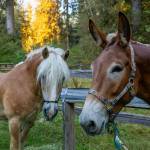
Before most visitors had reached the Hoh River Trail on the morning of Wednesday, Aug. 5, another kind of traffic was preparing to enter the backcountry.
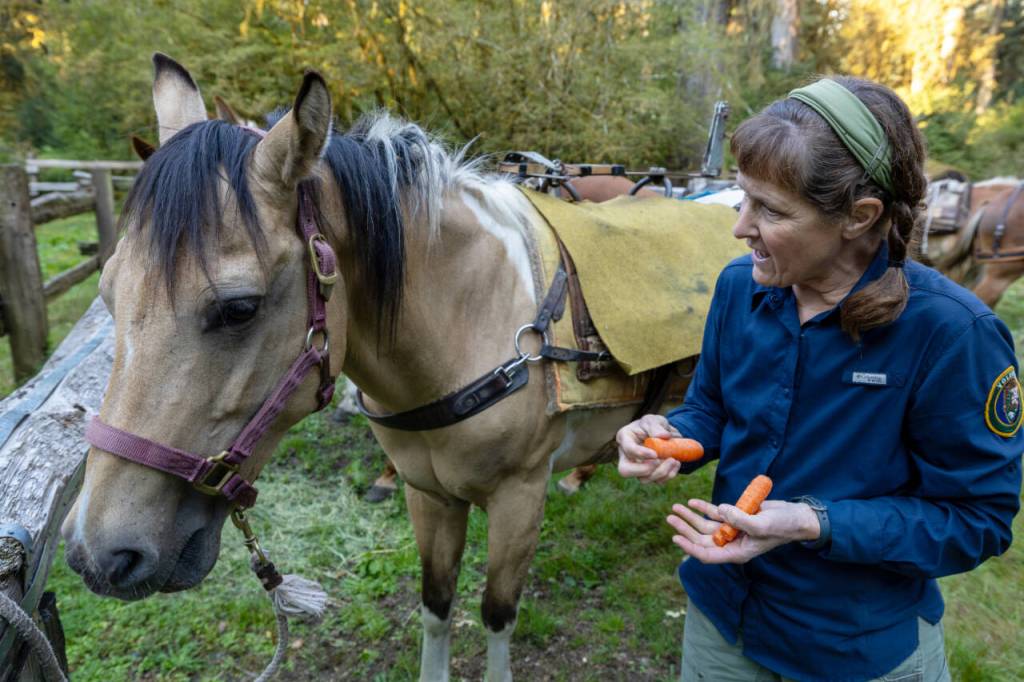
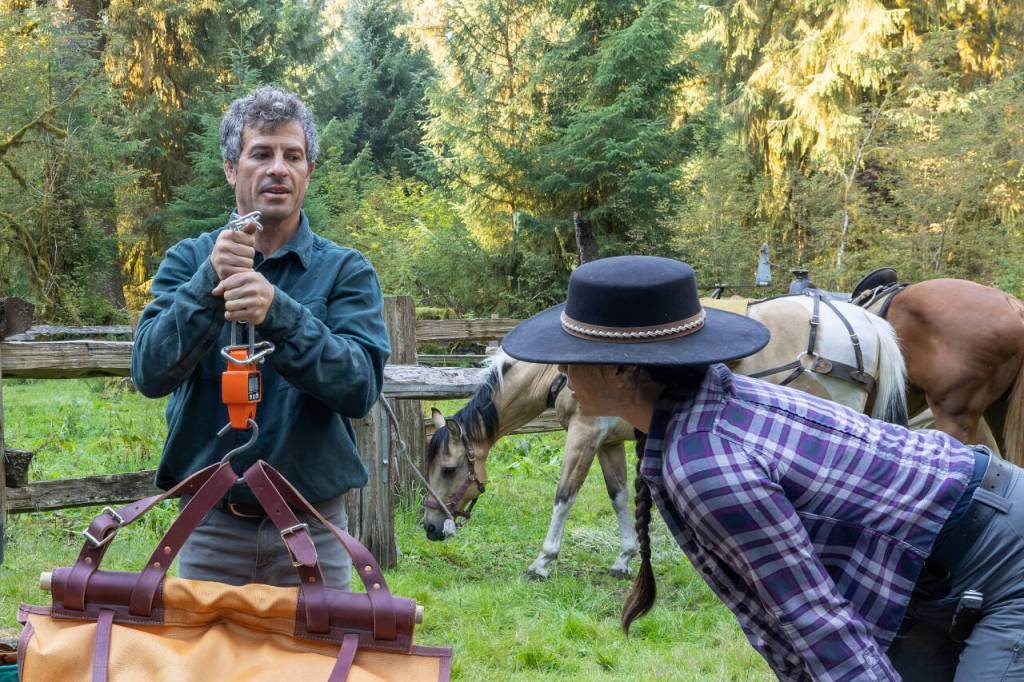
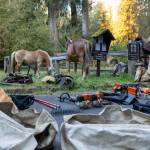
At the stock corral, horses and mules shifted along the split-rail fences as volunteer packers Rachael Taylor-Tuller, Matthew Tuller and Harold Wiese brushed animals, checked hooves, fitted saddles and sorted piles of camping gear, tools and supplies for a Gray Wolf Trail Crew heading nearly 10 miles into Olympic National Park.
For the hikers who would pass them later that morning, the pack string might simply look like an unusual sight on the Hoh River Trail.
But the horses and mules were part of something much larger.
The packers volunteer with the Peninsula Chapter of Back Country Horsemen of Washington, a nonprofit that works with land managers and other volunteer groups to keep trails open and support backcountry access. The chapter says it contributes more than 3,000 volunteer hours on 500 miles of trail each year, representing more than $140,000 in donated labor, equipment and tool use. It is one of 35 Back Country Horsemen of Washington chapters statewide.
That work can be seen in the Gray Wolf Trail Crew, now a program within the Peninsula Chapter.
Rebecca Wanagel serves as leader of the Gray Wolf Trail Crew and trail project director for the Peninsula Chapter. The all-volunteer crew works in both Olympic National Forest and Olympic National Park.
Wanagel said Olympic National Forest does not have its own dedicated trail crew, leaving its roughly 270 miles of trail dependent on work performed by several volunteer organizations. Gray Wolf Trail Crew is one of those groups. In Olympic National Park, paid trail crews and park packers handle substantial amounts of work, while volunteers help reach trails that might otherwise receive less attention.
“In the park, what we do is they have so many miles of trail that they can’t get to it all,” Wanagel said. “So we jump in and help with the trails that wouldn’t get attention otherwise.”
Founded in 2007, the Gray Wolf Trail Crew works in both Olympic National Forest and Olympic National Park. Wanagel became crew leader in 2022, and in 2025 Gray Wolf became a program within the Peninsula Chapter of Back Country Horsemen of Washington.
That partnership changes what a volunteer trail crew can accomplish.
Trail work requires more than saws. A multi-day crew may need food, tents, fuel, protective equipment, radios, hand tools and chainsaw equipment carried miles into the backcountry. Without stock support, workers must carry that equipment themselves before work begins.
Wiese, who said he joined Back Country Horsemen after leaving the Navy in the mid-2000s, said packers allow trail crews to concentrate on the work they came to do.
“For them to camp about ten miles in and try to haul all that stuff, you know, it’s a lot of work,” he said.
The difference becomes more apparent on deep backcountry projects.
During an eight-day Upper Duckabush and Home Sweet Home project in Olympic National Park in 2024, six Gray Wolf volunteers and three volunteer packers maintained 9.7 miles of trail and cleared 94 fallen trees. Wanagel estimated the project involved 476 on-trail volunteer hours. In her report afterward, she wrote that the trip would have been impossible without stock support.
A 2025 project on the Appleton Pass, Boulder Lake and Olympic Hot Springs trails required another 430 hours of work and packing on trail. The crew cleared 79 downed trees, repaired tread and drainage and fought through sections of vegetation so thick that workers sometimes had to consult a mapping app simply to determine where the trail went. Wanagel described the Tullers’ packing support as becoming a “vital link” to getting backcountry trail work done.
Then, in June, a five-day Upper Duckabush project brought together 12 trail crew members and the same three volunteer packers who assembled at the Hoh in August. Together, the trail crew and packers logged 530 on-trail hours. The crew worked 8.5 miles of trail, hiked approximately 45 miles each and cleared about 120 logs. Part of the objective was to make the trail passable for pack animals so Olympic National Park crews could later bring in equipment for more extensive work.
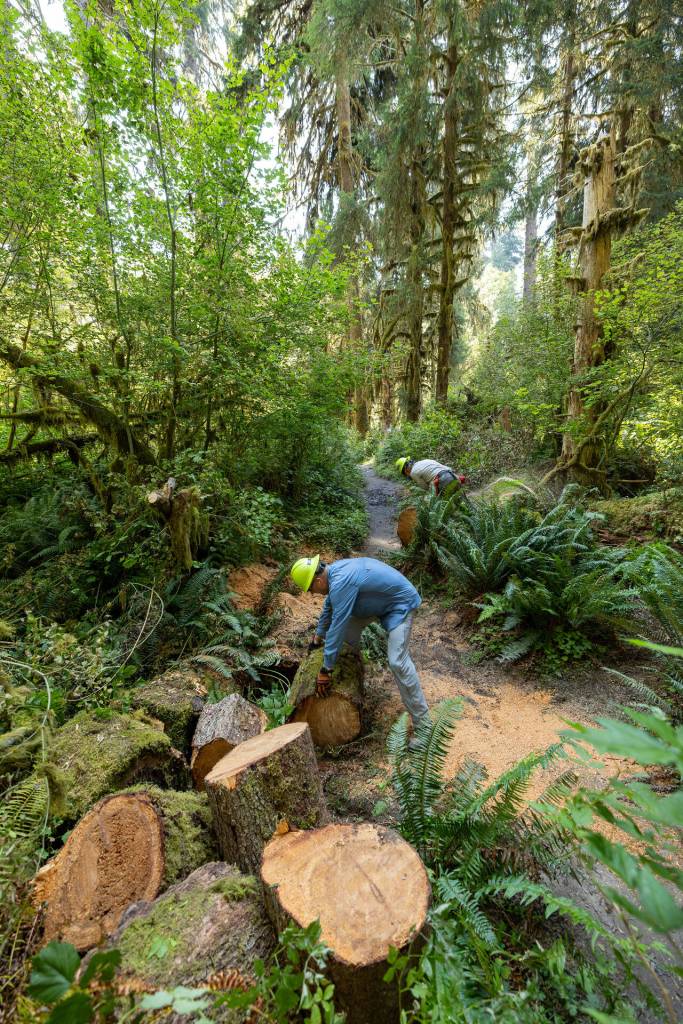
The work itself ranges from clearing fallen trees and cutting brush to repairing tread and drainage, constructing trail reroutes and, when needed, building bridges and installing footlogs.
It is skilled work as well.
Wanagel said crew members operate within their training and certification levels, use emergency action plans, carry radios and approach potentially dangerous trees cautiously. She and fellow volunteer Martin Knowles also serve as certified saw instructors and evaluators for BCHW, helping keep volunteer sawyers current with their certifications.
The crew attracts experienced trail workers as well as newcomers from across the Olympic Peninsula and as far away as the Puget Sound region, bringing different backgrounds and reasons for showing up. Some are longtime hikers, others enjoy physical work and camaraderie, and many simply want to give something back to the trails they use. Some volunteers appear for a project or two. Others become part of a core group that returns regularly.
“People give what they can give, do what they can do,” Wanagel said. “Every bit helps.”
Back at the Hoh, that network could be seen coming together in real time.
The horses and mules carried equipment for a five-day Gray Wolf project on the Hoh Lake Trail, with the crew camping nearly 10 miles up the Hoh River Trail. Wanagel had scouted the route weeks earlier and said it was clear at the time.
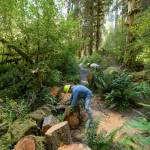
Just beyond Mount Tom Creek junction, however, a tree had fallen across the trail since her scouting trip.
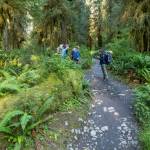
The trail workers headed out ahead of the pack string. Their first job was to remove the obstruction so the horses and mules carrying their equipment could continue toward camp.
It was a small job compared with clearing about 120 logs on the Duckabush or cutting through miles of brush on the Appleton Pass Trail, but it showed the system working.
The fallen tree was only the first task. Over five days, the crew planned to clear fallen trees along nearly five miles of the Hoh Lake Trail to Hoh Lake and brush at least 2.5 miles to the ridge, helping revive a trail that the Olympic Mountains has been working to reclaim. Volunteers also built a 400-foot reroute where Hoh Creek had washed out about 250 feet of trail.
Trail workers depend on packers. Packers depend on passable stock trails. Both work with land managers. Volunteers provide labor that stretches what public agencies can accomplish, and hikers who may never know their names walk through the results.
Wanagel does not claim Gray Wolf or the Peninsula Chapter does that work alone. Numerous volunteer organizations contribute to Olympic Peninsula trails.
But in the National Forest, where she said there is no dedicated trail crew, the equation becomes particularly stark.
“If not us, then who?” Wanagel said, emphasizing that “us” means the larger community of volunteer trail organizations, not Gray Wolf alone.
For the Gray Wolf Trail Crew, answering that question can mean a chainsaw, a shovel or a pair of loppers.
For the volunteer packers who support them, it can mean a horse or mule carrying those tools miles into the backcountry.
And for everyone who comes afterward, it may simply mean there is still a trail to follow.
How to help
Encountering a pack string
If you come across a pack string, stop, stand and speak so the horses and mules can recognize you as a person. Move to the downhill side of the trail when possible, remain still and follow the rider or packer’s directions while the animals pass.
Help maintain the trails
Volunteers can join the Gray Wolf Trail Crew or help with other projects of the Back Country Horsemen of Washington Peninsula Chapter. People can contribute according to their available time, abilities and training.
Support the volunteers
Donations to the Gray Wolf Trail Crew can be made through the Back Country Horsemen of Washington Peninsula Chapter and designated specifically for the crew. Information about volunteering and donating is available at pbchw.org/donate.php.




Best of Olympic Peninsula