Get It Growing: T’is the season for buying seeds
Published 1:30 am Wednesday, December 15, 2021
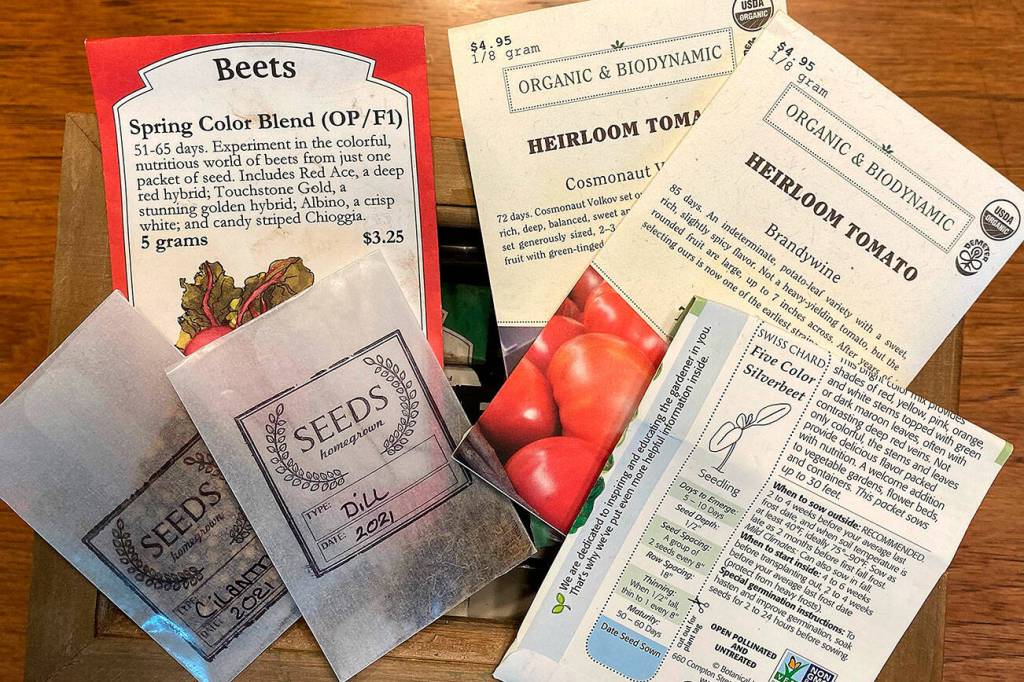

“I have seen women looking at jewelry ads with a misty eye and one hand resting on the heart, and I only know what they’re feeling because that’s how I read the seed catalogs in January.”
— Barbara Kingsolver, “Animal, Vegetable, Miracle: A Year of Food Life ”
T’is the season, for coveting seed catalogs and winter is the time for buying seeds. With the impending December solstice, spring can’t be too far away.
For a gardener, a seed catalog is like a trip to the candy store; it’s hard not to want a little of everything. Here are a few tips to help explain the different types of seeds and to, perhaps, avoid the common pitfall of over-buying.
First, inventory the seeds you already have cached away from last year. Most seeds will last more than one year if carefully stored. If you don’t want to use leftover, but viable seeds, consider sharing them with other gardeners (then you can justify buying more).
If you keep a garden journal, review it for ideas of plants you may, or may not, want to grow again. Remember what did great and what may have been marginal. If you want to retry a marginal crop, it might be wise to choose a different variety for the upcoming season.
Now the fun starts! Pour over the seed catalogs before you start ordering. This might be a good time to begin a garden journal for the coming season, by sketching out your garden layout and noting your plant rotation ideas.
There is some important seed terminology to review before buying as well: Hybrid, these seeds are the direct product of two different varieties of the same plant.
Hybrid plants tend to have vigor and be good performers in the garden. It is important to note that the seeds from mature hybrid plants will not grow back “true” to the original plant.
Open-pollinated, these plants are available to any suitable pollinator for fertilization, so they are more genetically diverse. Seeds from open-pollinated plants will grow true to the mother plant, provided they are fertilized with pollen from the same plant variety.
Heirloom, these plant seeds have been passed down through generations and are valued for the diversity they retain. To be considered heirloom, the seeds need to be from plants that have been cultivated for 50 or more years. The plants are carefully pollinated to ensure the seed produces plants true to the original plant.
You don’t need to be concerned about accidentally buying GMO seeds as they are not available to the general public, so many seed companies may not bother listing “non-GMO” on the package.
Another concern may be treated or coated seeds. Treated seeds come coated with an herbicide or pesticide to help prevent fungus or insect damage. They are often brightly dyed to indicate treatment and labeled as “treated” on the packaging. Organic gardeners will need to avoid these types of seeds.
Some coated seeds may be safe to use. Many tiny, modern seeds like marigolds or lettuce, may have a coating that looks like treated seeds, but is not. These seeds have something similar to a candy coating and are intended to help the gardener handle them more easily. Always read all the fine print about the type of coating on seeds.
Once your list is complete, it is recommended to buy from reputable seed companies that produce their seed for your particular climate. Three commonly used companies for the Pacific Northwest are Territorial Seed (of Oregon), Ed Hume Seed (Washington) and Seattle Seed Company (Washington).
Be aware, the availability and lead time of seeds have been affected by the pandemic, so it is best to start the process early.
Susan Kalmar is a Clallam County Master Gardener



Best of Olympic Peninsula