Some of Sequim Food Bank’s most committed volunteers aren’t old enough to drive
Published 4:30 am Wednesday, June 17, 2026
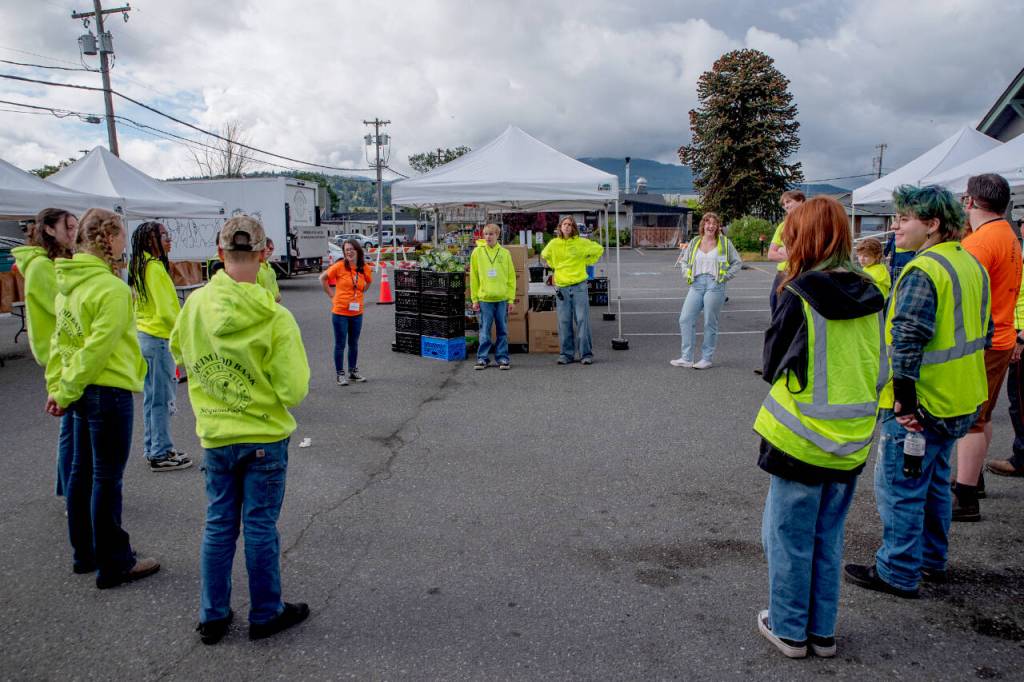
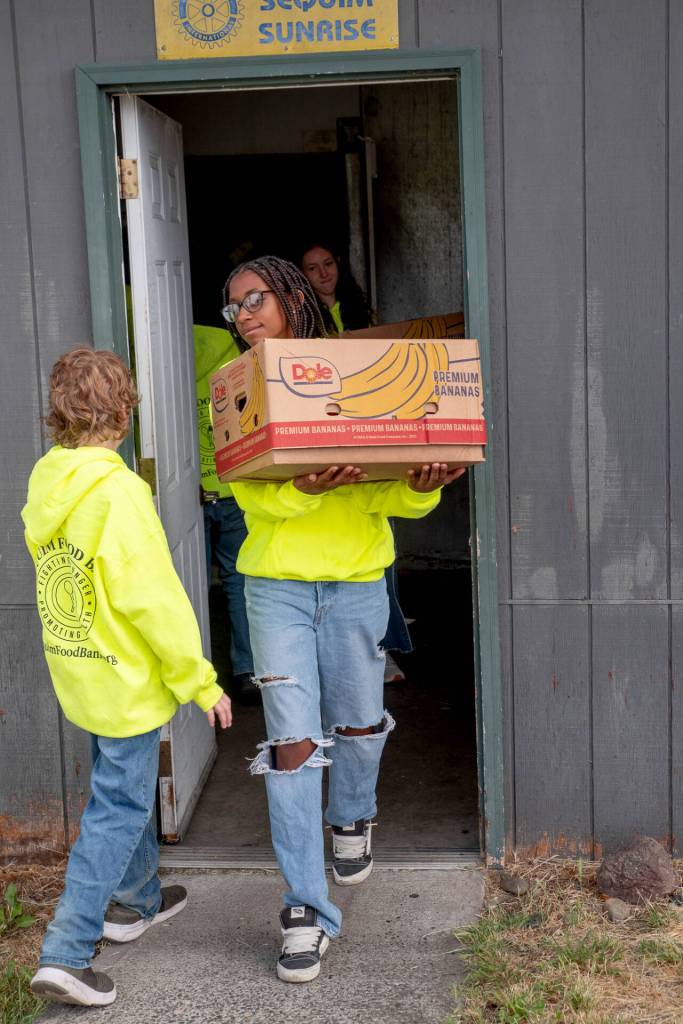
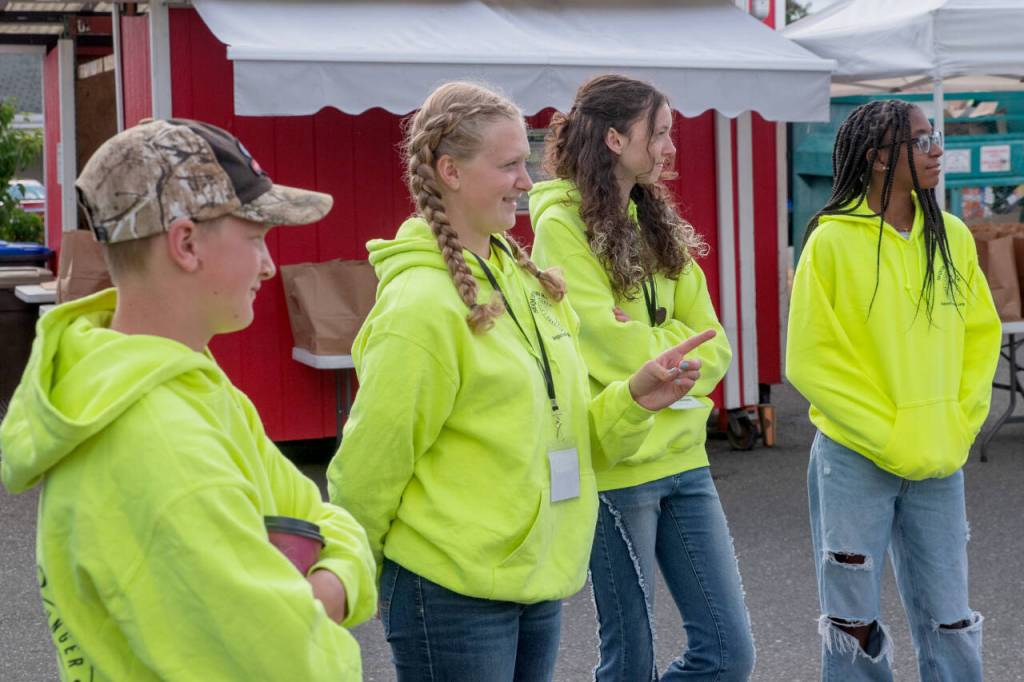
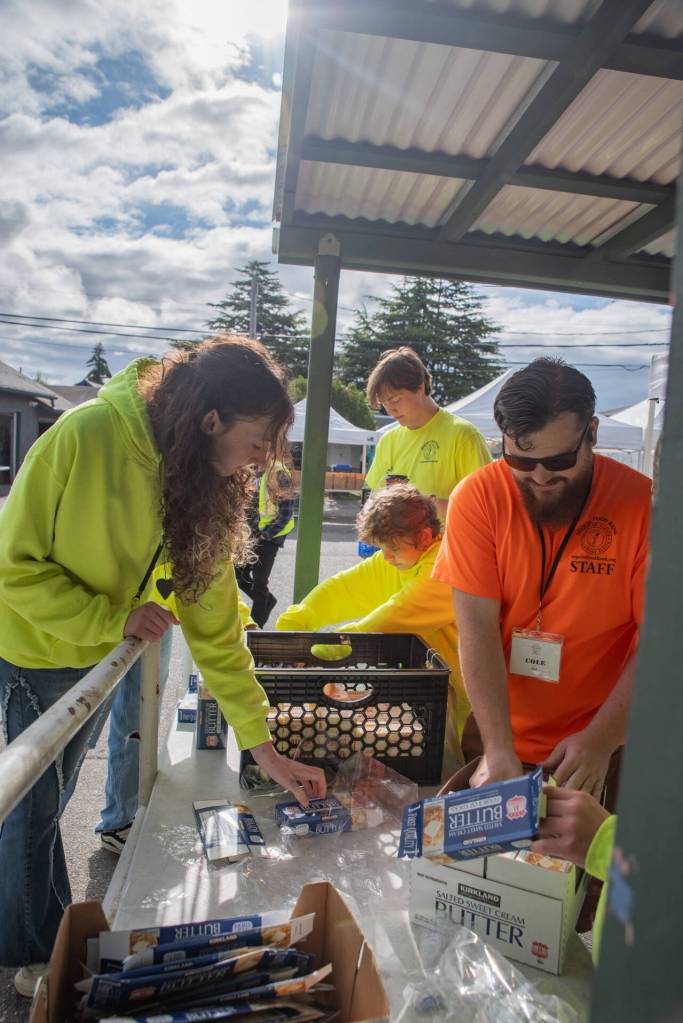
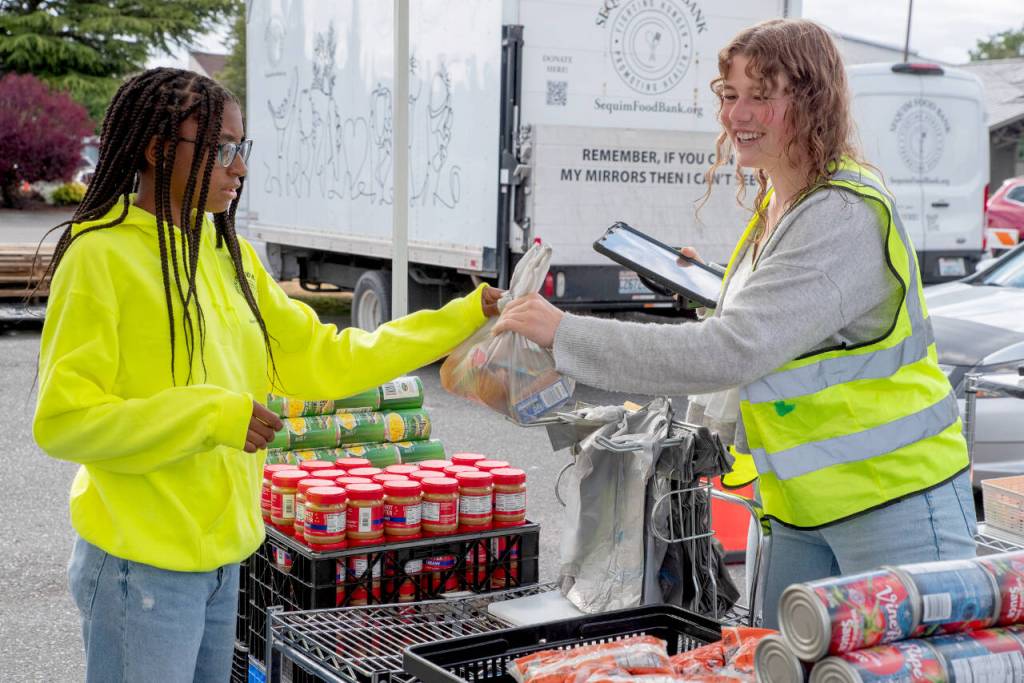
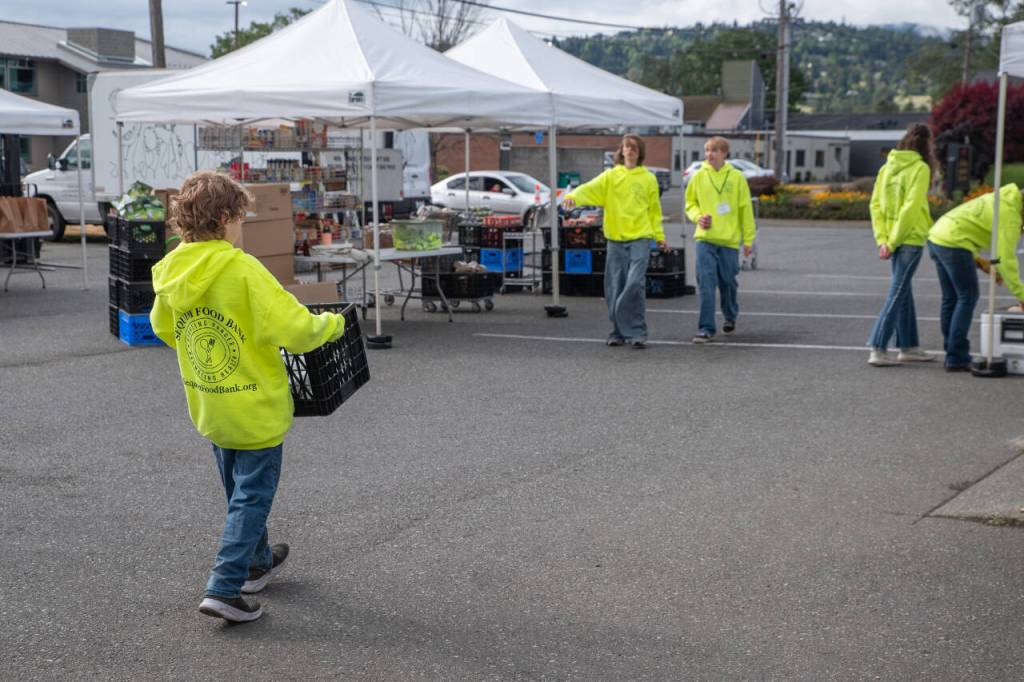


Early every Saturday morning, something unusual happens at the Sequim Food Bank.
While many of their peers are sleeping in, a devoted group of students — mostly teens but some as young as 11 — arrive ready to work. Some are dropped off by bleary-eyed parents because they aren’t yet old enough to drive. Within minutes, they are filling large paper bags with produce, organizing bread and preparing for the drive-through distribution line that opens at 9 a.m. and runs until noon.
Under the supervision of Virginia Reitsma, the food bank’s director of administration and its Teen Program coordinator, the young volunteers expertly take control of the operation.
On this Saturday in June, there is no grumbling or scrolling through phones. Instead, the group moves with purpose and energy.
“There is something so magical about this place,” said Skylar Paige Krzyworz, who started volunteering in fourth grade and recently completed her first year at Pacific Lutheran University studying elementary education and Spanish. She still returns to volunteer whenever she comes home.
Reitsma currently has a roster of 50 teen and pre-teen volunteers, some of whom volunteer periodically and some of whom volunteer more regularly. They begin arriving at 8 a.m., and some come even earlier. One of those who arrive early is Junior Lead Brayden Baritelle, 15, who has volunteered for nearly four years despite balancing responsibilities this year as a member of the Sequim Irrigation Festival royalty court.
Adult volunteers handle food distributions that take place on Mondays from 1 p.m. to 4 p.m. and on Fridays from 9 a.m. to noon. There is also a Mobile Pantry that serves various locations around Sequim.
For Sallie Alhaddad, 17, volunteering on Saturdays has become the highlight of the week.
“It’s like my favorite thing,” said Alhaddad, who prefers they/them pronouns and has volunteered at the food bank for nearly a year and a half.
As one of the teen leads overseeing the bread station, they have found a role that combines their love of helping others with their passion for cooking.
“I’ve met so many nice people,” Alhaddad said. “Everyone who comes through the line — I just have great conversations with them. I’ve made a lot of friends here.”
What started as volunteer service has also helped shape their future.
“I want to cook for a living,” Alhaddad said. “I’ll bring things I’ve baked or cooked here, and all the volunteers are like beta testers. One volunteer here even helped me get an apprenticeship with a chef.”
Rising need, rising commitment
As food insecurity has increased locally, youth participation at the Sequim Food Bank has grown alongside it.
“When I first started, there were maybe 60 to 80 families that came through on a Saturday,” Reitsma said. “Now we’re up to around 140 families.”
The youth volunteer initiative began in 2009 under longtime food bank leader Stephen Rosales after the organization expanded distribution to Saturdays. Rosales served about five years as executive director and roughly a decade as board president.
The program started with just four teens: his daughter Ashley; Molly Smith, daughter of future Executive Director Andra Smith; Samantha Shock; and Alyssa Habner.
“It got to a point (where) I didn’t even have to recruit volunteers,” Rosales said. “Every week, 10 or 12 kids just showed up.”
During busy Saturday distributions, the teens manage stations while Reitsma oversees operations.
“The clients absolutely think it’s amazing that these kids are here,” she said. “Some of them choose to come on Saturdays just so they can see the kids.”
Those relationships are a large part of what keeps volunteers returning.
For Kendall Adolphe, 15, volunteering began as a way to earn community-service hours and meet people. It quickly became something more meaningful.
“I started to get excited to go see the regulars that come in,” she said.
Adolphe, who recently finished her freshman year at Sequim High School and served as class president, spends most Saturdays checking in clients and helping newcomers navigate the process.
Along the way, she has built relationships with many regular visitors.
“Some people who come through this line have had a really hard week,” she said. “They’ll actually tell me about it or kind of vent to me. It’s a nice feeling to know they trust us here.”
She knows one client’s dietary restrictions and another’s beloved dog.
“You get to meet their families and learn about their pets and their lives,” she said. “Six months ago they were strangers, and now they’re my friends.”
Volunteering has also changed how she sees the community. When the food bank faced budget concerns earlier this year due to increased demand and federal budget cuts, Adolphe and her brother organized a food drive through their 4-H club.
“I definitely think we have a lot of people who need help,” she said. “A lot of families are struggling right now.”
Passing the torch
Krzyworz, who graduated last year, spent more than four years as teen leader before passing those responsibilities to younger volunteers.
“Seeing them take over the position that I was doing is just so rewarding,” she said. “You can see that even as people rotate out, the same mission is still alive and well.”
She said she has watched food insecurity increase dramatically over the years.
“When I first started, a busy Saturday might mean serving 30 families,” she said. “Now, serving more than 100 families is routine.
“It saddens me, but it also makes me incredibly grateful that we’re able to be a program people can turn to.”
Her experience inspired her Girl Scout Gold Award project, Gardens to Families, which focused on food insecurity education. She built garden beds for the food bank, created educational materials and developed recipe books to help families use common food bank ingredients.
“For me, food is a lot more than just calories,” she said. “It’s a way to build community. It spreads love.”
Krzyworz credits the food bank with shaping both her outlook and life path.
“I don’t think I would have become an AmeriCorps member at college if it wasn’t for the food bank,” she said. “That changed my life.”
She believes the lessons extend far beyond food.
“I think we’re really in a place in the world where people are lacking kindness,” she said. “This program teaches people to be kind. It teaches people that there are opportunities every day to help someone.”
Food bank staff see those lessons taking shape every week.
Transportation and Saturday Distribution Coordinator Cole Tierney said the teens regularly handle responsibilities many adults would find challenging.
“They know how to be polite. They know how to be quick. They know how to be efficient,” he said. “A lot of them run their stations so well that I don’t have to help them.”
Tierney believes the experience teaches skills that will last a lifetime.
“They’re learning work ethic, customer service and professionalism,” he said. “They’re learning the basics they’ll need for any job.”
He also believes young volunteers understand more than adults sometimes assume.
“A lot of people don’t give kids enough credit,” Tierney said. “They’re way more attentive than people think. They understand what’s going on.”
For Alhaddad, the rewards often come in small moments.
Many clients visit regularly, and Alhaddad remembers their favorite items.
“It makes them really happy and feel seen when I bring them exactly what they always want,” they said.
Sometimes that means saving a favorite loaf of bread. Other times, it means finding a birthday cake.
“Sometimes it’ll be somebody’s birthday,” Alhaddad said. “I work in the bread room, so I can give them cake that they might not have otherwise had.”
Those gestures matter.
“So much of this is just helping people,” they said. “And everyone here is really nice. It’s just a good environment to be in.”
Tomorrow’s leaders
According to Rosales, about 1,000 young people have participated in the Teen Program over the years, with some going on to academic and professional success.
At age 13, Baritelle became the youngest recipient of the food bank’s Junior Volunteer of the Year award. He, along with fellow royalty court member Emma Rhodes, recently became among the first youth winners of the new Junior Volunteer of the Year Award as part of the annual Clallam County Service Awards presented by the Peninsula Daily News, Soroptimist International of Port Angeles-Noon Club and the Boys & Girl Clubs of the Olympic Peninsula.
For Reitsma, watching young volunteers return week after week offers hope.
“Rain or shine, even in the dead of winter when it’s raining sideways or snowing, these kids are still here,” she said.
Their dedication, she added, inspires her every Saturday.
“They give me so much inspiration for our future and for this community.”
Baritelle put it more simply:
“I’ve learned who I want to be in my life — just a better person in general.”



Best of Olympic Peninsula